Disclosure: As an Amazon Associate, we earn from qualifying purchases.
Starting your day with a standard cup of black coffee gives you a quick spike in alertness, but it leaves your body running on empty from a metabolic standpoint. Exercise physiologist and nutrition scientist Dr. Stacy Sims has transformed how athletes and everyday fitness enthusiasts view their morning brew by championing the addition of high-quality protein. Blending nutrient-dense protein into fresh coffee—often dubbed "proffee"—helps stabilize blood glucose, curbs mid-morning cortisol spikes, and initiates muscle protein synthesis right when your body needs it most. Combining precise coffee extraction with targeted nutrition turns your morning ritual into an active performance tool.Quick answer: To make the ideal Stacy Sims protein coffee, blend 18 grams of freshly ground coffee brewed with 280 ml of water (a 1:15.5 ratio) with one scoop (approx. 20–25g) of cold-processed whey isolate or clean plant protein. Temper your brewed coffee to around 60–65°C (140–150°F) before combining to prevent the protein from denaturing or clumping, then blend with an immersion frother for 15 seconds until velvety smooth.
The Science and Brewing Mechanics Behind Protein Coffee
Merging specialty coffee extraction with macro-nutrient timing requires an understanding of both beverage chemistry and human physiology. When you drink plain caffeine on an empty stomach, particularly after overnight fasting, it stimulates the adrenal glands to release extra cortisol. Dr. Stacy Sims emphasizes that for women and endurance athletes, this fasted caffeine state can escalate systemic inflammation and trigger fat storage signals. Introducing at least 20 grams of protein alongside caffeine blunt this glycemic and hormonal response, shifting the body into an anabolic recovery state instead of a catabolic stress state.
From a barista's technical perspective, coffee temperature control is critical when introducing whey or plant proteins. Espresso or pour-over coffee extracted according to specialty coffee association (SCA) standards leaves the filter at roughly 88–92°C (190–198°F). If you dump whey protein directly into liquid above 70°C (158°F), the proteins instantly denature, resulting in a curdled, chalky texture that ruins the cup. Allowing your brew to cool slightly or pre-dissolving the powder in a splash of unsweetened plant milk ensures smooth emulsification and preserves delicate aromatic compounds like floral and fruity notes in high-grown Arabica beans.
Choosing the right bean profile further elevates the experience. Lighter, fruit-forward single-origin Ethiopian coffees can clash with chocolate or vanilla protein powders due to high acidity. Medium to dark roasts from Colombia, Brazil, or Sumatra—featuring tasting notes of cocoa, toasted nuts, and caramel—blend far better with whey isolates and plant-based protein powders, yielding a rich taste reminiscent of a café mocha.
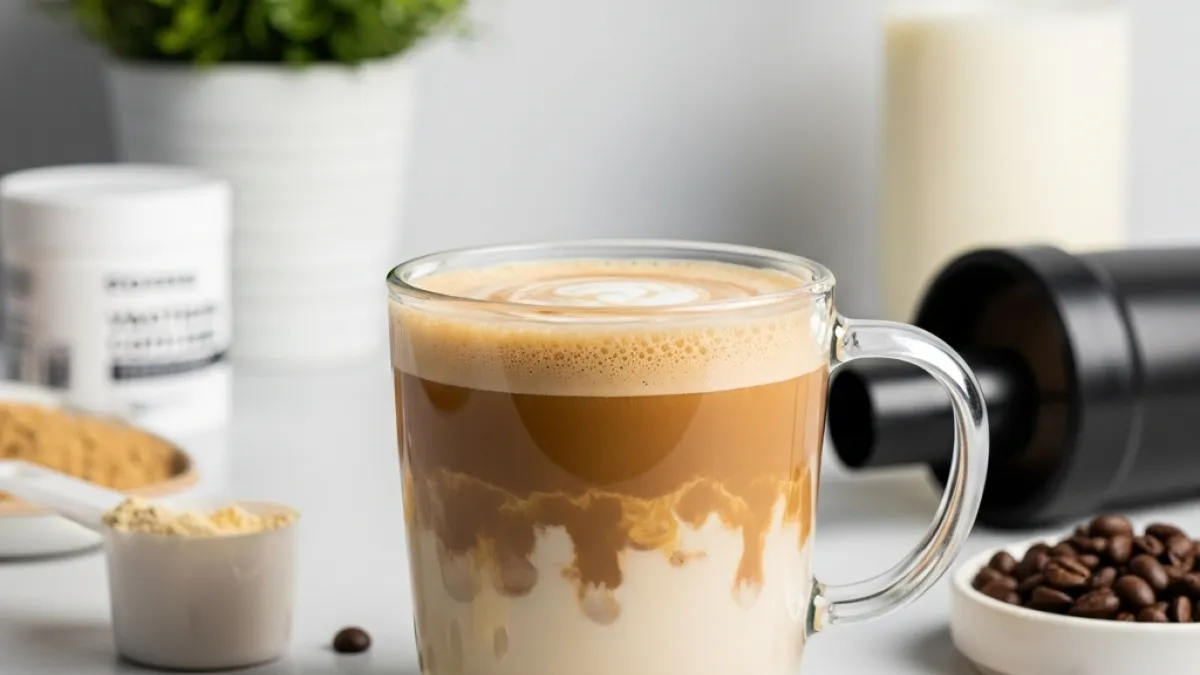
Step-by-Step Stacy Sims Protein Coffee Recipe
Achieving a balanced blend that retains pristine coffee flavor without unwanted grit relies on exact ratios and proper sequence. Here is the precise method to craft this nutrient-dense morning brew at home using pour-over or immersion coffee methods like the Hario V60 or French press.
Ingredients & Equipment Needed:
- 18 g freshly roasted whole bean coffee (medium-dark roast recommended)
- 280 ml filtered water heated to 93°C (200°F)
- 1 scoop (20–25 g protein) clean whey isolate or multi-source plant protein (such as Momentous)
- 30 ml unsweetened almond milk, oat milk, or cool filtered water (for slurry temper)
- A handheld milk frother or high-speed blender
- Burr grinder (such as a Baratza Encore or Fellow Ode)
Step-by-Step Instructions:
- Grind and Brew: Grind 18 grams of coffee to a medium particle size (around 500–700 microns). Brew using a pour-over dripper with 280 ml of water to achieve a target total dissolved solids (TDS) yield of around 1.35%. This produces a robust coffee base capable of carrying the protein's body.
- Prepare the Protein Slurry: In a separate tall glass, mix one scoop of protein powder with 30 ml of cold or room-temperature plant milk. Whisk thoroughly with your handheld frother until a smooth, thick paste forms. Pre-mixing prevents clumps from floating to the surface.
- Temper and Combine: Let your freshly brewed coffee sit in the server for 90 seconds until the liquid drops to approximately 65°C (149°F). Slowly pour the warm coffee into your protein slurry while running the electric frother on low power.
- Emulsify: Blend continuously for 15 to 20 seconds. You will see a stable, velvety micro-foam form on top, closely mimicking a latte made with micro-steamed milk. Serve immediately in a pre-warmed ceramic mug.
Barista's tip: Never throw whey protein into an active blender filled with piping hot liquid without venting the lid. Thermal pressure builds up instantly, creating a hazardous mess. More importantly, mixing above 70°C degrades delicate taste notes and breaks the fat-water emulsion. Always pre-mix your powder into a cold liquid slurry before introducing hot pour-over coffee!
Top Pick for Smooth Proffee: Dymatize ISO100 Whey Isolate

Protein Powder Selection and Temperature Compatibility
Not all protein powders act the same when combined with hot, acidic coffee liquid. Understanding the physical properties of whey isolate versus plant-based proteins helps you get a smooth texture every time.
| Protein Type | Max Temp Before Clumping | Mixing Difficulty | Best Coffee Pairing | Key Nutritional Benefit |
|---|---|---|---|---|
| Whey Isolate (e.g., Momentous) | 65°C (149°F) | Low (with frother) | Brazilian Medium Roast | Fast absorption, rich leucine profile |
| Pea & Rice Blend | 75°C (167°F) | Moderate (requires slurry) | Sumatran Dark Roast | Dairy-free, easy on digestion |
| Egg White Protein | 55°C (131°F) | High (foams excessively) | cold brew concentrate | Lactose-free, high bioavailability |
| Hydrolyzed Collagen | 85°C (185°F) | Very Low (stirs easily) | Any Brew Method | Joint and connective tissue support |
Dr. Stacy Sims frequently highlights high-grade formulations like Momentous Whey Isolate because it undergoes cold-process cross-flow microfiltration. This manufacturing process leaves the protein structure intact while eliminating lactose and fats, making it mix quickly into pour-over coffee. When utilizing plant-based options, ensure the product features a complete amino acid profile featuring pea and rice protein, as single-source plant proteins often produce an earthy, thick sludge when mixed with coffee.
If you prefer an iced version, brewing a concentrated cold brew or using an AeroPress concentrate (using 20 grams of coffee to 100 grams of water) works exceptionally well. Pouring concentrated coffee over ice alongside your pre-blended protein shake prevents thermal denaturing entirely while preserving sweet, chocolatey flavor profiles.
Optimizing Timing for Pre-Workout and Recovery
Integrating protein coffee into your daily training schedule depends heavily on your metabolic goals and session intensity. Consuming a protein coffee 30 to 45 minutes before a morning workout supplies circulating amino acids, preventing the liver and muscles from stripping native muscle tissue for gluconeogenesis during intense cardiovascular training. For those learning how to dial in home brewing for performance, timing caffeine intake alongside essential amino acids improves endurance without inducing energy crashes.
When used as a post-workout recovery tool, consuming your protein coffee within 30 minutes of finishing exercise initiates muscle repair mechanisms. The caffeine works synergistically with carbohydrates and amino acids, hastening glycogen replenishment in muscle cells. If you find standard espresso-based drinks too heavy right after training, a pour-over light-to-medium roast mixed with an unflavored or vanilla isolate provides an easily digestible recovery drink.
For those looking to expand their beverage horizons while maintaining optimal extraction standards, exploring varied prep routines like manual brewing methods allows you to tailor both strength and volume to match your daily calorie and protein targets.
Best Practices for Home Baristas and Athletes
To consistently produce café-quality proffee at home without sacrificing coffee extraction standards or nutritional integrity, follow these core guidelines:
End Clumpy Protein Coffee: VOLTRX Electric Vortex Shaker

- Use Freshly Roasted Beans: Stick to beans roasted within 2 to 4 weeks. Stale beans lack natural oils, yielding a flat taste that cannot balance the strong flavor of protein powders.
- Grind Fresh per Brew: Utilize conical or flat burr grinders like a Baratza or Fellow. Avoid blade grinders, which produce erratic particle sizes that lead to uneven extraction and bitter, astringent flavors.
- Control Water Quality: Brew with filtered water containing 70–120 ppm total hardness. Hard tap water extracts harsh, chalky compounds that clash with protein sweeteners.
- Measure by Mass, Not Volume: Use a digital scale to measure both coffee beans (in grams) and water. A strict 1:15 to 1:16 brew ratio yields a clean, sweet cup that complements both whey and plant proteins.
If your daily routine calls for an efficient morning workflow with high nutritional value, invest in a reliable handheld electric frother and a quality burr grinder. Start by brewing an 18-gram dose of a balanced medium roast coffee, cool the liquid slightly to 65°C, and froth in your preferred high-quality protein powder. This daily habit bridges the gap between third-wave specialty coffee and high-performance sports nutrition.
Frequently Asked Questions
Can I add protein powder directly into a hot coffee pot?
No, adding protein powder directly into boiling hot coffee in a pot or carafe causes the proteins to clump and denature instantly, leaving a chalky, unpleasant texture. Always allow your coffee to drop below 65°C (149°F) and pre-mix the powder with a small amount of cool liquid before combining.
Does caffeine degrade or destroy the protein in my drink?
Caffeine does not destroy or degrade the amino acids in protein powder. Your body absorbs and utilizes the protein for muscle protein synthesis just as effectively when combined with caffeine as it would on its own.
What type of protein powder blends best with hot coffee?
Cold-processed whey protein isolate blends the smoothiest into warm coffee liquids with minimal foaming. High-quality multi-source plant proteins (pea and rice) also work well if mixed into a cool milk slurry prior to adding warm coffee.
Can I make Stacy Sims protein coffee as an iced beverage?
Yes, iced protein coffee is very easy to prepare. Shake your protein powder with cold milk or water in a shaker bottle first, then pour fresh cold brew concentrate or espresso over ice into the mixture for a refreshing post-workout drink.
Sources
- Wikipedia: Coffee Extraction Standards and Chemistry
- Specialty Coffee Association (SCA) Protocols & Standards
- Dr. Stacy Sims, Ph.D. - Exercise Physiology & Nutrition Research Principles