Disclosure: As an Amazon Associate, we earn from qualifying purchases.
A coffee blend is a strategic combination of two or more coffee beans sourced from different origins, regions, or species (such as Arabica and Robusta) mixed together to create a balanced, consistent, and complex flavor profile. Unlike single-origin coffees—which showcase the distinct, unblended terroir of one specific farm or region—blends are engineered by roasters to achieve target sensory notes, maintain year-round taste consistency despite seasonal crop variations, and balance elements like body, acidity, sweetness, and aroma.
Why Roasters Create Coffee Blends
Roasting single-origin beans highlights specific regional characteristics, such as the bright, floral acidity of an Ethiopian Yirgacheffe or the earthy, heavy body of a Sumatran Mandheling. However, individual origins can sometimes feel unbalanced when brewed on their own or extracted under pressure during espresso preparation. Specialty roasters create blends for three main practical reasons:
- Flavor Balance: Combining an origin high in acidity (e.g., Kenya) with one that provides deep chocolate notes and thick body (e.g., Brazil) yields a well-rounded cup where no single characteristic overwhelms the palate.
- Consistency: Coffee is a seasonal agricultural product. When a harvest end or a crop's profile slightly shifts, roasters adjust the percentage of each bean in a blend to maintain a signature flavor profile that consumers expect year-round.
- Espresso Performance: High pressure extracts acidity aggressively. Blending helps soften harsh notes and ensures a rich, stable crema by incorporating origins known for high lipids and heavy body.
Pre-Roast vs. Post-Roast Blending
There are two primary technical methods roasters use to combine coffee origins: pre-roast blending (mixing green coffee before roasting) and post-roast blending (roasting origins separately and mixing roasted beans afterward).
| Feature | Pre-Roast Blending (Melange) | Post-Roast Blending |
|---|---|---|
| Definition | Green coffee beans are mixed together and roasted in a single batch. | Each origin is roasted individually to its ideal profile, then blended. |
| Efficiency | High; saves time and energy by running one roasting cycle. | Lower; requires multiple roast cycles and accurate inventory tracking. |
| Flavor Precision | Moderate; beans of different densities may roast unevenly. | High; allows maximum optimization of density, moisture, and caramelization for each origin. |
| Best Used For | Beans with similar bean density, moisture content, and screen size. | Combining radically different beans (e.g., high-altitude Arabica with Robusta). |
The Gold Standard Commercial Blend: Lavazza Super Crema

Anatomy of a Classic Espresso Blend
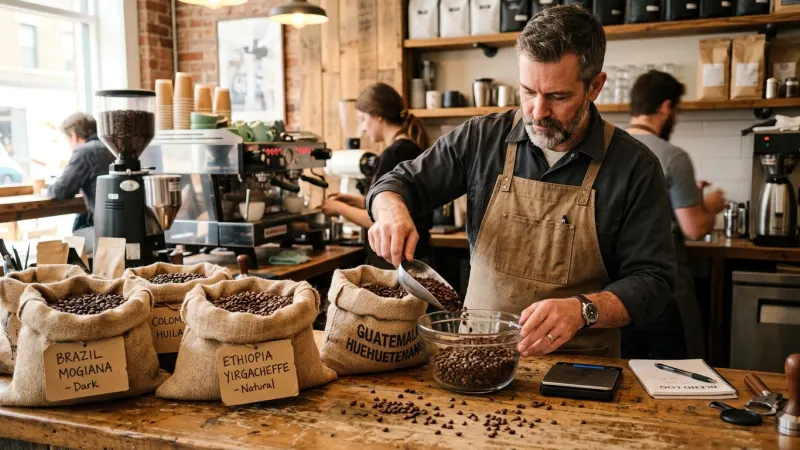
To understand how roasters build balance, consider the structural roles beans play in a classic espresso recipe. A typical 3-bean blend ratio often looks like this:
- The Base (50%–60%): Usually a dry-processed or pulped-natural Brazilian or Colombian coffee. It provides high natural sweetness, body, low acidity, and dominant notes of milk chocolate and toasted nuts.
- The Accent / Brightness (20%–30%): A washed Central American or East African coffee (such as Guatemala or Ethiopia). This adds clean citric acidity, floral aromas, or juicy fruit notes that cut through milk beverages like lattes and cappuccinos.
- The Body & Crema Enhancement (10%–20%): A high-grade washed Indonesian Arabica (like Sumatra) for deep earthy complexity, or a premium specialty-grade Robusta (such as India Royal Robusta) to boost caffeine, enhance tactile mouthfeel, and produce a dense, long-lasting crema layer.
For home brewing enthusiasts exploring advanced extraction techniques, understanding these component ratios makes dialling in shot parameters much more intuitive. You can learn more about fine-tuning your extraction variables in our comprehensive guide on mastering espresso extraction at home.
Single Origin vs. Coffee Blend: Which Should You Choose?
Precision Mixing Ratios: GreaterGoods Digital Coffee Scale

Neither single origins nor blends are inherently superior; the choice depends entirely on your preferred brewing method and taste preference.
Single Origin Coffees
- Pros: Unique, adventurous flavor profiles; clear traceability to individual farms; highlights natural terroir and processing methods.
- Cons: Highly seasonal; inconsistent availability; can taste overly sharp or thin when pulled as espresso without precise parameters.
Coffee Blends
- Pros: Smooth, harmonized flavor; forgiving across various brew methods; dependable consistency throughout the year; superior performance in milk-based drinks.
- Cons: Less distinct origin characteristics; lower traceability if component sources are not transparently listed by the roaster.
Frequently Asked Questions
Are coffee blends lower quality than single-origin coffees?
Preserve Multi-Origin Aromatics: Fellow Atmos Vacuum Canister

No. While commodity coffee manufacturers historical used blends to hide low-grade beans, specialty coffee roasters use high-scoring single-origin coffees in their blends to craft complex, deliberate flavor combinations. Quality depends on the grade of green coffee used, not whether it is blended.
Can I mix different coffees at home to create my own blend?
Yes. Combining remaining bags of whole bean coffee is an excellent post-roast blending experiment. Try combining a heavy, chocolate-forward coffee with a fruity or bright coffee in a 2:1 ratio to observe how flavor notes interact.
Sources
- Wikipedia: Coffee Roasting
- specialty coffee association (SCA) Standards
Looking for the Right Brewing Gear?
Check out our verified Top Coffee Brewing Essentials on Amazon.
As an Amazon Associate, we earn from qualifying purchases.