Coffee bean blending is the craft of combining two or more single-origin coffee beans to engineer a balanced flavor profile that no single origin can produce on its own. By pairing beans with complementary body, acidity, sweetness, and aroma, home baristas can optimize their daily coffee brew and achieve balanced extraction coffee parameters across espresso, pour-over, and drip methods. The standard framework for building a signature blend relies on precise bean ratios—typically a base bean comprising 50% to 70% of the mix, complemented by accent origins at 20% to 30%, and top-note aromatics filling the remaining 10% to 20%.
Why Blend Coffee Beans? The Science of Flavor Balance
While single-origin coffees showcase the distinctive terroir of a specific region, farm, or micro-lot, they can occasionally lack roundness. A single-origin bean might feature sparkling acidity but lack body, or offer deep chocolate notes while missing bright aromatic highlights. Blending solves this balance challenge through three main physical and chemical mechanisms:
- Flavor Synergy: Combining a heavy-bodied, low-acidity Brazilian bean with a bright, floral Ethiopian Yirgacheffe creates a harmonious cup where chocolate depth meets vibrant citrus top notes.
- Extraction Consistency: Single-origin beans fluctuate across harvests and seasons. Crafting a blend allows roasters and home baristas to maintain a uniform taste profile year-round.
- Optimized Extraction Coffee Profiles: Different bean origins possess different cellular densities and moisture contents. Strategic blending helps smooth out channel-prone extractions during high-pressure espresso brewing.
Pre-Roast Blending vs. Post-Roast Blending
One of the foundational decisions in coffee bean blending is deciding when to combine your beans. Both methods yield distinct results in the cup and require different skill sets.
1. Pre-Roast Blending (Green Blending)
Pre-roast blending involves mixing raw green coffee beans together before loading them into the roaster. The primary advantage is workflow efficiency: all beans are roasted in a single batch, allowing the flavors to fuse together during the Maillard reaction and caramelization phases.
However, pre-roast blending presents a major technical challenge: green coffee beans vary significantly in size, density, moisture content, and altitude of origin. For example, dense high-altitude Ethiopian beans roast much slower than soft, low-altitude Brazilian beans. Roasting them together can result in an uneven batch where some beans are under-developed and grassy while others are scorched.
2. Post-Roast Blending (Melange Blending)
Post-roast blending involves roasting each single-origin coffee bean separately to its ideal roast profile before mixing them together. This method gives you total control over the roast degree of each component, ensuring every bean achieves maximum flavor expression.
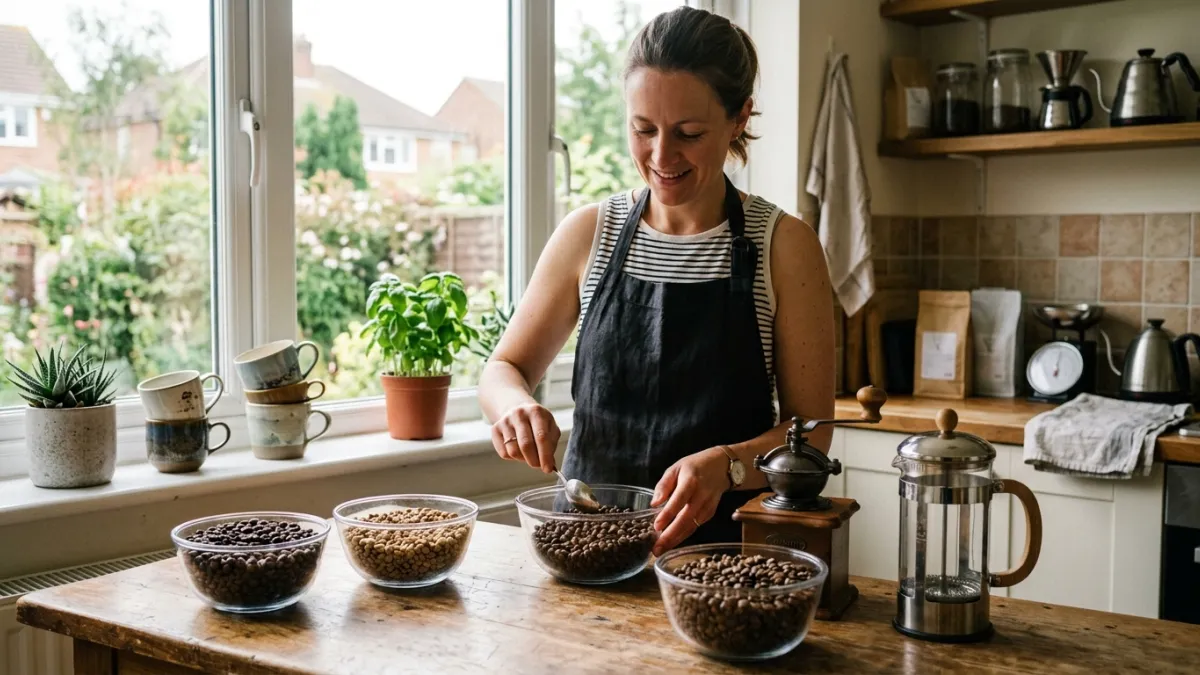
Post-roast blending also enables you to create "melange" blends—combining light-roasted beans (for acidity and fruity notes) with dark-roasted beans (for smokiness and thick crema). This is the recommended approach for home baristas and readers at Coffee Brew Hub who purchase pre-roasted single-origin bags to blend at home.
Building Your Blend: The 3-Part Ratio Formula
Constructing a professional-quality coffee blend requires a structured blueprint rather than random mixing. Professional roasters rely on a three-tier architecture based on bean percentage by weight:
- The Base Bean (50% – 70%): The backbone of your blend. Base beans provide body, sweetness, and balance without overpowering the cup. Classic base choices include medium-roasted Brazilian Santos, Colombian Supremo, or Guatemalan Antigua.
- The Accent Bean (20% – 30%): Adds mid-palate complexity, body, or acidity. Examples include Indonesian Sumatra for earthiness and heavy syrupiness, or Costa Rican beans for crisp malic acidity and stone fruit notes.
- The Top-Note / Aromatic Bean (10% – 20%): High-impact beans that deliver floral, fruity, or spicy aromas. Ethiopian Yirgacheffe, Kenya AA, or Panamanian Geisha are perfect choices. Because these flavors are intense, keeping them at 10% to 15% prevents them from dominating the brew coffee experience.
Classic Coffee Blend Recipes to Try at Home
Here are three time-tested blending formulas you can replicate using a digital kitchen scale and fresh single-origin roasted beans:
| Blend Name | Composition Ratios | Flavor Profile | Best Brewing Method |
|---|---|---|---|
| Historical Mocha-Java | 50% Yemen Mocha (or Ethiopian) 50% Indonesian Java |
Deep dark chocolate, wild berries, heavy syrupy body, earthy spice | French Press, Pour-Over |
| Classic Espresso Blend | 60% Brazil Natural (Medium Roast) 30% Colombia Washed (Medium-Dark) 10% India Robusta (Dark) |
Thick crema, toasted hazelnut, dark cocoa, low acidity, intense body | Espresso Machine, Moka Pot |
| Bright Breakfast Blend | 50% Colombia Washed (Light-Medium) 30% Guatemala Huehuetenango (Light) 20% Ethiopia Sidama (Light) |
Milk chocolate, orange zest, floral aroma, crisp, clean finish | Drip Coffee Maker, Chemex |
Pros and Cons of Blending Coffee Beans
Pros
- Customization: Tailor your cup precisely to your personal taste preferences.
- Consistency: Smooths out seasonal variations in individual single-origin harvests.
- Crema Enhancement: Adding small amounts of high-quality Robusta or dense natural Process Arabica dramatically improves espresso crema structure.
Cons
- Masking Terroir: Blending obscure distinct single-origin characteristics and subtle micro-lot nuances.
- Grind Size Variability: Mixing beans with vastly different roast levels can lead to uneven particle sizes during grinding, impacting overall extraction coffee balance.
Step-by-Step Guide to Blending at Home
- Weigh Your Portions: Always measure coffee beans by mass (grams) using a digital scale rather than by volume (scoops), as dark roasts are less dense than light roasts.
- Test Small Batches (Cupping): Start by brewing 100g test batches before mixing entire bags. Brew each origin individually, then sample blended spoonfuls in various ratios to evaluate flavor balance.
- Mix Thoroughly: Stir or shake the roasted beans in an airtight glass container to distribute the origins evenly before grinding.
- Adjust Your Grind and Extraction Coffee Parameters: When brewing blended coffee, monitor your flow rate. If mixing dark and light roasts, set your grinder to a medium baseline and adjust based on taste—if your brew coffee tastes sour, grind finer; if bitter, grind coarser.
Frequently Asked Questions
Can I blend pre-ground coffee beans?
While possible, blending pre-ground coffee is not recommended. Pre-ground beans oxidize rapidly, losing volatile aromatic compounds within minutes. Additionally, if the grounds have different particle sizes, they will separate in the bag due to settling, resulting in uneven extraction coffee results.
Should I add Robusta to my espresso blend?
Adding 10% to 20% high-grade Robusta to an espresso blend increases body, boosts caffeine content, and produces a thick, long-lasting crema layer. However, keep Robusta below 25% to avoid rubbery or overly bitter off-flavors.
How long should a freshly blended coffee rest?
After post-roast blending, let the mixed beans rest together in an airtight container for 24 to 48 hours. This allows degassing carbon dioxide to mingle, helping the flavor profiles integrate before your first coffee brew.