
Disclosure: As an Amazon Associate, we earn from qualifying purchases.
Coffee originated in the high-altitude forests of Ethiopia around the 9th century before traveling across the Arabian Peninsula, Europe, and the Americas to become a $400 billion global industry. Today, over 2.25 billion cups of coffee are consumed daily worldwide, with Coffea Arabica and Coffea canephora (Robusta) forming the backbone of modern commercial production. From ancient Sufi monasteries using coffee for night prayers to high-tech espresso bars, coffee's journey shaped world trade, modern finance, and social revolutions.
The Discovery: Kaldi and the Dancing Goats of Ethiopia
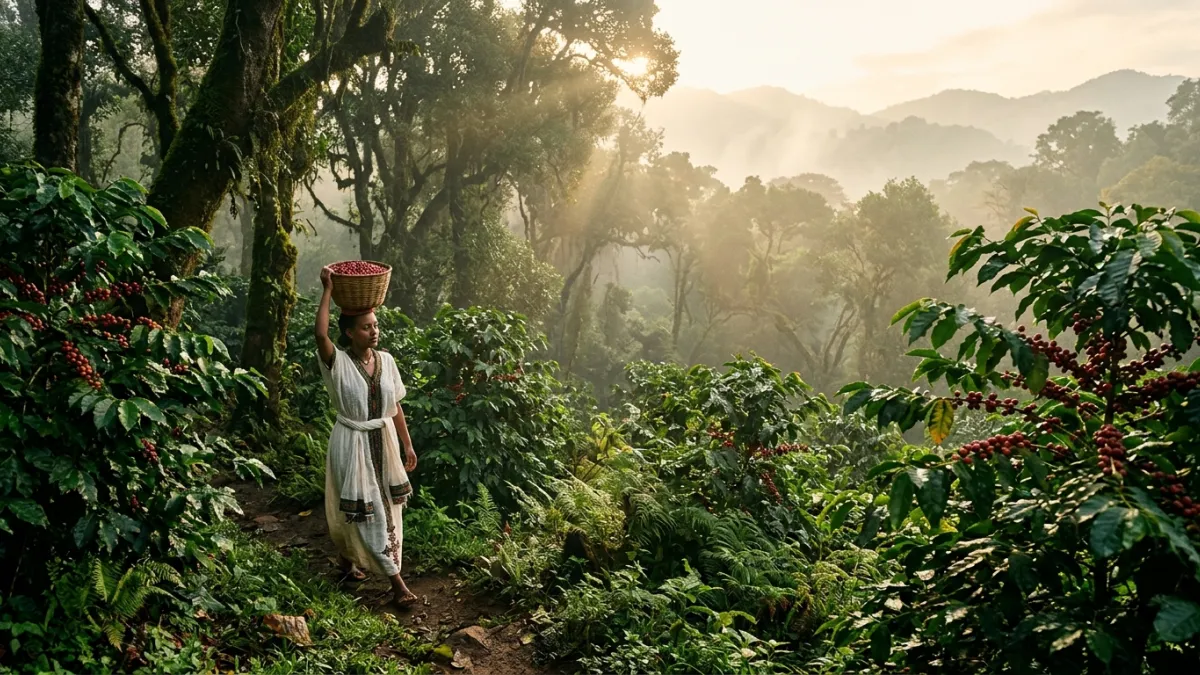
The most enduring origin story of coffee centers on Kaldi, an Ethiopian goat herder living around 850 CE in the ancient kingdom of Kaffa. According to historical legend, Kaldi noticed his herd exhibiting unusual energy—jumping and bleating excitedly—after consuming bright red berries from a wild evergreen bush. Intrigued, Kaldi ate the fruit himself and experienced a dramatic surge in alertness.
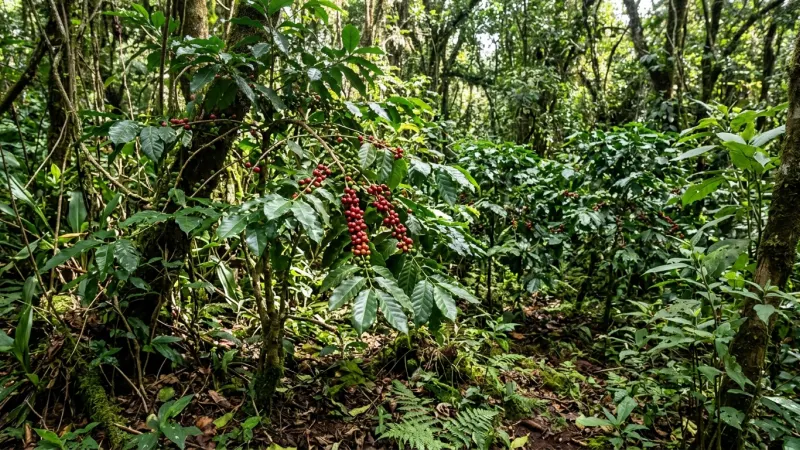
Kaldi brought the berries to a local Islamic monk, who initially condemned them as devilish and tossed them into a fire. As the seeds roasted in the coals, they released an alluring, rich aroma. The monks quickly raked the roasted seeds from the embers, crushed them, and dissolved them in hot water to create the world's first brewed beverage. The community noted that consuming the broth allowed them to stay awake during prolonged night prayer services. While this narrative blends folklore with history, botanical research confirms that Coffea arabica is native to southwestern Ethiopia, where indigenous Oromo people originally consumed the cherries crushed and mixed with animal fat for energy on long journeys.
The Arabian Peninsula: Coffee's First Golden Age
By the 15th century, coffee plants had crossed the Red Sea into Yemen, where formal cultivation began in the mountainous region of Mokha. Arabic scholars termed the beverage qahwah (which originally referred to a type of wine), reflecting its potent energizing properties. Yemen became the central hub for the global coffee trade, holding a strict monopoly on production by sterilizing exported beans—boiling or parching them—to prevent germination outside their territory.
The Middle East developed the world's first coffee infrastructure, giving rise to public establishments called qahveh khaneh. These coffeehouses emerged across cities like Cairo, Istanbul, and Mecca. Far from being simple drink stalls, they transformed into vital centers of civic life where citizens gathered to listen to music, play chess, discuss politics, and debate current affairs, earning the nickname "Schools of the Wise."
The European Invasion and the Age of Enlightenment
Taste the Genetic Origin: Volcanica Ethiopian Yirgacheffe

Sufi traders, Venetian merchants, and Dutch explorers broke the Arabian monopoly in the 17th century. Smuggled raw fertile seeds were transported to India by the saint Baba Budan around 1670, while Dutch traders successfully cultivated coffee trees in Java, Indonesia, establishing the first European-controlled plantations in Asia.
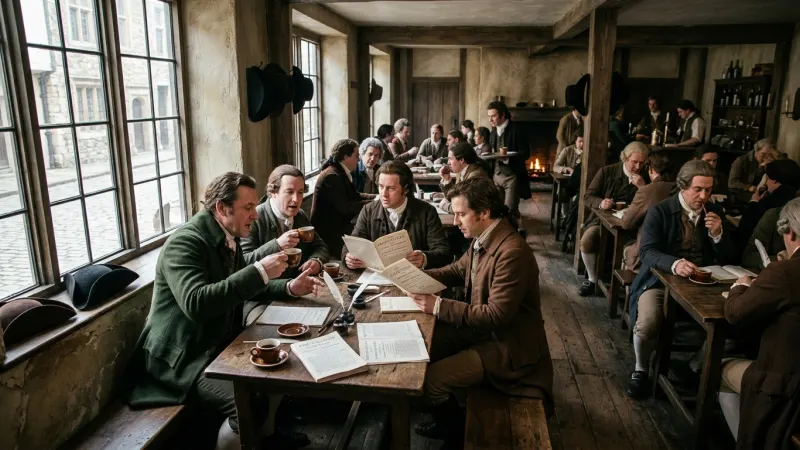
When coffee reached Europe around 1600, local clergy initially dubbed it the "bitter invention of Satan." However, Pope Clement VIII tried the beverage, famously enjoyed it, and declared that coffee should be baptized to neutralize its perceived demonic origins. European coffeehouses proliferated rapidly thereafter:
- London (1652): Known as "Penny Universities," where a customer paid one penny for admission and a cup of coffee to access political debates and news. Lloyd's of London, the world's premier insurance market, began inside Edward Lloyd's coffeehouse.
- Paris (1686): Café Procope opened, serving as an intellectual hub for Enlightenment thinkers like Voltaire, Rousseau, and Benjamin Franklin.
- Vienna (1683): Following the Battle of Vienna, military officer Jerzy Franciszek Kulczycki opened the first Viennese coffee house using sacks of coffee beans left behind by departing Ottoman troops, pioneering the practice of filtering grounds and adding milk and sweetener.
Historical Era Comparison
| Historical Era | Primary Region | Key Preparation Method | Primary Social Role |
|---|---|---|---|
| Ancient (Pre-15th C.) | Ethiopia | Chewed raw with fat; decoctions of dried husk (Qisher) | Nutritional supplement, tribal sustenance |
| Islamic Golden Age (15th–16th C.) | Yemen / Ottoman Empire | Finely pulverized, boiled in a Cezve/Ibriq | Religious vigil aid, political gathering in Qahveh Khaneh |
| Colonial / Enlightenment (17th–18th C.) | Western Europe & Colonies | Boiled steep-and-settle; early cloth bag filters | Intellectual debate, merchant trade networks |
| Industrial Era (19th–20th C.) | Global (Americas dominance) | Percolators, early espresso pressure systems, instant extraction | Fuel for factory shifts, workplace coffee breaks |
The Americas: Colonial Plantations and Modern Production
In 1720, French naval officer Gabriel de Clieu navigated trans-Atlantic hazards—including pirates, storms, and rationing his own drinking water—to transport a single healthy coffee seedling to the Caribbean island of Martinique. Within 50 years, that single plant generated over 18 million coffee trees, spreading across Central and South America.
Concurrently, the British East India Company's heavy taxation on tea led to the Boston Tea Party of 1773 in North America. Drinking coffee became a patriotic duty among American colonists, permanently shifting US beverage preferences from tea to coffee. By 1850, Brazil emerged as the world's dominant coffee producer, leveraging its vast high-altitude land to supply over 30% of global demand—a top position it maintains today.
Traditional Stovetop Heritage: Demmex Copper Cezve Ibrik

The Evolution of Coffee Waves
In the 20th and 21st centuries, coffee consumption evolved through distinct cultural movements known as "waves":
1. First Wave (1800s–1960s): Mass Accessibility
Focused on convenient, affordable mass consumption. Brands like Folgers, Maxwell House, and Nescafe commercialized pre-ground vacuum-sealed cans and instant coffee, making coffee a daily staple in households worldwide.
2. Second Wave (1970s–1990s): The Espresso Revolution
Pioneered by companies like Peet's Coffee and popularized globally by Starbucks. This era introduced European-style espresso beverages (lattees, cappuccinos), flavored syrups, dark roasts, and the modern cafe experience as a "third place" between home and work.
3. Third Wave (2000s–Present): Specialty Coffee
Treats coffee as an artisanal product, similar to fine wine. Focuses on single-origin sourcing, direct trade, light-to-medium roasting profiles, precise water chemistry, and manual pour-over extraction methods (such as the V60 or Chemex) to highlight natural botanical flavors.
The 20th Century Italian Revolution: Bialetti Moka Express

Frequently Asked Questions
Was Kaldi the goat herder a real historical person?
There is no written documentation of Kaldi prior to 1671, when it was recorded by Maronite scholar Antoine Faustus Nairon in his treatise De Saluberrima Potione Cahue. While the story is widely considered allegorical folklore, it accurately reflects Ethiopia's historical standing as the native botanical birthplace of the coffee plant.
How did coffee transition from a forbidden drink to a global staple?
Coffee faced religious and political bans in Mecca (1511), Cairo (1532), and Constantinople (1633) over fears that coffeehouses fostered political dissent. However, its economic value, high consumer demand, and energizing properties consistently led rulers to repeal prohibitions and instead tax its trade.
When was espresso invented?
Espresso was developed in Milan, Italy, at the turn of the 20th century. Luigi Bezzera patented the first steam-driven fast coffee machine in 1901 to reduce employee coffee break times. Achille Gaggia later refined the technology in 1947 by inventing the lever-piston mechanism, creating the modern high-pressure extraction process and signature layer of golden crema.
Sources
- Wikipedia - History of Coffee
- National Coffee Association USA
- specialty coffee association
Looking for the Right Brewing Gear?
Check out our verified Top Coffee Brewing Essentials on Amazon.
As an Amazon Associate, we earn from qualifying purchases.