Quick answer: specialty coffee refers to green coffee beans that score 80 points or higher on a 100-point scale evaluated by certified Q Graders according to Specialty Coffee Association (SCA) standards. It signifies exceptional flavor clarity, zero primary defects, complete supply chain traceability, and meticulous care across growing, processing, roasting, and brewing.
The Mechanics of Coffee Grading and the SCA Scale
To understand what separates a bag of commercial supermarket coffee from a bag of specialty beans, you have to look at how green coffee is evaluated before it ever touches a roaster. The Specialty Coffee Association (SCA) established a standardized scoring system ranging from 0 to 100. Certified professionals known as Q Graders—the sommelier equivalents of the coffee world—evaluate green and cupped coffee using rigorous physical and sensory protocols. Green beans are meticulously inspected for physical defects, while roasted samples are cupped to assess fragrance, aroma, flavor, aftertaste, acidity, body, balance, uniformity, clean cup, and sweetness.
Coffee that scores below 80 points is classified as commodity or commercial grade. This represents the vast majority of the global market, destined for instant coffee, pre-ground supermarket cans, and mass-market chains where consistency through dark roasting takes priority over intrinsic flavor. Coffee scoring between 80.0 and 84.99 is categorized as Very Good specialty coffee, offering clean profiles and clear origin characteristics. Beans scoring 85.0 to 89.99 are classified as Excellent, displaying remarkable complexity and vibrant acidity. The rare tier of 90.0 to 100.0 represents Outstanding coffees, often prized micro-lots sold at high-end auctions.
Physical inspection of the green coffee beans is equally strict during grading. A standard 350-gram sample of green specialty coffee must contain exactly zero Category 1 (primary) defects, such as full black beans, full sour beans, or dried cherries, which severely spoil the taste. It is allowed a maximum of five Category 2 (secondary) defects, such as broken beans or insect damage, per sample. In contrast, commercial grade coffee often contains numerous defects that result in astringent, rubbery, or unpleasantly bitter notes in the cup.
| SCA Score Range | Grade Category | Flavor Profile Characteristics | Defect Allowance (350g Sample) |
|---|---|---|---|
| 90.0 – 100.0 | Outstanding (Specialty) | Extremely distinct, delicate florals, complex acidity, exquisite sweetness | 0 Primary / Max 3 Secondary |
| 85.0 – 89.99 | Excellent (Specialty) | Vibrant acidity, pronounced origin characteristics, rich fruit or cocoa notes | 0 Primary / Max 5 Secondary |
| 80.0 – 84.99 | Very Good (Specialty) | Clean cup, balanced sweetness, pleasant body, free of off-flavors | 0 Primary / Max 5 Secondary |
| Below 80.0 | Non-Specialty (Commodity) | Flat, woody, astringent, inconsistent, dominated by heavy roast notes | Multiple Primary & Secondary permitted |
Sourcing, Traceability, and Ethical Supply Chains
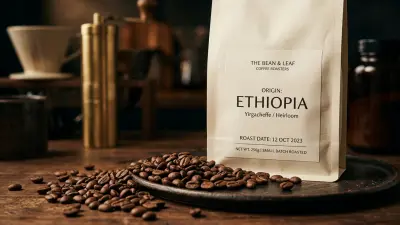
A fundamental pillar of specialty coffee is complete supply chain transparency. Unlike commodity coffee, which is pooled together from hundreds of undisclosed farms and traded on the C-Market stock exchange, specialty coffee tells a distinct story. When you pick up a true specialty bag, the label provides actionable data: the exact country, region, estate, or cooperative; the altitude (often between 1,200 and 2,200 meters above sea level); the botanical cultivar (such as Bourbon, Typica, SL28, or Gesha); and the processing method used to remove the fruit from the seed.
Processing plays a massive role in shaping the final flavor profile before roasting. In the washed (or wet) process, the fruit pulping happens immediately, leading to bright, crisp acidity and high cup clarity that highlights the coffee's terroir. The natural (or dry) process allows the seed to dry inside the full cherry, fermenting slightly to yield intense berry sweetness, heavy body, and wine-like notes. Honey processing sits in between, leaving varying amounts of sweet mucilage on the bean during drying to balance sweetness and acidity. Knowing these details helps home baristas select coffee beans that match their personal taste preferences.
Furthermore, specialty coffee relies heavily on Direct Trade models rather than traditional commercial procurement. Exporters and specialty roasters build multi-year relationships with farmers, paying prices significantly higher than the Fairtrade minimums or C-market baseline rates. This premium compensates the grower for the labor-intensive hand-harvesting of only ripe, red cherries and incentivizes sustainable agricultural practices. This financial sustainability allows farmers to reinvest in soil health, higher-elevation land management, and experimental processing facilities.
Barista's tip: When dialing in a light-to-medium roast natural process specialty coffee on an espresso setup, channel suppression is critical. Natural process beans grind slightly softer and create more fines, which can lead to uneven extraction and bitter channeling if puck preparation is rushed. Always use a fine needle WDT (Weiss Distribution Technique) tool to de-clump the grounds evenly in your 18-gram basket, aiming for a 1:2.5 brew ratio (18g in to 45g out) over 28 to 32 seconds at 93°C (200°F) to highlight the vibrant berry notes without harshness.
From Roaster to Extraction: Preserving Specialty Potential
Growing and harvesting high-scoring green coffee is only half the battle; roasting and brewing must preserve that potential. Specialty roasters approach their work as both a science and an art, carefully profiling each batch using software to track rate-of-rise (RoR) during roasting. Rather than scorching beans to mask imperfections behind dark oil, specialty roasters target lighter to medium profiles that highlight the inherent sugars, acids, and aromatics developed in the soil. Roasters print a clear "Roast Date" on every bag, as specialty coffee reaches its peak flavor clarity between 7 and 21 days post-roast once off-gassing stabilizes.
When it comes to home brewing, extraction physics dictates whether you actually taste the high-scoring qualities of the bean. Using blade grinders destroys fine specialty beans by producing inconsistent particle sizes, causing simultaneous sour under-extraction and bitter over-extraction. High-grade brewing requires precise, uniform particle sizes produced by conical or flat burr grinders from reputable brands like Baratza, Fellow, or Hario. Controlled particle size allows water to extract desirable solubles evenly across the bed.
To achieve the standard 18% to 22% extraction yield and 1.25% to 1.45% total dissolved solids (TDS) expected in filter coffee, baristas rely on proven recipe parameters. Using clean water filtered to SCA standards (free of chlorine, with 75-150 ppm total hardness) heated to 90–96°C (195–205°F) is non-negotiable. Whether you are using a pour-over cone like the Hario V60, an immersion brewer like the French press, or a hybrid device like the AeroPress, adherence to exact ratios and brew times guarantees clean, vibrant flavors in your cup.
- Standard Filter Brew Ratio: 1:15 to 1:17 (e.g., 20 grams of medium-coarse ground coffee to 320–340 grams of water).
- Bloom Phase: Pour 3x the coffee weight in water (e.g., 60g) and wait 30 to 45 seconds to release trapped carbon dioxide gas.
- Target Brew Time (Pour-Over): 2 minutes 30 seconds to 3 minutes 30 seconds total contact time.
- Target Brew Time (French Press): 4 minutes total steep time before gentle plunging.
Why Specialty Coffee Matters for the Home Barista
Transitioning from commercial coffee to specialty coffee permanently elevates your daily drinking experience. Because specialty coffee isn't burnt to a dark, uniform crisp, you open your palate to a spectrum of natural flavor profiles. A washed Ethiopian Yirgacheffe offers delicate jasmine and bergamot notes, a Colombian Pink Bourbon can taste like pink lemonade and cane sugar, and a Guatemalan Huehuetenango delivers rich milk chocolate and toasted hazelnut undertones. None of these flavors come from artificial additives; they stem entirely from soil, elevation, genetics, and precise processing.
Beyond taste, investing in specialty coffee connects you to a conscious global community. When you purchase beans with high traceability, your money directly rewards agricultural workers, farm managers, and roasters who prioritize quality over quick output. It turns a quick morning caffeine fix into a deliberate, rewarding ritual centered around craft, science, and sensory appreciation.
Equipping yourself with a decent burr grinder, a digital scale measuring to 0.1 grams, and fresh beans allows you to replicate café-quality pour-overs and espresso right in your own kitchen. Taking control of variables like grind size in microns, water temperature, and pour speed allows you to unlock the full potential of every origin you buy, transforming your home setup into a personal laboratory for taste discovery.
If you are ready to explore the world of specialty coffee at home, start by purchasing a whole-bean, single-origin bag from a local roaster that clearly lists the roast date, elevation, and process. Invest in a quality burr grinder, dial in a simple 1:16 pour-over ratio using a Hario V60 or pour-over brewer, and use water heated to roughly 93°C (200°F). Tasting a fresh, properly extracted specialty pour-over side-by-side with a commodity dark roast will instantly reveal the vast difference in clarity, sweetness, and complexity.
Frequently Asked Questions
What score must coffee achieve to be considered specialty?
Coffee must receive a minimum score of 80 points out of 100 on the SCA cupping scale evaluated by a certified Q Grader. Scores between 80.0 and 84.99 are rated Very Good, 85.0 to 89.99 are Excellent, and 90.0 and above are considered Outstanding specialty coffees.
Is single-origin coffee always specialty coffee?
No. Single-origin simply means the coffee comes from one specific geographic region, estate, or lot. While most specialty coffee is sold as single-origin to showcase its specific terroir, a single-origin coffee can still score below 80 points if it contains physical green bean defects or displays poor taste attributes during cupping.
How long does specialty coffee stay fresh after roasting?
Specialty whole bean coffee is typically at its peak between 7 and 21 days after the roast date. During the first few days, the beans off-gas significant amounts of carbon dioxide, which can impede even water extraction. After 4 to 6 weeks, volatile aromatic compounds degrade, resulting in a flatter, less vibrant cup.
Does specialty coffee have more caffeine than regular commercial coffee?
Generally, specialty coffee contains slightly less caffeine per bean than commercial coffee. Specialty coffee is made almost exclusively from Arabica species, which naturally contain about half the caffeine content of Robusta species (often used in cheap commercial blends). However, exact caffeine intake varies based on your total dose and extraction recipe.
Sources
- Specialty Coffee Association (SCA) Protocols & Standards
- Coffee Quality Institute (CQI) Q Grader Certification Standards
- Barista Hustle Science & Extraction Profiles