Disclosure: As an Amazon Associate, we earn from qualifying purchases.
Every time hot water meets ground coffee, a quiet chemical reaction begins that dictates whether your morning cup tastes like liquid silk or bitter ash. Brewing coffee is essentially an act of solvent chemistry, where water dissolves a complex spectrum of organic acids, sugars, aromatic lipids, and plant matter. Achieving that sweet, balanced cup isn't down to luck; it rests entirely on controlling the rate and yield of extraction. Understanding how extraction works transforms home brewing from a guessing game into a repeatable, delightful routine.Quick answer: coffee extraction is the process of dissolving flavor compounds from ground coffee into water, ideally yielding between 18% and 22% of the bean's soluble mass. Under-extracted coffee tastes sharp, sour, and watery, while over-extracted coffee tastes dry, bitter, and hollow. Striking the "just right" balance depends on adjusting grind size, brew time, water temperature, and brew ratio.
The Chemistry of Coffee Extraction: What Happens in the Cup
To master brewing, you need to understand the sequential order in which water dissolves compounds from ground coffee. When hot water hits the coffee grounds, chemical compounds do not extract simultaneously; they dissolve in a distinct hierarchy based on their solubility. Acids and fruit fats are the first to dissolve, bringing bright notes, subtle floral aromas, and occasionally sharp sourness. Next come the sweet lipids, caramelised sugars, and complex carbohydrates, which provide body, sweetness, and depth. Finally, heavy plant fibers, polyphenols, and bitter tannins dissolve late in the process.
According to research standardized by the Specialty Coffee Association (SCA), an ideal cup yields an extraction yield between 18% and 22%. This metric measures the percentage of the dry coffee ground weight that ends up dissolved in your brewed liquid. If you extract less than 18%, your coffee remains dominated by early-stage acids; extract beyond 22%, and harsh, bitter astringency overwhelms the natural sweetness. total dissolved solids (TDS) measures the strength or concentration of that liquid, typically targeted between 1.15% and 1.45% for filter coffee.
The goal of every barista is to pull out enough desirable sugars and acids to create depth without letting the extraction run so long that heavy, bitter tannins ruin the finish. Achieving this balance depends on how evenly water moves through the coffee bed, which in turn depends heavily on your equipment and technique.
Under-Extraction: Why Coffee Tastes Sour and Thin
Under-extraction occurs when water fails to dissolve enough soluble material from the coffee bed. If your brew cycle finishes prematurely, or if the water cannot penetrate the center of the coffee particles, you end up drinking only the fastest-extracting compounds. Because organic acids dissolve almost instantly, an under-extracted brew is overwhelmingly acidic, lacking the sweetness and body needed to offset that sharpness.
The sensory profile of under-extracted coffee is unmistakable. It hits the front of your tongue with a puckering, sour punch—reminiscent of green apples, unripe citrus, or vinegar. The body feels thin, watery, and weak, with a brief, salty finish that vanishes almost immediately. Instead of a rich, lingering sweetness, the cup leaves a fleeting, thin impression that leaves you feeling unsatisfied.
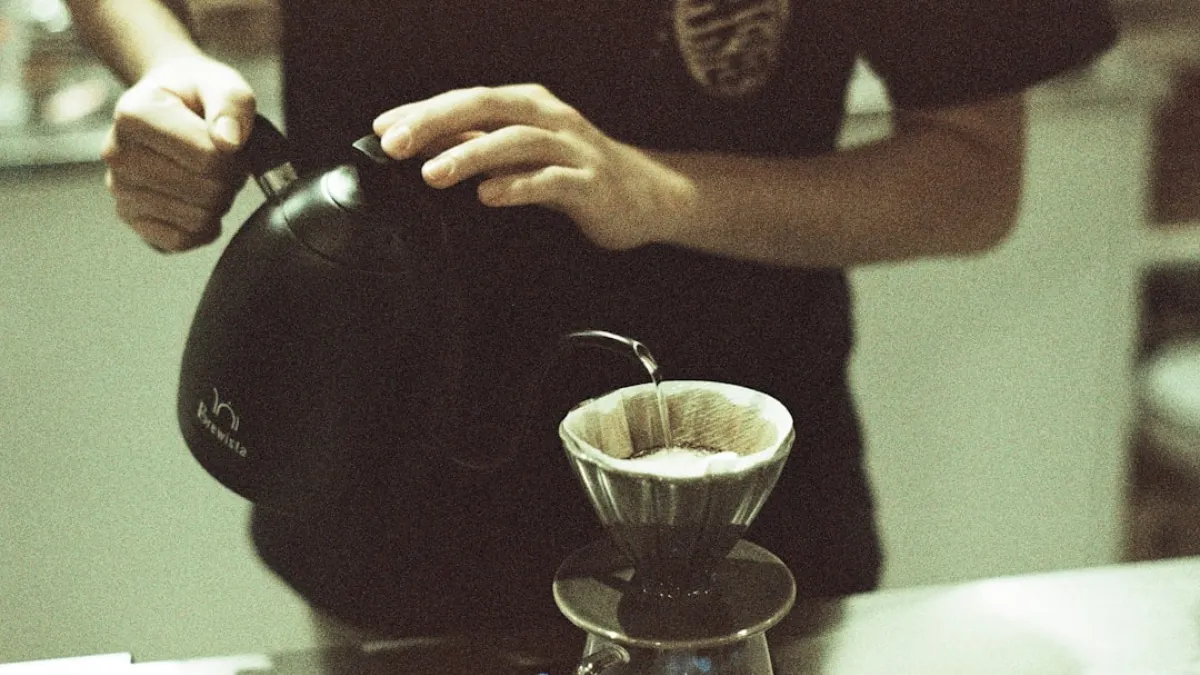
Barista's tip: A classic cause of under-extraction during pour-over brewing is "channeling," where water creates small high-velocity cracks in the coffee bed and bypasses most grounds entirely. If your V60 drawdown finishes abnormally fast and the coffee bed looks uneven or pocked with holes, gently swirl your brewer during the bloom phase to ensure every particle is evenly saturated.
Fixing under-extraction requires increasing your extraction yield through targeted brewing adjustments:
Control Your Brew Ratio: Timemore Black Mirror Precision Scale

- Refine your grind size: Make your grind finer by a few notches on your grinder (such as moving down from setting 18 to 15 on a Baratza Encore). Finer particles increase the total surface area exposed to water.
- Increase water temperature: Elevate your kettle temperature toward 94°C–96°C (201°F–205°F) using a temperature-controlled gooseneck kettle like the Fellow Stagg EKG. Hotter water acts as a more aggressive solvent.
- Extend contact time: Allow the water to rest longer in contact with the grounds, whether extending a French press steep to 4 minutes or slowing your pour-over flow rate.
Over-Extraction: Tackling Bitterness and Astringency
Over-extraction sits at the opposite end of the spectrum. It occurs when water stays in contact with coffee grounds for too long, at excessively high temperatures, or through a grind that is far too fine. Once the desirable sugars and pleasant organic acids are fully extracted, hot water continues dissolving heavy plant matter, polyphenols, and astringent compounds that are naturally bitter.
An over-extracted cup completely masks the unique character of the coffee bean. Specialty beans with delicate notes of jasmine or bergamot end up tasting flat, muddy, and harsh. The dominant flavor notes become burnt rubber, dark cocoa powder, wood, and ash. Beyond flavor, over-extraction creates an intense drying sensation on the sides of your tongue and roof of your mouth—a texture known as astringency, similar to over-steeped black tea or dry red wine.
To reduce extraction and restore sweet, vibrant flavors, adjust your brewing variables in the opposite direction:
- Coarsen your grind size: Adjust your burrs coarser to reduce total surface area, allowing water to pass through the coffee bed more quickly.
- Lower water temperature: Drop your water temperature to 90°C–92°C (194°F–198°F), particularly when using dark roast beans which are porous and extract easily.
- Shorten brew time: Speed up your pour-over technique or cut an espresso shot a few seconds earlier to prevent late-stage bitter compounds from washing into your cup.
The "Just Right" Zone: How to Dial In Your Brew
Finding the perfect balance—often referred to as the Goldilocks zone—requires aligning variable factors so that acidity, sweetness, and bitterness balance each other out smoothly. In a well-extracted cup, bright acidity highlights fruit notes, rich sweetness provides body, and a subtle touch of bitterness provides structure and a pleasant aftertaste.
Systematically dialing in coffee requires adjusting one variable at a time while keeping the rest constant. For example, fix your dose at 18 grams and your water mass at 300 grams (a standard 1:16.6 ratio), then adjust only your grind size until the flavor balances out. Keeping detailed notes on grind settings, water temperature, and total drawdown time speeds up this process considerably.
| Brewing Parameter | Under-Extracted | Ideal Balance ("Just Right") | Over-Extracted |
|---|---|---|---|
| Extraction Yield | Below 18% | 18% – 22% (SCA Standard) | Above 22% |
| Dominant Flavor Profile | Sour, salty, sharp, vegetal | Sweet, ripe fruit, chocolate, balanced | Bitter, astringent, dry, ash-like |
| Mouthfeel & Body | Thin, weak, watery | Round, creamy, smooth, complex | Hollow, harsh, rough drying texture |
| Primary Causes | Grind too coarse, water too cool, brief contact time | Balanced grind, correct temp, accurate timing | Grind too fine, water too hot, long contact time |
| Corrective Action | Grind finer, raise temp, extend brew time | Maintain parameters, enjoy brew | Grind coarser, lower temp, reduce brew time |
Eliminate Inconsistent Extraction: Precision Burr Grinders

Key Brewing Variables and How to Control Them
Every home brewing method—from a simple Hario V60 to a high-end espresso machine—relies on managing five key physical parameters. Mastering how these variables interact gives you precise control over every pot you brew.
1. Grind Size and Particle Distribution
Grind size is the single most influential variable under your direct control. Fine grinds create a massive total surface area, allowing fast extraction but slowing down water flow. Coarse grinds allow water to glide through quickly, reducing overall extraction. Investing in a quality flat or conical burr grinder, such as a Baratza or Commandante, yields uniform particle sizes. Blade grinders create an inconsistent mix of tiny "fines" (which over-extract) and large "boulders" (which under-extract), causing sour and bitter notes in the same cup.
2. Water Temperature and Thermal Stability
Water temperature acts as the engine of extraction. The SCA recommends an optimal range of 90°C to 96°C (195°F to 205°F). Lightly roasted dense beans benefit from hotter water (94°C–96°C) to break down dense cell walls, while darker roasts extract far easier and taste best at cooler temperatures (90°C–92°C) to prevent scorching harsh flavors.
3. Brew Ratio and Yield
Your brew ratio measures the weight of dry coffee against total water weight. A standard filter ratio ranges between 1:15 and 1:17 (for instance, 18 grams of ground coffee to 300 grams of water). For espresso, standard ratios range from 1:1.5 to 1:2.5, pulling a 36-gram liquid shot from an 18-gram dose in roughly 25 to 30 seconds. Adjusting your ratio changes liquid strength (TDS) and influences overall extraction yield.
4. Contact Time and Turbulence
Contact time refers to how long water interacts with coffee grounds. In immersion methods like the French press or AeroPress, time is controlled manually by when you press the plunger (typically 4 minutes for immersion). In percolation methods like pour-over, contact time depends on your grind size and pouring technique. Gentle agitation, such as stirring during the bloom, encourages uniform extraction, but excessive turbulence can clog filter paper with fine particles and cause unwanted bitter channeling.
Hit the 200°F Sweet Spot: Variable Temperature Gooseneck Kettles

To start improving your coffee immediately, invest in a digital scale with a built-in timer, buy whole-bean coffee roasted within the past 2 to 4 weeks, and adjust your grind size finer whenever a cup tastes sour, or coarser whenever it leaves a dry, bitter aftertaste.
Frequently Asked Questions
Why does my coffee taste both sour and bitter at the same time?
This frustrating combination is usually caused by an inconsistent grind from a blade grinder or severe channeling in your brew bed. Large particles under-extract (adding sourness), while tiny fines over-extract (adding bitterness). Switching to a quality burr grinder and ensuring even saturation during the bloom phase will resolve this issue.
Does darker roast coffee extract faster than light roast?
Yes, dark roast coffee extracts much faster because the roasting process makes the bean structure highly porous and fragile. When brewing dark roasts, use slightly cooler water (around 90°C/194°F) and a slightly coarser grind setting to prevent over-extraction and harsh bitterness.
How does bean freshness affect coffee extraction?
Coffee beans used within 2 to 4 weeks of their roast date extract predictably and retain vibrant flavors. Extremely fresh beans (under 4 days post-roast) release large amounts of carbon dioxide gas, which repels water and can lead to uneven, under-extracted coffee. Older beans (past 2 months) lose their aromatic oils and taste flat, regardless of your brewing technique.
Sources
- Specialty Coffee Association (SCA) Standards
- Wikipedia: Coffee Extraction
- Baratza Grinder Operation Manuals and Grind Metrics