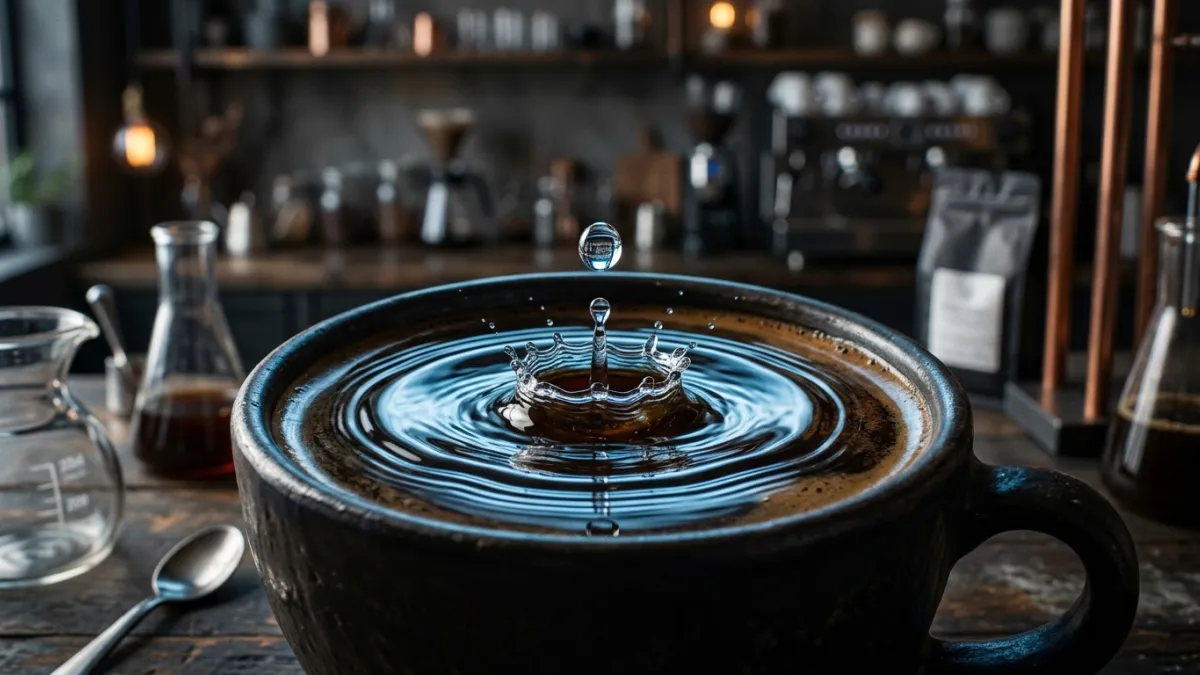
Unlock Better Brews: How Water Quality Transforms Your Coffee
As passionate home baristas, we obsess over every detail of our coffee ritual: the freshest beans, the perfect grind size, the precise brewing temperature, and the ideal method. Yet, there's one crucial ingredient that often gets overlooked, silently shaping—or sabotaging—our daily cup: water.
Considering coffee is 98% water, it stands to reason that the quality of this seemingly simple element plays a monumental role in the final flavor profile. At coffee brew hub, we believe in mastering every aspect of brewing, and understanding your water is a game-changer. Let's dive into the unseen world of water chemistry and discover how it profoundly affects your coffee.
The Hidden Chemistry: What's in Your Water?
Not all water is created equal. The tap water flowing into your home carries a unique mineral signature, and these dissolved solids interact directly with coffee compounds during extraction. Here's what matters most:
- Total Dissolved Solids (TDS): This measures the concentration of inorganic salts, minerals, and metals dissolved in water, expressed in parts per million (ppm). The specialty coffee Association (SCA) recommends a TDS range of 120-150 ppm for optimal coffee extraction. Too low, and your coffee can taste flat, watery, and underextracted. Too high, and it might be overextracted, bitter, or muddy.
- Hardness (Calcium & Magnesium): These are the rock stars of coffee extraction. Calcium and magnesium ions bind with flavor compounds in coffee grounds, drawing out desirable sweetness, acidity, and body.
- Ideal Hardness: A moderate amount (around 50-75 ppm for calcium hardness) is perfect.
- Too Soft: Water with very low mineral content leads to weak, underdeveloped flavors.
- Too Hard: Excessively hard water can lead to over-extraction, creating chalky, bitter, or astringent notes. It also causes scale buildup in your brewing equipment, shortening its lifespan.
- Alkalinity (Bicarbonates): Often confused with pH, alkalinity refers to water's capacity to neutralize acids—its "buffering" ability.
- High Alkalinity: Acts as a strong buffer, dulling the vibrant acidity in coffee and leading to a flat, sometimes bitter, or overly "ashy" taste.
- Low Alkalinity: Can result in overly sour or acidic coffee, as there's not enough buffer to balance the natural acids. The SCA recommends an alkalinity of around 40 ppm.
- pH Level: While related to alkalinity, pH measures how acidic or basic water is (7 is neutral). The SCA recommends a pH of 6.5-7.5. Extreme pH levels (either very acidic or very alkaline) can negatively impact flavor and extraction.
- Chlorine & Chloramines: These disinfectants are added to municipal water supplies to kill bacteria. While safe to drink, they impart a harsh, medicinal, or swimming pool-like off-flavor that instantly ruins coffee's delicate nuances.
Identifying Your Water Quality
Before you can fix your water, you need to know what you're dealing with:
- Taste & Smell Test: This is your first, simplest indicator. Does your tap water have an off-putting taste or smell (e.g., metallic, chlorine)?
- Local water quality Reports: Most municipal water providers publish annual Consumer Confidence Reports (CCR) detailing their water's mineral content, pH, and treatment methods. This is an excellent starting point.
- Home Test Kits: Affordable strips or digital meters (for TDS, pH) can give you a more precise picture of your tap water's characteristics.
Practical Solutions for Superior Brewing Water
Don't despair if your tap water isn't ideal! There are several effective ways to improve it and elevate your coffee:
- Carbon Filtration: A simple and highly effective solution for removing chlorine, chloramines, sediment, and some organic contaminants. Pitcher filters (like Brita or Soma), faucet filters, and whole-house carbon filters are great options. While they improve taste, they generally don't significantly alter mineral content.
- Reverse Osmosis (RO) Systems: RO systems strip nearly all dissolved solids from water, leaving it almost pure. This is a powerful solution, but RO water is too "empty" for coffee on its own. It needs to be remineralized to achieve the ideal coffee brewing profile.
- Distilled Water + Remineralization: Similar to RO, distilled water is pure H₂O. You can purchase distilled water and add specific mineral packets (like Third Wave Water or DIY mineral solutions) to achieve the SCA-recommended profile. This offers ultimate control.
- Bottled Water: Some bottled spring waters can be suitable, but you need to check their mineral content labels. Look for brands with a TDS in the 100-200 ppm range and balanced mineral composition. Avoid purified or distilled bottled water unless you plan to remineralize.
- Boiling (for Chlorine): Boiling water for 5-10 minutes can help dissipate chlorine gas, but it will not remove chloramines or alter mineral content. This is a partial solution at best.
Elevate Your Home Barista Game
The quest for perfect water is an exciting frontier for any coffee enthusiast. Start by understanding your current water, then experiment with different solutions. You'll be amazed at the depth, clarity, and vibrancy that emerge in your coffee when you get the water right.
Think of water as the ultimate flavor canvas. By controlling its composition, you're not just brewing coffee; you're crafting an experience. So, next time you prepare your brew, remember the silent ingredient, and let it help you turn your kitchen into a true personal café.