
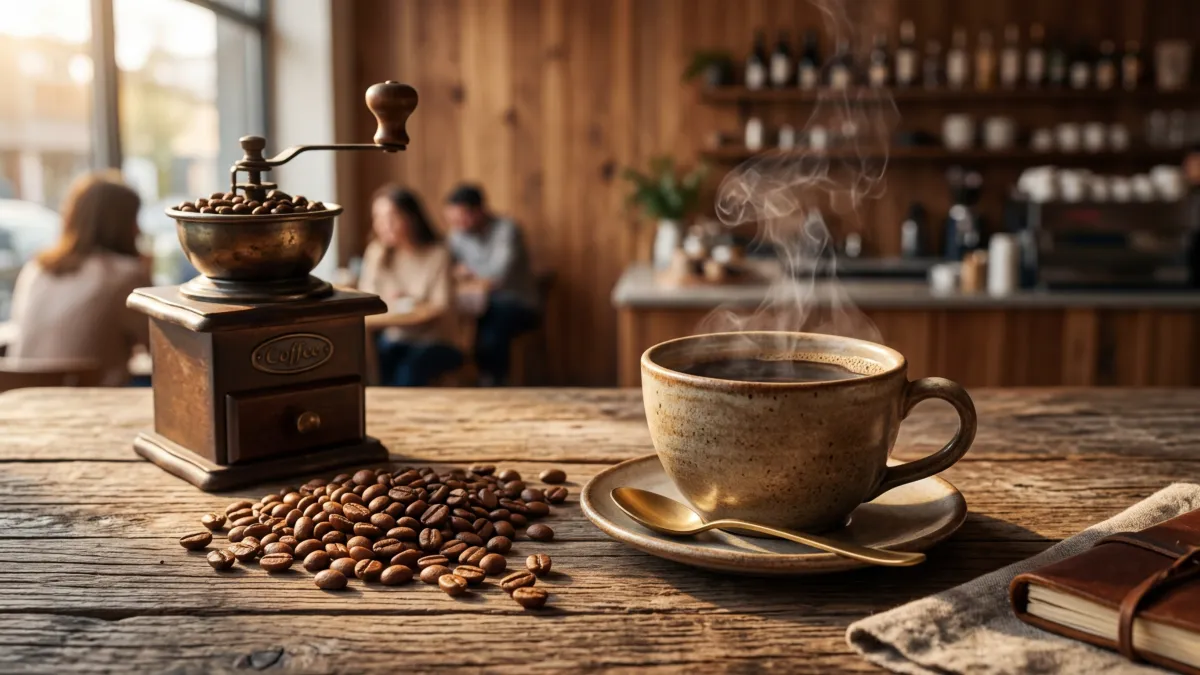
Quick answer: Medium roast coffee hits the industry "sweet spot" by combining natural origin acidity with rich caramel sweetness developed during roasting. Typically measuring between 55 and 65 on the Agtron Gourmet scale, these beans feature a chocolate-brown color, a dry surface, and unmatched versatility across pour-over, drip, and espresso brewing methods.
The Chemistry and Physics of Medium Roast Coffee
During the drum roasting process, coffee beans undergo profound physical and chemical transformations that dictate their final flavor profile. As raw green coffee absorbs thermal energy, internal moisture turns to steam, creating pressure that culminates in the audible event known as "first crack" at approximately 196°C to 205°C (385°F to 401°F). Light roasts are dropped shortly after this milestone, preserving fragile volatile organic compounds. Medium roasts are developed slightly further, ending right before or at the very onset of the second crack around 210°C to 220°C (410°F to 428°F). This extra roasting time allows thermal breakdown to continue, smoothing out harsh green acids without charring the cellulose matrix.
Chemical reactions inside the drum at this roast level are dominated by the Maillard reaction and sugar caramelization. The Maillard reaction occurs between amino acids and reducing sugars, generating hundreds of new aromatic compounds that manifest as toasted nuts, freshly baked bread, and chocolate. Simultaneously, caramelization breaks down simple sucrose into rich brown polymers that add body, depth, and comforting sweetness to the cup. Because the roast stops before oils are pushed to the exterior bean wall, medium roasts maintain a dry surface texture while retaining structural solubility.
According to specialty coffee Association (SCA) standards, roast color density can be objectively quantified using infrared reflectance equipment on the Agtron scale. On the Agtron Gourmet Scale, true medium roasts register within the 55 to 65 range, placing them between bright medium-light roasts (65-75) and oil-sheened medium-dark roasts (45-55). This numerical precision ensures consistency for specialty roasters striving to maintain identical flavor profiles across seasonal coffee crops.
Flavor Dynamics: Maillard Reaction vs. Caramelization
Understanding flavor development requires looking at how heat alters organic acids during the roast profile. Citric and malic acids, which give light roasts their sharp apple and citrus brightness, steadily degrade as heat exposure continues. In a medium roast, enough organic acidity remains to keep the coffee lively and structured, but it is mellowed by converted sugars. This transformation prevents the thin, sour mouthfeel that beginners often dislike in extremely light roast single-origins.
The balance achieved between 18% and 22% solubles extraction yields a harmonious sensory experience. Bitter pyrolytic compounds have not yet formed in dominant quantities, meaning drinkers experience sweet flavor notes rather than ash or carbon. This clean development makes medium roast coffee an ideal benchmark for evaluating bean origin quality without distracting roaster influence.
Sensory Profile and Ideal Origin Profiles
The sensory profile of a well-crafted medium roast coffee is characterized by structural balance, velvety body, and clean finishing notes. Cup evaluations usually reveal a satisfying medium body with a total dissolved solids (TDS) strength of 1.15% to 1.45% when brewed according to standard gold-cup guidelines. Aromatics range from toasted almond and milk chocolate to subtle stone fruit, dark honey, and warm spice. Acidity is present but integrated, reminiscent of ripe berries or wine-like malic sweetness rather than sharp lemon.
Because medium roasting does not overwhelm the natural attributes of the coffee cherry, regional terroir remains distinctly noticeable. Single-origin beans from high-altitude microclimates exhibit complex flavor layers when brought to a medium roast degree. Roasters carefully calibrate heat application to highlight natural regional strengths while softening aggressive sharpness.
Five Top Medium Roast Bean Origins to Explore
Colombia Supremo beans represent one of the most reliable medium roast options available to home baristas. Grown at altitudes between 1,200 and 1,800 meters, Colombia Supremo boasts large bean sizes that roast exceptionally evenly. At a medium roast level, these beans deliver classic notes of sweet caramel, toasted pecan, and smooth milk chocolate, backed by a gentle red apple acidity.
Ethiopia Yirgacheffe, when roasted to a medium level, offers an exquisite sensory contrast to traditional chocolatey profiles. While light roasts emphasize extreme floral jasmine and lemongrass, medium roasting introduces notes of bergamot tea, candied orange peel, and dried blueberry. The resulting cup displays a delicate, tea-like body and exceptional floral aromatic lingering power.
Guatemala Huehuetenango coffee benefits immensely from high growing elevations along the Cuchumatanes mountain range. Medium roasts from this region present a complex sweet-and-savory structure filled with dark cocoa, brown sugar, and subtle green plum notes. The clean, lingering finish makes Huehuetenango an exceptional choice for pour-over lovers seeking depth without heavy bitterness.
Brazil Cerrado provides low-acid, heavy-bodied medium roast options ideal for those who prefer smooth, comforting daily brews. Grown on expansive plateaus, Brazil Cerrado beans develop dense nutty qualities during roasting, bringing forward warm hazelnut, cocoa powder, and dark molasses flavors. Its mild acidity makes it an incredible base for espresso blends and milk-based beverages.
Sumatra Mandheling undergoes a traditional wet-hulled processing method (Giling Basah) that imparts characteristic earthy complexity. While commonly taken to dark roast levels, stopping Sumatra at a true medium roast unveils remarkable nuance. Drinkers can expect sweet cedar, baker's chocolate, pipe tobacco, and subtle herbal spice layered over a rich, full-bodied mouthfeel.
Specialty Brewing Parameters for Medium Roasts
Unlocking the ideal extraction from medium roast beans requires attention to key brewing variables. Because medium roasts are more porous and soluble than light roasts but less fragile than dark roasts, they tolerate a wide range of extraction parameters. Dialing in a precise brewing recipe allows home baristas to maximize sweetness and clarity while avoiding harsh astringency or hollow watery flavors.
Using high-quality burr grinders, such as the Baratza Encore or Fellow Ode, ensures uniform particle size distribution essential for consistent extraction. Blade grinders crush beans unevenly, producing fine dust that leads to over-extraction and bitter channels alongside large boulders that under-extract. Grinding medium roast beans to a target particle range between 500 and 800 microns provides optimal surface area contact for pour-over drip methods.
Barista's tip: When dialing in medium roast beans on a pour-over dripper like the Hario V60, start with water at 93°C (200°F) and an 18g dose to 300g water ratio. If the finish leaves a dry, astringent sensation on the sides of your tongue, your grind is slightly too fine, causing localized over-extraction. Coarsen your grind setting by one or two notches to restore sweetness and vibrant fruit clarity.
water temperature plays a crucial role in thermal energy transfer during extraction. Water heated to 90°C–96°C (195°F–205°F) effectively extracts desirable carbohydrates, sugars, and aromatic oils from medium roast grounds. Boiling water above 98°C (208°F) can pull excess bitter tannins, whereas water below 88°C (190°F) fails to fully dissolve complex caramel compounds, leaving the cup flat and sour.
Comparing Popular Brewing Equipment
Different brewing equipment highlights distinct facets of a medium roast's flavor structure. Filter paper brewing methods like the Hario V60 and Chemex trap insolubles and diterpene oils, producing crystalline clarity that showcases floral and fruit top notes. Immersion methods like the French press retain natural oils and fine suspended particles, delivering a creamy mouthfeel and deep chocolate sweetness.
espresso extraction compresses flavor development into a high-pressure 25 to 30 second shot, utilizing 18g to 20g doses. Medium roasts serve as the foundational favorite for modern espresso recipes, producing dense crema, balanced tartness, and luxurious sweetness that cuts through steamed milk without tasting charred.
| Brew Method | Target Grind Size | Water Temp (°C / °F) | Brew Ratio (Coffee:Water) | Extraction Time | Flavor Profile Highlights |
|---|---|---|---|---|---|
| Hario V60 Pour-Over | Medium-Fine (500–700 µm) | 92°C–94°C / 198°F–202°F | 1:15 to 1:16 | 2:30 – 3:15 mins | Vibrant sweetness, floral clarity, crisp acidity |
| French Press Immersion | Coarse (800–1000 µm) | 94°C–96°C / 201°F–205°F | 1:14 to 1:15 | 4:00 mins steep | Full body, rich cocoa, smooth creamy mouthfeel |
| AeroPress | Medium-Fine (600–750 µm) | 90°C–92°C / 194°F–198°F | 1:13 to 1:15 | 1:30 – 2:00 mins | Balanced body, punchy fruit, low bitterness |
| Home Drip Machine | Medium (700–850 µm) | 93°C / 200°F | 1:16 to 1:17 | 4:00 – 6:00 mins | Approachably balanced, smooth daily driver cup |
| Modern Espresso | Fine (200–300 µm) | 91°C–93°C / 195°F–200°F | 1:2 to 1:2
Would you like a price quote?
Our expert team is ready to find the right solution for you. Comments (0)
Log in
or continue with Google for instant publishing. Guest comments require admin approval.
No comments yet. Be the first! Related Content What Coffee to Serve After a Heavy Meal: 4 Digestive-Friendly Specialty BeansDiscover the best digestive-friendly specialty coffee beans to serve after a heavy dinner. Learn how... Read More : What Coffee to Serve After a Heavy Meal: 4 Digestive-Friendly Specialty Beans How to Store Coffee Beans for Lasting FreshnessMaster the art of coffee bean storage! Learn expert tips to protect your precious beans from enemies... Read More : How to Store Coffee Beans for Lasting Freshness How to Read a Coffee Bag Label: Your Guide to Better CoffeeLearn to decipher coffee bag labels like a pro! Understand roast date, origin, and processing to unl... Read More : How to Read a Coffee Bag Label: Your Guide to Better Coffee |