Quick answer: Adding whole or freshly ground spices like Ceylon cinnamon, green cardamom, ginger, and nutmeg directly to your coffee grounds before brewing elevates natural sweetness and creates a balanced cup. For optimal extraction without bitterness, blend 0.5 to 1 gram of finely ground spices per 18 grams of coffee using traditional immersion or pour-over brewing methods.
The Science and Flavor Dynamics of Spicing Coffee
Understanding how spices interact with hot coffee requires looking at solubility, volatile oils, and extraction dynamics. When hot water between 90–96 °C (195–205 °F) contacts coffee grounds, it extracts soluble solids, organic acids, sugars, and aromatic compounds. Spices contain volatile essential oils—such as cinnamaldehyde in cinnamon, cineole in cardamom, and gingerol in ginger—that dissolve readily alongside coffee solubles during the initial bloom stage. Adding spices pre-brew ensures these delicate oils blend smoothly with the coffee’s natural lipids, preventing the gritty surface float common when stirring raw spice powders into a finished mug.
The chemical profile of your roast dictates which spices will harmonize best with your beans. Light roasts from Ethiopia or Kenya often present bright floral and berry notes that shine alongside citrusy green cardamom or a subtle grating of fresh nutmeg. Conversely, dark roasts possess bold roasted, chocolate, and caramel qualities that withstand pungent, warm spices such as dry ginger, clove, or crushed black pepper. Adjusting your coffee-to-water ratio from a standard 1:16 (18 grams of coffee to 288 grams of water) to a slightly tighter 1:15 ratio helps offset the extra dilution when brewing complex, spice-infused coffee.
Using whole spices yields a dramatically cleaner, sweeter extraction than pre-packaged ground spices from the grocery store aisle. Pre-ground spices lose their aromatic volatile oils rapidly through oxidation, leaving behind woody, dusty off-flavors that ruin high-grade coffee beans. Investing in a manual spice grinder or dedicated conical burr grinder ensures your spice particles remain uniform and vibrant. Combining freshly ground spices with freshly roasted beans—ideally harvested and roasted within 2 to 4 weeks—results in an exceptional cup that adheres to specialty coffee association (SCA guidelines) for flavor purity and balanced extraction.
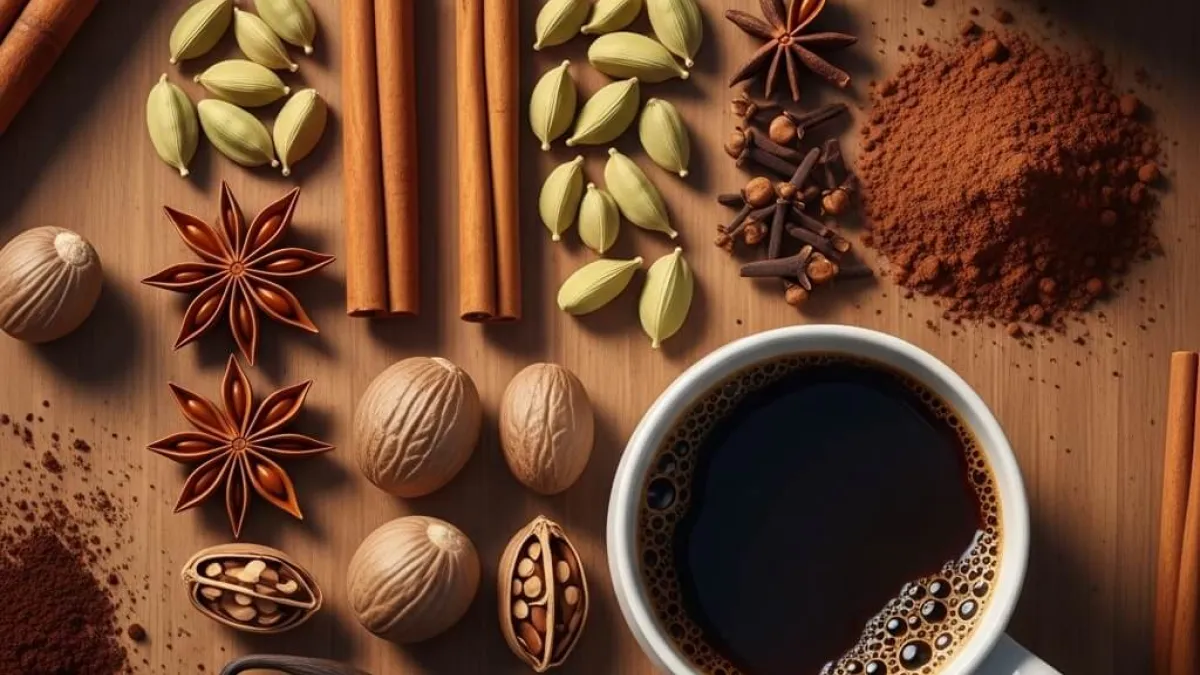
Top Spices to Transform Your Daily Brew
Each spice brings a distinct flavor profile, chemical benefit, and extraction behavior to your brew bar. Selecting high-grade, single-origin spices guarantees that your coffee remains clean and bright rather than cloudy or astringent.
- Ceylon Cinnamon: Unlike common Cassia cinnamon, true Ceylon cinnamon offers a delicate, sweet floral aroma with minimal coumarin content. It enhances natural coffee sweetness without requiring refined sugars.
- Green Cardamom: The undisputed king of Middle Eastern coffee, green cardamom provides vibrant eucalyptus, citrus, and mint notes that cut through rich dark roasts and dense milk foam.
- Dried Ginger: Delivers a sharp, thermogenic bite and warming heat. It balances heavy body and helps calm digestive discomfort, making it ideal for morning pour-overs.
- Whole Nutmeg & Clove: Extremely potent botanicals that impart deep woodsy, sweet-spicy undertones. Use these in tiny fractions to prevent overpowering the coffee’s origin flavors.
- Star Anise & Black Pepper: Star anise introduces a distinct licorice sweetness, while a single crack of black pepper adds a subtle back-of-the-throat kick that heightens overall flavor perception.
Barista's tip: Never run whole spices directly through your primary coffee burr grinder! The essential oils in cardamom and clove will heavily coat the steel or ceramic burrs, tainting subsequent coffee batches with intense spice flavors for weeks. Instead, crush whole spices separately using a mortar and pestle or dedicated stainless micro-grinder, then blend the resulting powder thoroughly into your coffee dose before loading the filter basket.
Crafting the Ultimate Pre-Brew Coffee Spice Blend
Creating a batch blend of pre-brew coffee spices saves time during busy morning routines while maintaining consistent flavor proportions. By pairing dry, whole-ground spices in precise ratios, you can produce a versatile mix that seamlessly complements pour-over, batch drip, and French press extractions. This custom blend focuses on warm spice undertones, moderate sweetness, and a soft, lingering finish.
To prepare this signature spice mix, thoroughly combine 2 tablespoons of finely ground Ceylon cinnamon, 1 teaspoon of ground green cardamom, 1 teaspoon of dry ginger powder, ½ teaspoon of freshly grated nutmeg, and ¼ teaspoon of finely crushed black peppercorns. Store this mixture in an airtight glass jar away from direct heat and light. When preparing your morning brew, add 0.5 grams (roughly 1/4 teaspoon) of this blend directly to an 18-gram coffee dose. Yielding a standard 1:16 ratio brew across a 3-minute extraction window allows the spice oils to fully integrate into the beverage without clogging filter paper.
For immersion methods like the French Press or AeroPress, coarse spice grinds are preferred to avoid sediment passing through the metal mesh screen. Steep the ground coffee and spice blend in water heated to 94 °C (201 °F) for exactly 4 minutes before plunging smoothly. If you enjoy espresso-based drinks, dust a tiny pinch of fine spice powder directly over your tamped puck before locking the portafilter into the group head; the 9 bars of pressure extract intense spice aromatics straight into the crema layer.
Cultural Spiced Coffee Recipes and Brewing Methods
Spiced coffee cultures across the globe showcase how different brewing devices and spice combinations highlight local culinary traditions. Exploring traditional recipes from Morocco and Southern India provides excellent inspiration for expanding your domestic brewing portfolio using versatile brewing methods.
In Morocco, Café des Épices is a staple of vibrant city medinas. Dark roasted beans are ground coarse-medium and blended with dark cinnamon, clove, ginger, cardamom, and nutmeg. Prepared traditionally in a stovetop Moka pot or traditional ibrik, the prolonged water contact time creates an intense, full-bodied extraction with dense creaminess. The intense heat of the Moka pot’s lower chamber volatilizes deep spice aromas, delivering a syrup-like cup that pair exceptionally well with warm milk or honey.
In Southern India, Sukku Kaapi offers a completely different take centered around herbal wellness. This brew often omits the coffee bean entirely or utilizes a small portion of dark chicory coffee, brewing dry ginger root, coriander seeds, black peppercorns, and cardamom in boiling water. The resulting decoction is sweetened with unrefined palm jaggery, creating a sharp, restorative tonic that clears sinuses and soothes indigestion. Master these traditional styles by comparing their core specifications below:
| Recipe Style | Primary Spices | Recommended Grind Size | Ideal Brew Method | Target Brew Temp |
|---|---|---|---|---|
| Moroccan Café des Épices | Cinnamon, Cardamom, Clove, Anise | Medium-Coarse | Moka Pot / French Press | 93–96 °C (200–205 °F) |
| Southern Indian Sukku Kaapi | Dry Ginger, Coriander, Black Pepper | Coarse / Crushed | Decoction Stovetop Pot | 100 °C (212 °F Boiling) |
| Arabian Qahwa | Green Cardamom, Saffron, Cloves | Very Coarse | Traditional Dallah Pot | 90–92 °C (194–198 °F) |
| Modern Craft Spice Drip | Ceylon Cinnamon, Nutmeg, Vanilla | Medium (300–400 microns) | V60 / Chemex Pour-Over | 92–94 °C (197–201 °F) |
| Spice | flavor profile | Best For |
| Cinnamon | Sweet & Woody | Blood sugar regulation |
| Cardamom | Herbal & Citrusy | Indian spiced coffee |
| Ginger | Spicy & Sharp | Digestion & weight loss |
| Nutmeg | Nutty & Sweet | Evening "treat" coffees |
| Cloves | Intense & Pungent | Moroccan spiced coffee recipe |
Health Benefits and Metabolic Support of Coffee Spices
Beyond stunning aromatic profiles, blending organic spices into your coffee adds functional health benefits without relying on artificial flavoring syrups or sugary creamers. Traditional medicine systems like Ayurveda have long utilized spiced decoctions, and modern nutritional science continues to confirm the therapeutic actions of these bioactive compounds.
Cinnamon and ginger act as natural thermogenic agents, slightly elevating metabolic expenditure while supporting healthy blood glucose control. Cinnamon in particular contains polyphenol compounds that mimic insulin function, helping smooth out potential blood sugar spikes and reducing post-coffee energy crashes. Incorporating these spices allows home coffee enthusiasts to lower their daily sugar consumption while maintaining a sweet, velvety mouthfeel in their cup. Learn more about dialing in healthy brewing techniques on our coffee health guide.
Furthermore, spices like turmeric and clove boast remarkably high antioxidant profiles that work synergistically with chlorogenic acids naturally present in coffee beans. When adding turmeric, pairing it with a small pinch of cracked black pepper increases the bioavailability of curcumin by up to 2,000 percent. This creates a deeply anti-inflammatory beverage that supports joint health, digestive ease, and sustained mental focus throughout your morning workflow.
For maximum flavor clarity and health impact, begin by grinding whole green cardamom pods and Ceylon cinnamon stick fragments using a dedicated hand grinder, adding exactly 0.5 grams to your daily 18-gram pour-over dose. Master this ratio on a standard paper-filtered V60 to enjoy a clean, aromatic cup before experimenting with heavier stovetop Moka pot extractions.
Frequently Asked Questions
Should I add spices to my coffee before or after brewing?
It is best to add ground spices directly to your dry coffee grounds before brewing. Hot water extracts the aromatic essential oils evenly alongside coffee solubles, preventing gritty particles from floating on top of your finished beverage.
Will spices damage my home coffee grinder?
Yes, whole spices can damage or contaminate primary coffee burr grinders. Hard spices like clove or cinnamon can nick burr blades, and residual essential oils leave strong flavors behind that affect future coffee batches. Always use a separate spice grinder or mortar and pestle.
How much spice should I use per cup of coffee?
A good starting benchmark is 0.5 grams of spice mix per 18 grams of coffee grounds (about 1/4 teaspoon per cup). Because spices are potent, start small and adjust upward to suit your taste without overpowering the coffee's origin profile.
Does adding cinnamon to coffee help reduce sugar intake?
Yes. Ceylon cinnamon creates a natural sensory perception of sweetness due to its volatile aromatics, allowing you to cut back on refined sugars and flavored syrups without sacrificing flavor.