Master Your Grind: Conical vs. Flat Burr Grinders Compared
At Coffee Brew Hub, we believe the journey to an exceptional cup of coffee begins long before the hot water meets the grounds. It starts with the grind. A high-quality grinder is arguably the most critical piece of equipment for any home barista, impacting everything from extraction efficiency to the final flavor profile. But navigating the world of coffee grinders can be daunting, especially when faced with the fundamental choice: conical vs. flat burr.
Both types dominate the premium grinder market, each with a loyal following and distinct characteristics. Understanding their differences is key to unlocking your coffee's full potential and turning your kitchen into a personal café. Let's dive deep into an unbiased comparison to help you make an informed decision.
Understanding Conical Burr Grinders
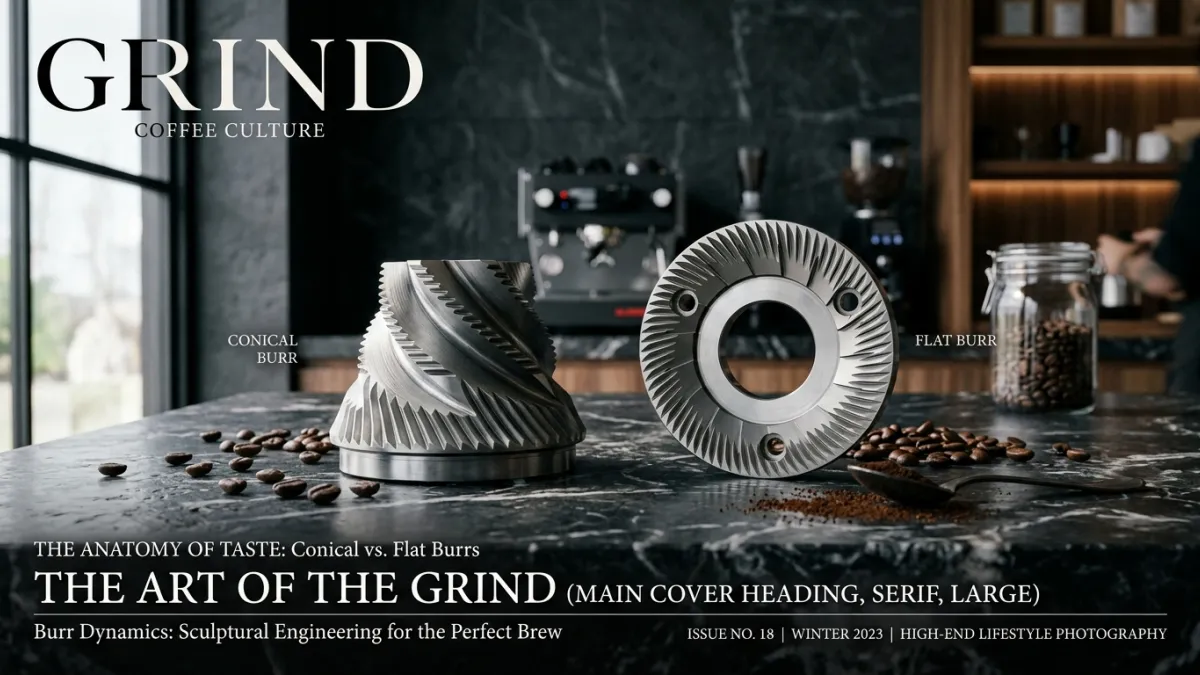
Conical burr grinders feature two cone-shaped burrs: an outer ring burr and a smaller, inner cone-shaped burr that fits inside it. Coffee beans are fed between these burrs, which rotate at relatively slower speeds, crushing the beans into grounds. This design is prevalent in many home grinders, from entry-level electric options to high-end espresso workhorses.
- How They Work: Beans fall into the gap between the rotating inner cone and the stationary outer ring. Gravity assists the grinding process as beans are pulled down and through the progressively smaller gap.
- Advantages:
- Lower RPM & Heat: Conical burrs typically spin slower, generating less heat during grinding. This helps preserve the delicate aromatics and flavor compounds of your coffee.
- Quieter Operation: Generally, conical grinders tend to be less noisy than their flat burr counterparts.
- Less Grind Retention: Their design often leads to less coffee remaining in the grind chute after use, reducing waste and ensuring fresher grounds for each brew.
- Often More Compact: The vertical design can sometimes allow for a smaller footprint.
- Disadvantages:
- Particle Distribution: While very consistent for espresso, some argue conical burrs can produce a slightly wider particle distribution (more fines and boulders) at coarser settings compared to flat burrs.
- Best For: Versatile for most brewing methods, from espresso to French press. Often favored for espresso due to their consistency at fine settings and resistance to clogging.
Understanding Flat Burr Grinders
Flat burr grinders utilize two parallel, ring-shaped burrs positioned one above the other. Coffee beans are fed between these two flat surfaces. One burr remains stationary while the other rotates at high speeds, pulverizing the beans as they move outwards through the grinding chamber.
- How They Work: Beans enter at the center and are centrifugally forced outwards between the two flat burrs, being ground as they travel from the inner edge to the outer edge.
- Advantages:
- Superior Grind Uniformity: Flat burrs are often lauded for producing a highly uniform particle size, especially at coarser settings. This can lead to a cleaner cup with excellent clarity of flavor.
- Distinct Flavor Profile: Many connoisseurs report that flat burrs tend to emphasize brighter, more acidic, and distinct notes in coffee, offering a very "clean" taste experience.
- Ideal for Filter & Pour Over: Their consistency shines with brewing methods sensitive to particle distribution, like pour-over and drip coffee.
- Disadvantages:
- Higher RPM & Heat: Flat burrs typically spin faster, which can generate more heat and potentially degrade delicate flavors if grinding large quantities.
- Increased Noise: Generally louder due to the higher rotational speed.
- Higher Grind Retention: The design can sometimes lead to more residual coffee remaining between the burrs and in the chute, potentially staling and affecting the next dose.
- Cost: High-quality flat burr grinders often come at a higher price point.
- Best For: Those prioritizing absolute grind uniformity and a distinct flavor profile, particularly for filter coffee and light roasts.
Key Comparison Points for the Home Barista
Now, let's put them head-to-head on the factors that matter most:
- Grind Consistency & Particle Distribution:
- Conical: Excellent at fine settings for espresso. Can produce a slightly wider particle range at coarser settings.
- Flat: Generally regarded as producing a more uniform particle size across all settings, leading to cleaner extractions, especially for filter brews.
- Heat Generation:
- Conical: Lower RPM means less friction and less heat transfer to the grounds, preserving flavor.
- Flat: Higher RPM can generate more heat, especially during extended grinding. Good quality flat burrs mitigate this with better materials and design.
- Noise Level:
- Conical: Generally quieter.
- Flat: Typically louder.
- Grind Retention:
- Conical: Tends to have lower retention, meaning less stale coffee left behind.
- Flat: Can have higher retention due to the horizontal orientation and centrifugal force. Single-dosing techniques can help minimize this.
- Speed:
- Conical: Often faster, especially for larger doses.
- Flat: Can be slower for the same output, though this varies greatly by model.
- Flavor Profile Impact:
- Conical: Often described as producing a more "rounded" or "full-bodied" cup, potentially emphasizing sweetness and texture.
- Flat: Known for clarity, brightness, and highlighting distinct flavor notes, particularly acidity.
Which Grinder is Right for Your Home Café?
The "best" grinder isn't about one burr type being superior, but rather which one aligns better with your preferences, brewing habits, and budget.
- Choose a Conical burr grinder if:
- You primarily brew espresso and value a robust, full-bodied shot.
- You want a quieter grinder for early morning brewing.
- You're conscious about grind retention and minimizing waste.
- You're looking for a versatile grinder that performs well across many brew methods without breaking the bank for entry-level models.
- Choose a Flat burr grinder if:
- You prioritize absolute grind uniformity for clean, bright filter coffees (pour-over, AeroPress, drip).
- You enjoy exploring the nuanced, acidic, and complex notes in lighter roasted coffees.
- You're willing to invest more for a premium grinding experience and potentially higher quality materials.
- Noise isn't a primary concern, or you mostly single-dose to minimize retention.
Conclusion
Both conical and flat burr grinders are capable of producing excellent results, elevating your home brewing significantly beyond pre-ground coffee. Your choice ultimately boils down to your personal taste preferences, primary brewing methods, and what characteristics you value most in your daily cup. We encourage you to research specific models within each category and consider how they fit into your brewing routine. Whichever path you choose, investing in a quality burr grinder is a foundational step towards mastering coffee brewing and truly making your kitchen a personal café.