Pour-over coffee brewing is a dance between chemistry, water flow dynamics, and thermal energy. While many home coffee lovers focus heavily on purchasing high-end burr grinders or rare light-roast single-origin beans, water temperature control remains the quiet variable that dictates whether a cup tastes brilliantly vibrant or harsh and bitter. Pouring boiling water directly from a standard kitchen kettle onto delicate grounds scorches delicate aromatics and triggers aggressive over-extraction. Conversely, water that cools down too rapidly yields a weak, sour, and uninspiring brew. A variable-temperature gooseneck kettle gives you total mastery over thermal stability and fluid dynamics, turning a basic kitchen routine into a precise craft.
Quick answer: variable temperature gooseneck kettles regulate flow rate down to 17–40 ml per second while holding target water temps within ±1°F (0.5°C). For unmatched precision and aesthetic balance, the Fellow Stagg EKG Pro leads the market, while the OXO Brew Adjustable Temperature Kettle and Bonavita 1.0L variable temperature Kettle offer exceptional performance for budget-conscious home baristas.
The Science of Thermal Stability and Extraction
Water accounts for roughly 98.5% of a pour-over cup, making its temperature the primary solvent driver during extraction. According to specialty coffee Association (SCA) golden cup standards, the ideal water temperature window at the moment of contact with coffee grounds ranges between 195°F and 205°F (90°C to 96°C). When brewing light roasted beans, higher temperatures around 203°F–205°F (95°C–96°C) help solubilize complex organic acids, sugars, and floral aromatic compounds that are otherwise locked deep within dense seed cellular structures. Darker roasts, on the other hand, feature highly porous cellular walls that extract rapidly; dropping your kettle's setting down to 195°F–198°F (90°C–92°C) prevents the harsh, burnt phenol compounds from dominating the profile.
Maintaining a stable thermal profile throughout a 3-minute pour-over draw-down requires active heat retention. Standard wide-spout kettles drop as much as 8°F to 10°F within sixty seconds of removal from a heat source, destabilizing your brew bed temperature. Digital gooseneck kettles equipped with Proportional-Integral-Derivative (PID) thermal controllers continuously pulse electrical current through the heating element. This eliminates temperature overshoot and keeps your water locked at your chosen setting during long, multi-stage pour schedules like pulse pouring or bloom phases.
Barista's tip: Always factor in thermal loss when water travels through the air. Water poured from a kettle set to 203°F typically hits the coffee bed around 198°F to 200°F depending on room ambient temperature and pour height. Preheating your dripper with 100g of hot water before loading your grounds mitigates thermal drop by up to 4°F across the total brew duration.
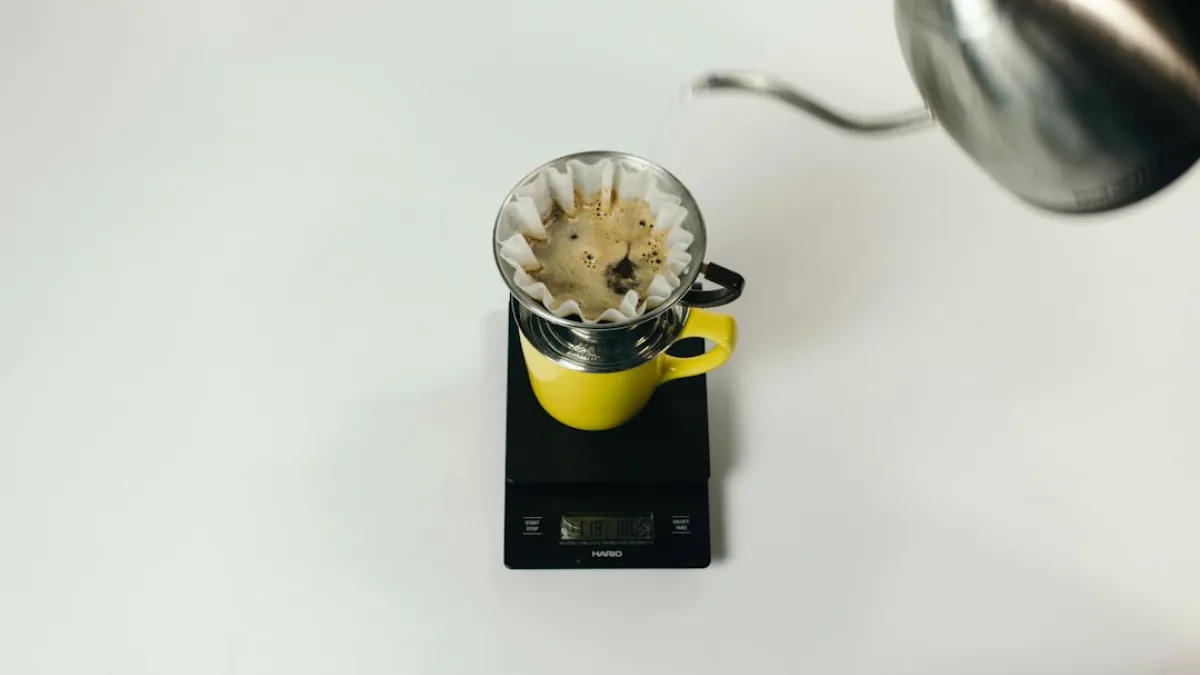
Water agitation is equally dependent on kettle spout geometry. A standard kitchen kettle dumps water at high velocities exceeding 150 ml per second, disturbing the coffee bed, fracturing the filter paper seal, and blasting deep channels into the grounds. Uncontrolled channeling lets water bypass the coffee entirely, resulting in simultaneous under-extraction and over-extraction. In contrast, the restricted curve of a gooseneck spout dampens fluid turbulence, allowing you to sustain a gentle flow of 17 to 40 ml per second. This steady flow maintains a flat, uniform bed profile from the initial bloom through the final draw-down.
Key Features to Evaluate Before Buying
Navigating the options available in 2025 requires looking beyond surface-level aesthetics to focus on heating response, pouring mechanics, and digital accuracy. A kettle's internal wattage directly dictates how quickly water reaches target temperatures during morning routines. High-performance models generally operate between 1000 and 1500 watts, boiling a full liter of water in under four minutes. Lower-wattage units can feel painfully slow, especially when attempting back-to-back brews for multiple guests.
Spout shaping and handle counterbalancing determine how comfortably you can control pour geometry. A well-designed gooseneck features a tapered spout angle that cuts off water flow instantly when tipped backward, preventing drips and splatter. Ergonomic, weighted handles offset the liquid weight inside the chamber, relieving wrist pressure during long 45-second bloom cycles or slow 3-stage spiral pours. Materials also play a vital role; food-grade 304 stainless steel interiors prevent scale accumulation and keep water free from plastic taste contamination.
Hold functions and micro-degree adjustments represent the gold standard for home baristas. A kettle that features single-degree adjustments lets you fine-tune extraction recipes when dialing in fresh single-origin roasts. Built-in hold modes keep the set temperature stable for 30 to 60 minutes, ensuring your secondary pour stays as hot as your initial bloom. Integrated brew timers built directly into the base display further streamline your workflow by eliminating the need for a separate hand timer.
Top Kettle Specifications and Comparison
The following table outlines the key technical specifications and performance characteristics of the top pour-over kettles in 2025 to help you select the ideal match for your countertop setup.
| Kettle Model | Power Wattage | Capacity | Temp Range & Precision | Key Highlight |
|---|---|---|---|---|
| Fellow Stagg EKG Pro | 1200W | 0.9 L / 0.6 L | 135°F–212°F (±1°F) | PID precision, slow counterbalanced flow, customizable color screen |
| Brewista Artisan Variable | 1000W | 1.0 L | 104°F–212°F (±1°F) | Super-fast pour speed flexibility, wood-accent ergonomics |
| OXO Brew Adjustable Temp | 1500W | 1.0 L | 170°F–212°F (±1°F) | Ultra-fast heat-up time, built-in timer, intuitive dial |
| Bonavita 1.0L Variable | 1000W | 1.0 L | 140°F–212°F (±1°F) | Durable stainless steel, proven workhorse reliability |
| Cosori Electric Gooseneck | 1200W | 0.8 L | 5 Presets (170°F–212°F) | Affordable entry point, rapid boiling, easy presets |
In-Depth Review of the Best Kettles for 2025
1. Fellow Stagg EKG Pro: The Precision Benchmark
The Fellow Stagg EKG Pro remains the defining gold standard for specialty coffee purists and home baristas who prioritize flow control and industrial design. Equipped with a 1200-watt heating element and micro-tuned PID thermal controller, it heats 900 ml of water with near-zero temperature overshoot. Its signature gooseneck spout design intentionally restricts maximum pour velocity, making it virtually impossible to over-agitate your grounds or cause uneven splashing on a V60 cone.
The high-resolution color screen introduces customizable schedules, altitude adjustments, volume alerts, and a hold feature that keeps water at your exact target temperature for up to 60 minutes. The counterbalanced handle pulls mass back toward your thumb, granting effortless control over subtle spiral pouring movements. While its premium price tag and 0.9-liter capacity might not fit large family households, its performance for manual drip coffee remains unmatched.
2. Brewista Artisan Gooseneck Kettle: The Choice of Champions
Favored by World Brewers Cup competitors, the Brewista Artisan 1.0L kettle blends eye-catching aesthetic choices with robust commercial performance. Featuring a slightly wider spout diameter than the Stagg, the Brewista gives baristas a wider dynamic pour rate range—allowing you to quickly flood a Chemex bed during initial bloom, then drop down to a whisper-slow center drip for final extraction.
Its touch-sensitive glass base includes built-in fast boil modes, pre-set temperature buttons, and a digital stopwatch timer. The double-walled handle curve prevents heat transfer to your palms, even during back-to-back brew sessions. For coffee enthusiasts who enjoy brewing across multiple pour-over drippers like flat-bottom Wave filters, conical drippers, and steep-and-release steepers, the Brewista offers unmatched flow flexibility.
3. OXO Brew Adjustable Temperature Pour-Over Kettle: Maximum Speed and Value
The OXO Brew Gooseneck Kettle packs high-end performance features into a durable, user-friendly package backed by a 1500-watt heating element. It reaches target temperatures faster than almost any rival in its price class, bringing a full liter from room temperature to 200°F in under three minutes. The simple push-dial control lets you adjust target temperatures in 1-degree steps without navigating complex software menus.
The spout is engineered for a consistent, smooth stream that avoids erratic dripping even when pouring at steep angles. An automatic stay-warm function holds target temperatures for 30 minutes, while the built-in timer tracks brew time straight on the base display. It is an exceptional option for home brewers seeking rapid morning speed, solid 1.0-liter capacity, and rock-solid construction.
4. Bonavita 1.0L Variable Temperature Kettle: The Reliable Workhorse
The Bonavita Variable Temperature Kettle has earned a legendary reputation across specialty coffee communities over the past decade. Built from durable brushed stainless steel, this utilitarian kettle focuses purely on thermal accuracy and durability. Its 1000-watt heating element maintains set temperatures between 140°F and 212°F in 1-degree increments, holding heat for up to one hour.
Though its industrial looks lack the modern aesthetic flair of newer rivals, its performance remains solid. The gooseneck spout provides clean, precise water control suitable for all drip methods, while the simple digital interface requires zero learning curve. For budget-conscious coffee lovers wanting commercial-grade internal components without high design premiums, the Bonavita is a dependable pick.
Optimizing Water Temperature for Different Coffee Methods
Achieving ideal flavor profile clarity requires tailoring water temperatures to bean density, roast level, and extraction dynamics. Light roasts processed via washed methods retain natural organic density; utilizing water between 202°F and 205°F (94°C–96°C) accelerates thermal breakdown of complex sugars, accentuating pleasant stone fruit and tea-like floral acidity. Medium roasts perform best between 198°F and 201°F (92°C–94°C), balancing chocolate sweetness with rounded acidity.
When working with dark roasts or decaffeinated beans—which are chemically softer and significantly more porous—water temperatures should be dropped to 192°F–195°F (89°C–90°C). High water temperatures on dark roasts cause heavy bitterness, rubbery undertones, and harsh astringency. Furthermore, water chemistry influences extraction rates; filtered water with 70–120 ppm total dissolved solids (TDS) extracts cleaner floral tones when paired with precise 200°F temperature control.
How to Match Your Brewing Gear for Optimal Results
If you prefer vibrant, fruity light-roast single origins brewed through a Hario V60 or Kalita Wave using a 1:16 coffee-to-water brew ratio (such as 18 grams of medium-fine grounds to 288 grams of water), invest in the Fellow Stagg EKG Pro or Brewista Artisan for ultimate pour control. If your daily routine involves larger brew volumes, mixed tea preparations, or fast multi-cup batches in a Chemex, the OXO Brew Adjustable Kettle offers the ideal balance of speed, 1500W power, and 1-liter capacity. Start by setting your kettle to 202°F (94°C) using filtered water, and adjust in 2°F increments based on taste to find your personal sweet spot.
Frequently Asked Questions
Do I really need a gooseneck kettle for pour-over coffee?
Yes, a gooseneck kettle is essential for pour-over brewing because its narrow spout restricts water flow rate to 17–40 ml per second. Standard wide-spout kettles pour too rapidly, causing bed agitation, filter overflow, and severe channel formation that degrades cup clarity.
What temperature should I set my gooseneck kettle for light roast coffee?
Light roast coffees require high water temperatures between 202°F and 205°F (94°C to 96°C) to thoroughly extract complex sugars and floral acids from dense bean structures.
Is an electric variable temperature kettle better than a stovetop kettle?
Electric variable temperature kettles are far more accurate and convenient than stovetop models. They use digital PID controllers to maintain target temperatures within ±1°F and hold water at temperature automatically, eliminating the need for external analog thermometers.
How do I descaling my gooseneck kettle?
Descaling should be performed every 30 to 60 days using a 1:1 mixture of water and food-grade white vinegar or a citric acid descaling solution. Heat the solution to a boil, let it sit for 20 minutes, then rinse thoroughly with clean water to remove mineral scale build-up.
Sources
- Specialty Coffee Association (SCA) - Brewing Standards
- Fellow Products - Stagg EKG Pro Technical Manual
- Wikipedia - Pour-Over Coffee Mechanics
Looking for the Right Brewing Gear?
Check out our verified Top Coffee Brewing Essentials on Amazon.
As an Amazon Associate, we earn from qualifying purchases.