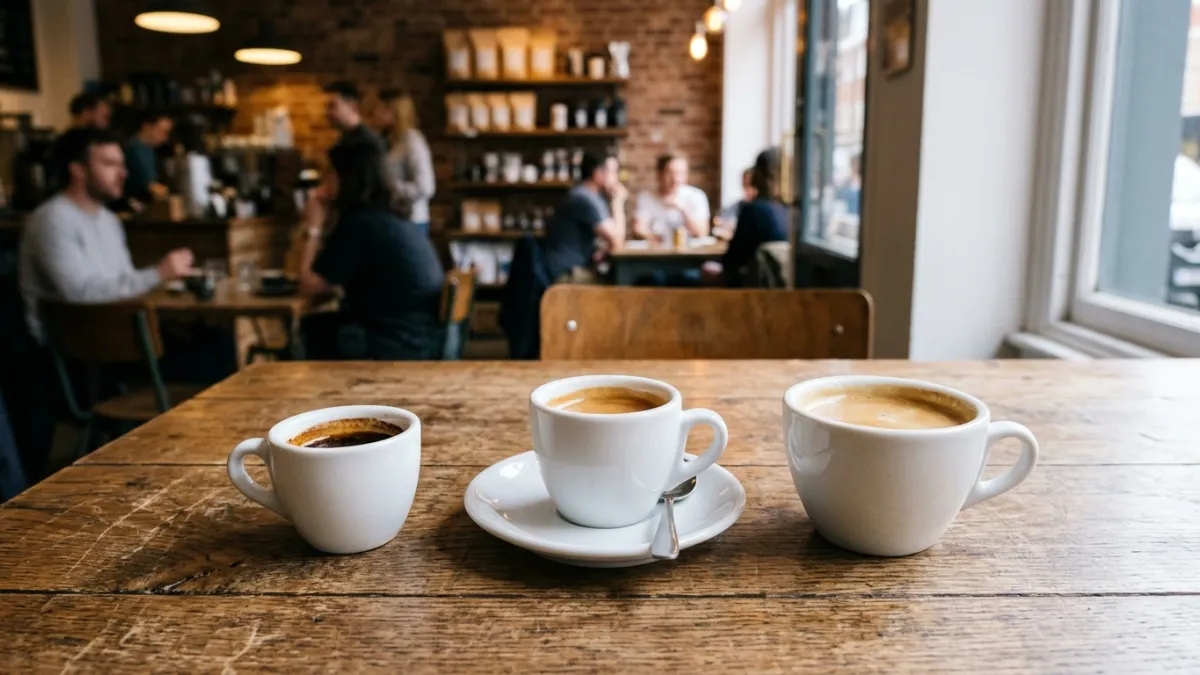
If you have ever stood in front of an espresso machine or scanned a specialty coffee menu, you have likely encountered three terms that sound like a trio of classic Italian cars: espresso, ristretto, and lungo. While they are all pulled using the exact same portafilter, coffee dose, and machine pressure, the liquid that lands in your cup behaves, smells, and tastes dramatically different. Understanding the precise relationship between dose, yield, and extraction time turns what seems like subtle coffee jargon into a powerful set of tools for dialing in your morning brew.
Quick answer: The fundamental difference lies in the brew ratio and water volume used for extraction while keeping the ground coffee dose identical. A ristretto uses a concentrated 1:1 to 1:1.5 ratio for a rich, low-bitterness shot; a standard espresso uses a balanced 1:2 ratio; and a lungo stretches to a 1:3 or 1:4 ratio, yielding a larger, highly aromatic drink with pronounced bitter notes.
The Chemistry of Extraction: Dose, Yield, and Ratios
To understand why these three drinks taste so distinct, you first need to look at how water extracts flavor compounds from ground coffee. When hot water at roughly 90–96 °C (195–205 °F) passes through a finely ground puck of coffee under 9 bars of pressure, chemical compounds do not dissolve all at once. Instead, they extract in a very specific, predictable sequence. Acidic, fruity notes and natural fats come out first, followed by sweet sugars and balanced tactile body, and finally, heavy, dry, and bitter plant phenols.
The total dissolved solids (TDS) and extraction percentage define the character of your shot. The Specialty Coffee Association (SCA) identifies an optimal extraction yield between 18% and 22% for balanced coffee. In a standard espresso setup using an 18 g dose of coffee in a double basket, shifting the liquid yield changes which phase of extraction dominates the cup. Altering water flow does not merely dilute or concentrate the cup; it fundamentally shifts the chemical balance of what ends up in the glass.
Because the basket weight remains constant, coffee baristas use liquid weight ratios rather than fluid volume to ensure accuracy. Volume can be misleading due to crema thickness, which varies depending on bean freshness and roast profile. By measuring dry grounds to liquid weight in grams using a precise digital scale, you gain absolute control over whether your shot becomes a concentrated ristretto or an extended lungo.
Deconstructing the Three Shots: Ratio, Flow, and Flavor
While all three options start with the same portafilter basket, their mechanical execution and sensory profiles diverge significantly. Here is how each classic drink breaks down when pulled by a trained barista.
1. Standard Espresso (Normale)
The benchmark of modern coffee culture, a traditional espresso (often called a normale) aims for complete sensory harmony. Using a standard 18 g dose of finely ground specialty coffee, an espresso targets a 1:2 brew ratio, yielding roughly 36 g of liquid in 25 to 30 seconds. The resulting beverage exhibits a velvety body, vibrant acidity, balanced sweetness, and a thick, reddish-brown crema layer on top.
2. Ristretto (The Restricted Shot)
Ristretto translates from Italian as "restricted" or "narrow." To brew a true ristretto, the flow of water is cut short, stopping the extraction before the mid-to-late soluble compounds dissolve. Utilizing the same 18 g dose, a ristretto stops at a tight 1:1 to 1:1.5 ratio, delivering only 18 g to 27 g of liquid in 15 to 20 seconds. Because extraction stops early, bitterness is almost completely absent, leaving behind intense sweetness, dense tactile viscosity, and pronounced bright acidity.
3. Lungo (The Long Shot)
Lungo means "long" in Italian, and it refers to letting water run through the coffee puck for an extended period. With an 18 g dose, a lungo uses a 1:3 to 1:4 ratio, pulling between 54 g and 72 g of liquid over a longer 35 to 45 second shot time. Far from simply adding hot water like an Americano, a lungo forces extra water directly through the ground coffee. This pulls out late-stage bitter compounds and plant material, resulting in a lighter body, lower viscosity, higher total caffeine extraction per cup, and a distinct dry, woody flavor note.
Barista's tip: Never pull a lungo simply by letting a standard espresso run for 40 seconds on the same grinder setting. Because the water takes longer to pass through, keeping the fine grind leads to severe over-extraction and micro-channeling in the puck. To pull a sweet, complex lungo, coarsen your grind slightly so the water flows faster, reaching your 1:3 ratio target within 30 to 35 seconds without blistering the coffee bed.
Side-by-Side Comparison Matrix
Comparing these parameters side-by-side helps illustrate how subtle adjustments in water output and extraction duration completely alter the physical properties of the espresso basket yield.
| Drink Type | Dose (Dry) | Yield (Liquid) | Brew Ratio | Brew Time | Flavor Profile |
|---|---|---|---|---|---|
| Ristretto | 18 g | 18–27 g | 1:1 to 1:1.5 | 15–20 sec | Dense, sweet, intense acidity, low bitterness |
| Espresso | 18 g | 36 g | 1:2 | 25–30 sec | Balanced, rich body, clear notes, golden crema |
| Lungo | 18 g | 54–72 g | 1:3 to 1:4 | 35–45 sec | Stretched body, tea-like texture, high bitter notes |
Grind Adjustments, Water Dynamics, and Dialing In
Achieving excellence across these three brewing styles requires more than just stopping the pump at a different time. When using professional home espresso machines or conical and flat burr grinders—such as those manufactured by Baratza, Fellow, or Eureka—matching your grind size to your intended target ratio is critical for high quality extraction.
For a ristretto, some baristas prefer to grind slightly finer (around 180–220 microns) than standard espresso size. This finer particle distribution increases resistance in the basket, allowing you to hit optimal extraction saturation within a shorter shot time. Conversely, when preparing a lungo, adjusting the burrs slightly coarser prevents the fine coffee particles from creating high pressure localized channels, which otherwise wash out harsh, astringent flavors.
It is also worth clarifying the common confusion between a lungo and an Americano or Long Black. An Americano is created by pulling a standard 1:2 espresso shot and diluting it with clean hot water from an external tap. This preserves the balanced flavor profile of the espresso while extending its volume. A lungo, by contrast, forces all excess water directly through the coffee puck, extracting additional solubles that external water addition can never replicate.
Which Shot Should You Brew?
Choosing between an espresso, ristretto, and lungo comes down to bean roast level, beverage goals, and your personal taste preferences. Lightly roasted single-origin coffees with vibrant floral notes often shine as a balanced espresso or a slightly stretched ratio, as they require sufficient water volume to extract complex sugars. Darker, traditional Italian roasts perform wonderfully as a ristretto, which suppresses harsh burnt flavors while highlighting deep chocolate and nutty undertones.
If you prefer drinking milk-based beverages like cortados or flat whites, a double ristretto serves as an incredible base, cutting through milk with intense sweetness and minimal bitterness. If you enjoy sipping a longer, dark, flavorful cup without the extreme strength of a double shot, dialing in a slightly coarse single-origin lungo offers an intriguing alternative to pour-over methods like the V60 or Chemex.
Practical Recommendation
To master these brewing styles at home, start by keeping your dose fixed at 18 grams of fresh beans (roasted within 2 to 4 weeks) and practice pulling a standard 1:2 espresso shot (36 g yield in 28 seconds). Once your grinder is properly dialed in for standard espresso, experiment by cutting your next shot short at 24 grams to sample a dense ristretto, then pull a second shot out to 54 grams for a extended lungo. Observing how the flavor shifts from sweet acidity to long-finish bitterness across these three cups is the fastest way to train your palate and take command of your home coffee bar.
Frequently Asked Questions
Does a ristretto have less caffeine than a lungo?
Yes. Caffeine is a highly soluble compound, but it extracts continuously throughout the brew cycle. Because a ristretto uses significantly less water volume and shorter contact time, it extracts less total caffeine than a standard espresso or a long-pulled lungo made from the exact same dose of ground coffee.
Can I make a ristretto or lungo with coffee pods or capsules?
Yes, many capsule machines have dedicated ristretto and lungo buttons. However, preset buttons on automated machines simply alter the volume of water pumped through the pod without adjusting the grind size, which can sometimes result in over-extracted lungos or under-extracted ristrettos compared to manual espresso dialing.
Is a lungo the same thing as an Americano?
No. An Americano is made by diluting a standard espresso shot with separate hot water. A lungo forces all the water through the ground coffee puck itself, extracting distinct compounds and bitter flavor profiles that bypass diluted drinks.
Sources
- Specialty Coffee Association (SCA) Standard Protocols
- Wikipedia: Espresso Technical Definitions
- Baratza Grinder Calibration Manuals & Grinding Theory
Looking for the Right Brewing Gear?
Check out our verified Top Coffee Brewing Essentials on Amazon.
As an Amazon Associate, we earn from qualifying purchases.