
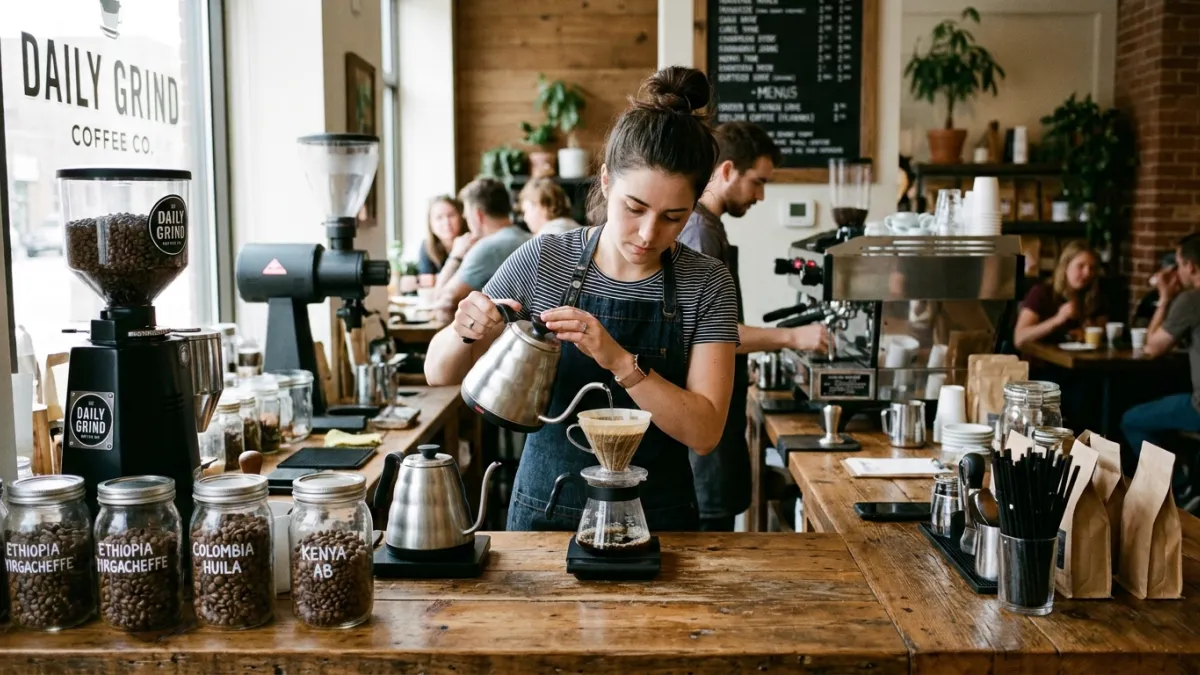
Walking into a specialty café today feels dramatically different from stepping into a traditional commercial coffee shop. Instead of dark, oily beans stored in clear hoppers and heavy syrups lining the counter, you encounter single-origin offerings labeled with elevation details, washing methods, and harvest dates. Third wave coffee transformed a daily caffeine habit into an artisanal craft centered on origin, transparency, and culinary precision. Understanding this evolution helps home baristas appreciate why specific brewing parameters like grind distribution, water temp, and extraction percentages matter so much in modern coffee culture.
Quick answer: Third wave coffee is a movement that treats coffee as an artisanal food product rather than a commodity, prioritizing bean origin, ethical sourcing, light-to-medium roasting, and precise brewing techniques. A café qualifies as "specialty" when it serves coffees scoring 80 points or higher on the Specialty Coffee Association (SCA) 100-point scale, prepared by trained baristas who control exact water ratios, grind sizes, and extraction variables.
Understanding the Evolution: First, Second, and Third Waves
To grasp what sets third wave coffee apart, it helps to look at the historical progression of coffee consumption over the last century. The First Wave began in the late 19th and early 20th centuries, defined by accessibility and convenience. Vacuum-sealed tins, instant granules, and pre-ground coffee allowed millions of households to brew coffee easily at home. Brands prioritized shelf-life and low cost over flavor clarity, which led to widespread consumption of heavily roasted Robusta and low-grade Arabica beans.
The Second Wave emerged in the late 1960s through the 1990s, driven by pioneers who introduced consumers to higher-quality Arabica coffee and espresso-based beverages. This era made dark-roasted dark espresso blends, flavored lattes, and Italian-style beverage terminology mainstream. While the second wave raised public awareness about coffee quality and created the modern café environment as a social hub, the actual focus remained largely on dark roast profiles, milk beverages, and brand consistency rather than individual farm-level origins.
The Third Wave emerged as a response to this standardized approach, treating coffee with the same reverence given to fine wine or craft beer. Rather than masking the intrinsic characteristics of the bean with deep roasting or added syrups, third wave roasters and baristas highlight terroir—the specific soil, climate, altitude, and processing method of each origin. Transparency, direct trade relationships with farmers, light-to-medium roast profiles, and meticulous manual brewing methods define this contemporary era.
What Defines a True 'Specialty' Café?
The term "specialty coffee" is not just a marketing buzzword; it carries a strict technical definition established by the Specialty Coffee Association (SCA). Coffee is evaluated by certified Q Graders using a standardized 100-point cupping scale. Beans must earn a score of 80 points or above to achieve specialty status. This evaluation assesses attributes such as aroma, flavor profile, acidity, body, balance, uniformity, and cleanliness of the cup.
Beyond the numerical score on paper, a specialty café demonstrates its commitment through every step of its workflow. Sourcing transparency is paramount: bags or menu boards clearly display the producer's name, farm or washing station, region, elevation (often exceeding 1,500 meters above sea level), botanical variety (such as Bourbon, Typica, or Gesha), and processing technique (washed, natural, or honey processed). This level of detail allows consumers to connect their morning cup directly to the agricultural effort behind it.
Barista's tip: Pay attention to the roast date stamped on the bag rather than a generic expiration date. Peak flavor expression for light-to-medium specialty roasts typically occurs between 7 and 21 days after roasting, once the beans have outgassed excess carbon dioxide but retaining their volatile aromatic compounds.
Equipment quality and maintenance also set specialty cafés apart from commercial chains. Professional specialty shops invest heavily in precision machinery, including flat or conical burr grinders with minimal retention and temperature-stable espresso machines. Staff members treat extraction like chemistry, continuously dialing in parameters throughout the day to adapt to ambient humidity and bean degassing.
Comparing Coffee Waves and Café Standards
Understanding the operational differences across coffee movements highlights why specialty coffee yields such distinct flavor profiles. The table below outlines key characteristics that differentiate traditional commercial spots from third wave specialty cafés.
| Feature | First & Second Wave Cafés | Third Wave Specialty Cafés |
|---|---|---|
| Bean Quality & Grading | Commercial grade (below 80 SCA score); focus on volume | Specialty grade (80+ SCA score); high altitude Arabica |
| Traceability | Blends labeled by country or generic roast level | Single-origin, single-farm, or micro-lot traceability |
| Roast Profile | Dark to very dark; masks bean defects with smoky notes | Light to medium; highlights natural acidity and origin flavor |
| Brewing Precision | Automated batch brewers, fixed machine settings | Weighed doses (0.1g accuracy), monitored water temp & time |
| Grind Equipment | Standard commercial grinders, blade or basic burrs | High-end flat/conical burrs (e.g., Mahlkönig, Baratza, Fellow) |
| Water Management | Basic tap filtration or tap water | Remineralized water optimized to 75–150 ppm total hardness |
The Science of Third Wave Extraction in Practice
Specialty coffee relies heavily on scientific parameters to unlock pleasant flavors without pulling harsh bitter compounds from the ground coffee. Baristas strictly measure the total dissolved solids (TDS) and aim for an extraction yield between 18% and 22%, which represents the ideal balance under SCA guidelines. Achieving this requires precise control over water quality, grind size distribution, coffee-to-water ratios, and brewing temperature.
Water quality plays a massive role in flavor extraction, given that a cup of pour-over coffee consists of roughly 98.5% water. Specialty cafés use specialized reverse osmosis systems with remineralization to maintain magnesium and calcium ions at ideal concentrations (roughly 75 to 150 ppm total hardness). These minerals bind to positive flavor compounds during extraction, ensuring vibrant acidity and pleasant sweetness in the final cup.
Brewing variables are tuned to match specific preparation methods, whether serving an espresso or a pour-over:
- V60 Pour-Over: 18 g coffee to 300 g water (1:16.6 ratio), medium-fine grind, 93 °C (200 °F) water, 45-second bloom phase, total brew time 2:40 to 3:15 minutes.
- Espresso: 18 g dose yield of 36 g liquid (1:2 ratio), fine grind, 93 °C water temp, 9 bar extraction pressure, target shot duration 27 to 30 seconds.
- French Press: 30 g coarse coffee to 500 g water (1:16.6 ratio), 95 °C water, steep time 4:00 minutes before skimming crust and pressing.
- AeroPress: 15 g medium grind to 220 g water (1:14.6 ratio), 90 °C water, 2:00 minute total steep and press sequence.
Bringing the Third Wave Experience to Your Home Kitchen
Transitioning to third wave brewing at home does not require thousands of dollars in commercial machinery. The most critical upgrade any home barista can make is transitioning from a blade grinder to a quality burr grinder, such as a Baratza Encore or Fellow Ode. Consistent particle size ensures uniform extraction, preventing the sourness caused by coarse boulder particles or bitterness caused by excessive fine particles.
Once you have an accurate burr grinder, pair it with a digital kitchen scale measuring to 0.1 grams and a variable-temperature gooseneck kettle. Start with fresh single-origin coffee roasted within the past two weeks, and begin experimenting with standard pour-over devices like the Hario V60 or Chemex using a consistent 1:15 to 1:17 brew ratio. Measuring your inputs systematically reveals how minor changes in grind size or water temperature dramatically reshape sweet, floral, and fruity notes in your cup.
Frequently Asked Questions
Is specialty coffee always light roast?
While third wave coffee leans toward light and medium roast profiles to preserve natural origin flavors, specialty coffee is defined by its SCA score of 80+ rather than roast level alone. Specialty roasters craft medium or medium-dark roasts designed specifically to emphasize balance and body without burning the beans.
Why does specialty coffee taste more acidic or fruity?
Lightly roasted specialty Arabica beans retain high concentrations of organic acids, such as malic and citric acids, naturally found in the coffee cherry. Because these coffees are not roasted dark enough to break down these compounds, they showcase bright, fruity, or floral tasting notes rather than traditional dark roast bitterness.
What is the difference between single-origin and coffee blends?
Single-origin coffee comes from one specific geographic location, such as a single region, processing station, or individual farm lot, showcasing distinct local terroir. Blends combine beans from multiple origins to create a balanced, consistent flavor profile designed to cut smoothly through milk in espresso drinks.
Sources
Specialty Coffee Association (SCA) Standards
Wikipedia: Third wave of coffee
Looking for the Right Brewing Gear?
Check out our verified Top Coffee Brewing Essentials on Amazon.
As an Amazon Associate, we earn from qualifying purchases.
