Disclosure: As an Amazon Associate, we earn from qualifying purchases.
Strolling down the specialty coffee aisle or browsing an online roaster's menu often leads to a noticeable price discrepancy. A 12-ounce bag of a daily espresso blend might run around $14 to $16, while a single-origin lot from a micro-farm in Yirgacheffe or Huila can easily stretch past $22 to $35. To the uninitiated, both bags contain roasted Arabica beans, making the dramatic price gap seem arbitrary. However, the cost differential is driven by fundamental economics, agricultural risk, traceability, and sensory distinctiveness that separate bulk agricultural commodities from rare micro-lots.Quick answer: Single-origin coffee commands a premium price due to lower harvest yields, single-estate supply chain traceability, seasonal availability, and labor-intensive micro-lot processing. In contrast, blends combine larger, year-round harvests from multiple regions to maintain price stability, lower sourcing overhead, and offer a consistent flavor profile.
Understanding the Core Definitions: Single-Origin vs. Coffee Blend
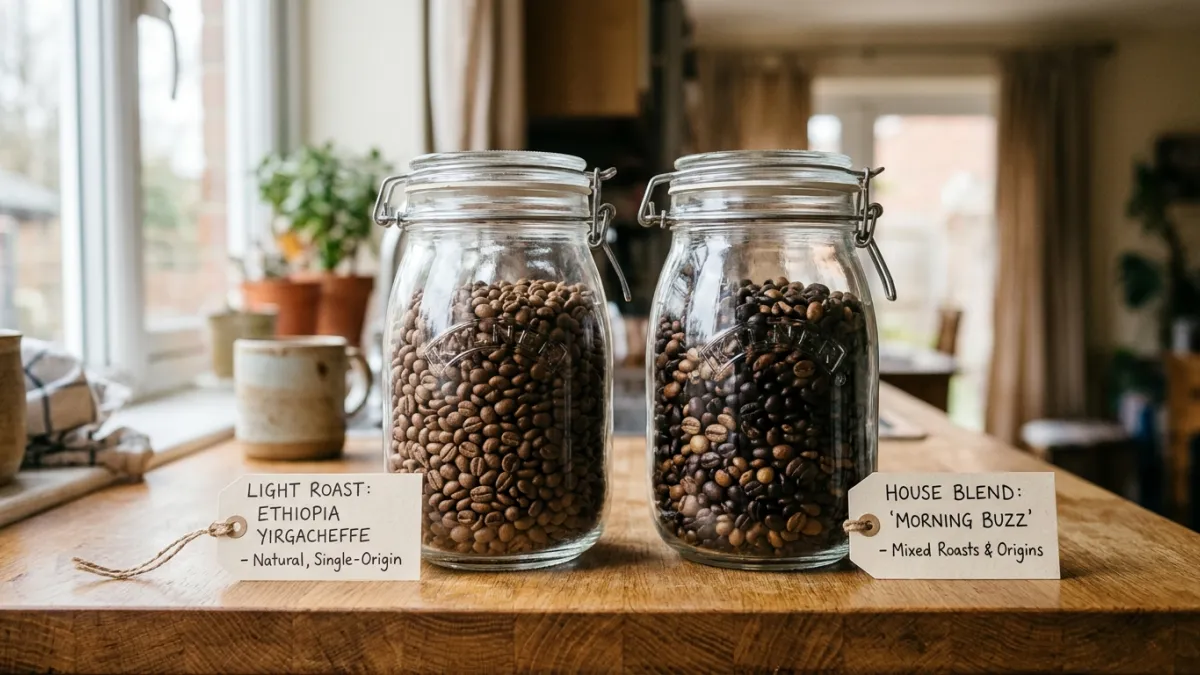
To understand the cost dynamics, one must first clarify what actually goes into the bag. A single-origin coffee comes from a single geographic location. This can range from a macro level—such as an entire country or region—down to a micro level, such as a specific farm, cooperative, or individual lot (often referred to as a micro-lot or nano-lot). The primary appeal of single-origin beans lies in their terroir: the unique combination of soil chemistry, altitude, climate, and processing method that imparts distinct flavor characteristics to the bean.
A coffee blend, on the other hand, is a crafted combination of beans originating from different regions or even different countries. Roasters design blends with precise goals in mind, such as balancing acidity, adding body, or ensuring that a specific signature flavor remains identical month after month. Blending allows roasters to take advantage of complementary attributes—for example, pairing a bright, floral Ethiopian bean with a heavy-bodied, chocolaty Brazilian bean to create a balanced espresso profile.
The structural difference between these two categories directly impacts cost. Single-origin coffees showcase natural variations and seasonal nuances, requiring exact sourcing and precise roasting. Blends leverage agricultural volume and flexibility, giving roasters the ability to swap components if prices fluctuate or a specific crop becomes unavailable due to weather events.
The Sourcing and Supply Chain Economics
The path from the coffee tree to your brewing setup involves complex logistics, and single-origin supply chains are inherently more fragile and costly to manage. Purchasing single-origin coffee often relies on Direct Trade relationships or specialized importer channels. Roasters or buyers travel to origin, sample dozens of microlots via cupping sessions, and pay premium prices well above the international commodities exchange standard (the "C Market" price) to secure exclusive rights to high-scoring lots.
Furthermore, micro-lots represent extremely small harvest yields. A farm might produce only ten 60-kilogram bags of a rare Pink Bourbon or Gesha cultivar in a single harvest season. Because the farmer cannot rely on economies of scale, the baseline cost per pound must cover the higher risk and manual labor involved in selective picking (hand-harvesting only red, perfectly ripe cherries) and specialized fermentation techniques like anaerobic maceration or natural processing.
Breville Barista Touch Espresso Machine BES880BSS, Brushed Stainless Steel

Blends rely on a fundamentally different financial model. To maintain commercial viability and consistent pricing, roasters source high-volume coffee crops from larger estates or regional co-ops. Buying in bulk lowers freight overhead, shipping container costs, and green coffee buying premiums. If a drought affects one region in Colombia, a roaster can reformulate their house blend by increasing the percentage of a similar Central American bean without sacrificing the overall flavor profile or inflating the retail price.
Barista's tip: When dialing in a light-roasted single-origin coffee on a pour-over setup like a Hario V60, extraction efficiency is key due to high bean density. Aim for an 18 g dose with a 1:16.5 ratio (around 297 g of water) at 94–96 °C (201–205 °F). Grind medium-fine—roughly 500–600 microns—and ensure a generous 45-second bloom using 50 g of water. If your brew stalls or tastes astringent, channel formation is usually the culprit rather than bean quality; maintain a gentle, steady spiral pour to keep the bed evenly saturated.
Sensory Profiles, Cup Scores, and Processing Costs
Price differences are also tied to sensory evaluation standards established by the Specialty Coffee Association (SCA). Coffee is graded on a 100-point scale by certified Q Graders. Commodity-grade coffee scores below 80, standard specialty coffee scores between 80 and 84, and high-tier single-origins typically score 85 points or higher. Scoring above 88 points puts a coffee into the elite micro-lot category, which directly correlates with exponentially higher auction and retail prices.
Processing methods heavily influence both cup score and production cost. Washed (wet-processed) coffees require substantial water infrastructure, while experimental fermentations demand strict temperature monitoring, anaerobic tanks, and prolonged drying times on raised African beds. If a processing batch spoils, the producer absorbs a massive financial loss, which must be factored into the price of successful yields.
| Factor | Single-Origin Coffee | Coffee Blend |
|---|---|---|
| Traceability | Specific farm, lot, or producer co-op | Multiple regions or international origins |
| SCA Cup Score | Typically 85 to 90+ points | Typically 80 to 84 points (per component) |
| Harvest Yield | Limited, highly seasonal micro-lots | Large volume, consistent annual supply |
| Target Flavor Profile | Distinct, complex, highlighting terroir | Balanced, uniform, predictable year-round |
| Recommended Extraction | Pour-over (V60, Chemex), AeroPress | Espresso, Moka pot, French press |
Roasting Dynamics: Precision vs. Uniformity
Baratza Sette 270Wi-Grind by Weight Conical Burr Grinder

Roasting single-origin coffee requires a high level of precision and technical control. Single-origin beans vary significantly in density, moisture content, bean size, and elevation origin. A dense Kenan bean grown at 2,000 meters above sea level absorbs heat far differently than a softer bean grown at lower altitudes. Roasters must craft customized roast profiles using specialized software to highlight delicate origin characteristics like jasmine aroma, bergamot notes, or bright citric acidity without introducing roast defects like scorching or tipping.
Roasting blends involves different technical requirements. Roasters must either pre-blend green coffee beans that share similar densities and moisture profiles, or post-blend components that have been roasted individually to their optimal development level. Post-blending requires extra labor, floor space, and storage capacity, but pre-blending requires precise thermal management to ensure softer beans do not burn while denser beans remain underdeveloped.
Because single-origins are often roasted to light or medium levels to preserve origin attributes, they retain higher organic acid density and cell wall strength. This makes them less forgiving during extraction, requiring home baristas to use precision burr grinders (such as flat or conical burr sets from Baratza or Fellow) to achieve uniform particle sizes without excessive fines that cause bitterness.
Which Should You Buy? Making the Choice for Your Setup
Choosing between single-origin coffee and a blend ultimately depends on your preferred brewing method, taste preferences, and daily coffee budget. If your goal is to experience expressive fruit notes, complex floral aromas, and vibrant acidity through manual brew methods like the V60, Chemex, or AeroPress, investing in single-origin beans provides a far superior sensory experience.
Conversely, if you prefer milk-based drinks like lattes and cappuccinos, or if you rely on an automated drip machine or espresso setup that demands consistency every morning, high-quality blends offer excellent value. Blends are engineered to cut through milk with rich notes of dark chocolate, toasted nuts, and caramel, providing a reliable cup without requiring constant adjustments to your grind size or water temperature.
Frequently Asked Questions
Is single-origin coffee always better quality than a blend?
Moccamaster 53948 KBGV Select 10-Cup Coffee Maker, Matte Black, 40 ounce, 1.25l

Not necessarily. While single-origin coffees often carry higher SCA cup scores and showcase rare flavor profiles, a thoughtfully crafted blend using high-grade specialty components can easily surpass a low-quality, poorly processed single-origin coffee. Quality depends on green bean selection, sorting, handling, and roasting expertise rather than classification alone.
Why do single-origin coffees taste more acidic or fruity?
Single-origin coffees are typically roasted lighter to preserve the natural organic acids and volatile aromatic compounds developed in the coffee cherry at high altitudes. Blends are often roasted medium to dark to create a balanced, low-acidity profile that pairs well with milk and traditional espresso preparation.
Do single-origin coffee beans go stale faster than blends?
All roasted coffee degrades over time as carbon dioxide outgasses and lipids oxidize. However, light-roasted single-origin coffees generally hit their peak flavor between 10 and 21 days post-roast, while darker espresso blends may peak earlier (around 7 to 14 days). Storing beans in an airtight container away from light and heat preserves freshness across both types.
Sources
Looking for the Right Brewing Gear?
Check out our verified Top Coffee Brewing Essentials on Amazon.
As an Amazon Associate, we earn from qualifying purchases.