Quick answer: Building a dream coffee bar requires prioritizing fresh beans and a quality burr grinder before spending on expensive espresso machines. Budget setups starting under $150 can yield extraordinary drip and pour-over coffee using manual grinders like the Timemore C2 and immersion brewers like the French press, while upgrades to electric grinders and temperature-controlled kettles provide convenience and precision for setups between $200 and $1,000+.
Foundation First: Core Elements Every Coffee Bar Needs
Before allocating funds toward shiny brewers or milk frothers, every home barista must understand the variables that dictate coffee quality. coffee extraction relies on dissolving organic compounds, sugars, and acids from ground coffee seeds into heated water. specialty coffee Association (SCA) standards establish that optimal brewing requires water temperatures between 90°C and 96°C (195°F to 205°F) and a total dissolved solids (TDS) target in water between 75 and 250 ppm. Without clean water and consistent coffee particles, even the most expensive coffee machine will produce flat or bitter beverages.
Your coffee grinder serves as the heartbeat of your coffee station. Blade grinders chop roasted beans into unpredictable fragments, creating a mix of microscopic fines that over-extract into harsh bitterness and large boulders that under-extract into sour notes. A burr grinder uses two revolving abrasive surfaces to crush beans into uniform particles. Consistent grind sizing allows water to pass through the coffee bed at an even rate, yielding balanced sweetness, acidity, and body.
Fresh whole-bean coffee and water filtration form the remaining pillars of a solid foundation. Specialty coffee roasters recommend consuming beans within 2 to 4 weeks of their roast date, as oxygen quickly degrades delicate aromatic oils once coffee is roasted and ground. Because a cup of black coffee consists of approximately 98% water, tap water loaded with chlorine or excessive mineral deposits will ruin delicate floral and fruity flavor notes. A simple charcoal or ion-exchange water filter pitcher dramatically improves sweetness and protects gear from scale buildup.
Tier 1: The Essential Starter Setup (Under $150)
Starting your coffee bar journey on a modest budget of $150 or less allows you to prioritize flavor extraction without paying for complex electronics. At this price point, manual equipment delivers exceptional mechanical quality. Hand grinders allow manufacturers to dedicate 100% of the build cost toward precise stainless steel burrs rather than electric motors and plastic gearing.
A manual burr grinder paired with a classic manual brewer easily out-brews standard automatic drip machines. Pour-over drippers like the Hario V60 or immersion tools like the French press and AeroPress cost under $40 yet offer complete control over water temperature and steep duration. Adding a basic digital kitchen scale with 0.1-gram precision ensures repeatable coffee-to-water ratios rather than relying on inconsistent volumetric scoops.
Barista's tip: When brewing pour-over coffee on a manual setup, pour roughly two to three times the weight of your coffee dose in hot water for a 30 to 45-second bloom phase. This initial pour releases trapped carbon dioxide gas from freshly roasted beans, preventing gas bubbles from repelling water and creating channels during the main extraction.
- manual burr grinder ($30–$70): Timemore C2/C3 or Hario Skerton Pro for reliable grind uniformity across filter brewing methods.
- Manual Brewer ($15–$40): Hario V60 glass/plastic dripper, Bodum French Press, or AeroPress Original.
- Precision Scale ($15–$25): Digital kitchen scale measuring in 0.1g increments with an integrated timer function.
- Stovetop Gooseneck Kettle ($20–$35): A narrow spout kettle allowing precise flow rate control over pour-over beds.
Tier 2: The Enthusiast Setup ($200 to $500)
Investing between $200 and $500 elevates your daily routine by introducing speed, electric automation, and fine temperature management. An electric burr grinder becomes the centerpiece at this tier, eliminating the physical labor of hand-grinding morning beans while handling multiple pour-overs or large batch brews effortlessly.
Variable temperature electric gooseneck kettles are a game-changer for filter coffee enthusiasts. Lightly roasted Ethiopian or Colombian coffees often shine when brewed at higher temperatures (94°C–96°C / 201°F–205°F) to draw out dense sugars, whereas darker roasts benefit from lower temperatures (88°C–91°C / 190°F–195°F) to tame roast bitterness. Having single-degree temperature control allows you to fine-tune extraction parameters for specific roast profiles.
This price range also unlocks entry-level espresso capability. Compact semi-automatic espresso machines allow you to craft dense shots and steam textured milk for lattes and cappuccinos. When brewing espresso, baristas typically aim for a 1:2 yield ratio—such as extracting 36 grams of liquid espresso from an 18-gram coffee dose over 25 to 30 seconds.
Tier 3: The Prosumer & Dream Setup ($500+)
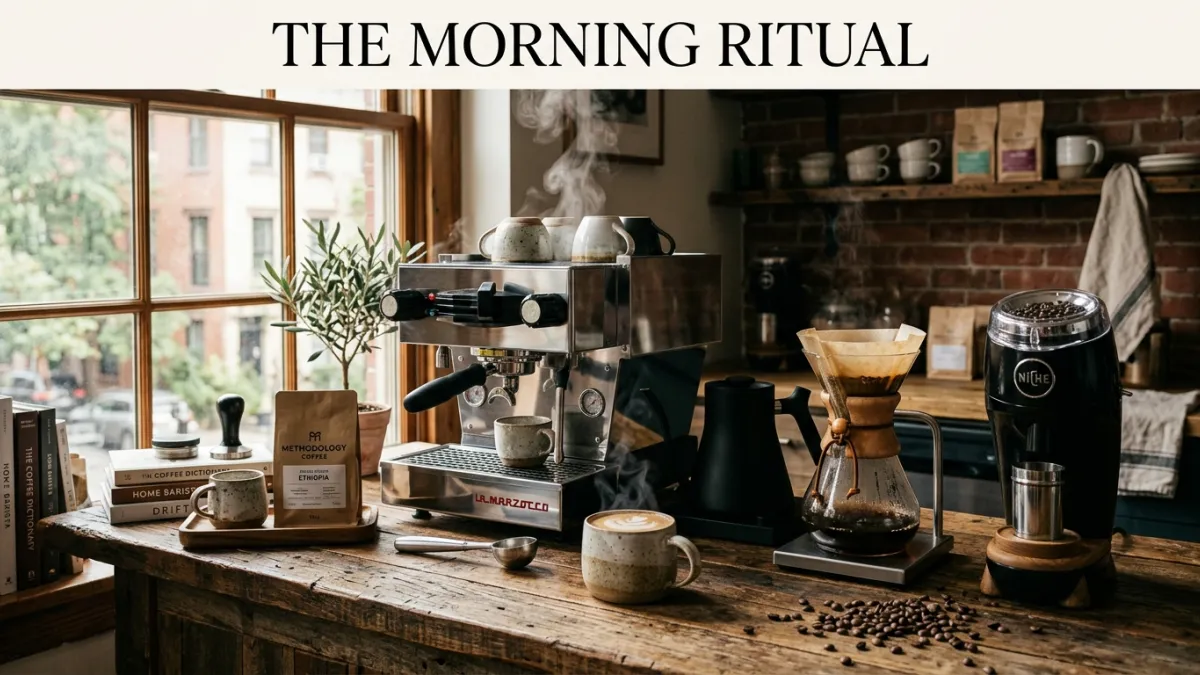
For dedicated coffee enthusiasts with a budget of $500 to $2,000+, the home coffee station rivals commercial cafés. Prosumer setups feature single-dose electric grinders with flat steel burrs that produce narrow particle distributions, emphasizing clarity, sweetness, and distinct origin characteristics in specialty micro-lots.
Home espresso machines in this tier feature Proportional-Integral-Derivative (PID) temperature stability, dual boilers or heat exchangers for simultaneous brewing and steaming, and commercial 58mm portafilters. Having dedicated steam boilers provides dry, high-pressure steam power capable of texturing silky microfoam for latte art in under 15 seconds.
Accessories play a major role in optimizing workflow at the high end. Magnetic distribution tools, heavy stainless steel tampers, insulated carafes, airtight vacuum canisters like the Fellow Atmos, and dedicated under-sink reverse osmosis or remineralization water systems ensure every single variable remains under complete control.
Coffee Setup Equipment & Specification Comparison
Selecting the right equipment requires matching your preferred coffee styles with realistic technical specifications. The table below outlines gear recommendations, target parameters, and expected extraction metrics across various budget tiers.
| Budget Tier | Recommended Grinder | Primary Brewer | Ideal Ratio | Target Water Temp | Best For |
|---|---|---|---|---|---|
| Starter (<$150) | Timemore C2 / C3 (Manual) | Hario V60 / AeroPress | 1:15 – 1:17 | 92°C – 96°C (198°F–205°F) | Single-cup filter, clarity, minimal space |
| Enthusiast ($200–$500) | Baratza Encore ESP / Capresso | Chemex / Breville Bambino | 1:16 (Drip) / 1:2 (Espresso) | 90°C – 95°C (194°F–203°F) | Speed, milk drinks, multi-cup brewing |
| Prosumer ($500+) | Fellow Ode Gen 2 / Niche Zero | Gaggia Classic Pro / Dual Boiler | 1:2 – 1:2.5 (Espresso) | 93°C ± 0.5°C (200°F) | Barista-grade espresso, latte art, single-origin cupping |
Recommended Next Steps for Home Baristas
To start building your ideal home coffee station today, begin by assessing your preferred coffee drink style and buying the highest-quality burr grinder your current budget allows. Pair that grinder with fresh specialty beans and a simple manual pour-over device or French press, keeping your coffee-to-water ratio anchored between 1:15 and 1:17 for drip brewing. As your palate refines and your brewing technique stabilizes, gradually upgrade your temperature control and espresso hardware over time.
Frequently Asked Questions
Is a burr grinder really necessary for a beginner coffee bar?
Yes, a burr grinder is the most critical piece of equipment in any coffee setup. Unlike blade grinders that chop coffee into uneven pieces, burr grinders crush beans uniformly, ensuring equal extraction rates across all grounds and preventing sour or bitter flavors.
What is the ideal coffee-to-water ratio for daily brewing?
A standard starting ratio for pour-over and drip coffee is 1:16, meaning 1 gram of ground coffee for every 16 grams (or milliliters) of water. For a stronger brew or immersion methods like French press, try a 1:15 ratio; for a lighter cup, try 1:17.
Can I make espresso with a budget under $150?
True espresso requires 9 bars of pressure to extract coffee over 25–30 seconds. While true pressure-driven espresso machines cost more, budget tools like the AeroPress or Moka Pot can brew concentrated, espresso-like coffee that pairs wonderfully with warm milk.
How much difference does water temperature actually make?
Water temperature significantly affects extraction speed. Water between 90°C and 96°C (195°F–205°F) efficiently extracts desirable sugars and organic acids. Water that is too cold results in sour, under-extracted coffee, while boiling water can exaggerate harsh, burnt flavors.
Sources
Looking for the Right Brewing Gear?
Check out our verified Top Coffee Brewing Essentials on Amazon.
As an Amazon Associate, we earn from qualifying purchases.