Quick answer: You don't need expensive commercial equipment to brew cafe-quality coffee at home. Investing under $100 in high-impact tools like a precision digital scale with a timer, a manual steel-burr grinder, and a pour-over gooseneck kettle will drastically improve your consistency, extraction yield, and cup clarity immediately.
The Science of Precision: Gear That Eliminates Guesswork
coffee brewing is essentially an organic extraction process governed by chemistry and physics. When hot water hits ground coffee beans, it dissolves soluble compounds—acidic flavors extract first, followed by sweet sugars and pleasant lipids, and finally bitter astringent compounds. Achieving the gold-standard extraction yield of 18% to 22%, as defined by the specialty coffee Association (SCA), requires precise measurement rather than rough estimation. Eyeballing your dry dose with a standard plastic scoop can introduce a variance of up to 3 to 5 grams per cup, completely altering your target coffee-to-water ratio.
A dedicated coffee scale equipped with a built-in timer is arguably the single most impactful upgrade you can make for under $40. By weighing both dry grounds and liquid output down to 0.1-gram precision, you lock in repeatable brewing ratios—typically between 1:15 (stronger, heavier body) and 1:17 (brighter, lighter body). Integrating a live timer allows you to track bloom duration (usually 30 to 45 seconds) and total drawdown times, ensuring you extract sweet solubles without washing over-extracted bitterness into your mug. Choosing a water-resistant model with a silicone thermal pad protects the internal strain gauges from heat and accidental spills.
Barista's tip: When using a digital scale, always weigh your whole beans before grinding and re-weigh your grounds afterward. Low-cost electric grinders often suffer from high retention, holding onto 0.5 to 1.5 grams of stale grounds inside the chute. Tracking input versus output ensures your targeted 18 g dose actually ends up in your brewer, keeping your balance exact.
Another area where precision pays dividends is thermal management. water temperature dictates how quickly chemical compounds dissolve from the cell structure of the bean. The ideal brewing window spans 90°C to 96°C (195°F to 205°F). Water straight off a rolling boil (100°C / 212°F) can scald delicate light roasts, producing harsh ash notes, whereas water below 88°C (190°F) results in under-extracted, sour, and hollow flavors. A fast, accurate digital instant-read thermometer lets you monitor thermal decline inside your kettle or brewer in real time, giving you complete command over your thermal profile.
Grind Quality and Extraction: Unlocking Bean Potential
If water is the carrier, the grind size is the gatekeeper of flavor. Whole-bean coffee begins losing its volatile aromatic compounds through oxidation within 15 minutes of being ground. Furthermore, inexpensive blade grinders chop beans randomly, creating an erratic mixture of large boulders and micro-fine dust. The fine particles over-extract instantly, adding intense bitterness, while the large boulders under-extract, contributing sourness. To achieve uniform particle distribution, switching to a burr-based mechanism is vital.
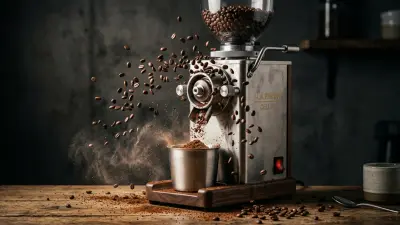
While high-end electric burr grinders can easily exceed several hundred dollars, manual burr grinders offer exceptional grind distribution at a fraction of the cost. Because your hand provides the mechanical force, budget manual grinders direct their entire manufacturing cost into sharp, precisely aligned stainless steel or ceramic burrs instead of cheap motors and plastic gears. Hand grinders featuring 38mm or 42mm stainless steel conical burrs can produce consistent particle sizes across fine (200–400 microns for espresso or Moka pot), medium (600–800 microns for V60 pour-over), and coarse (1000+ microns for French press) settings.
In addition to grinding fresh, protecting whole beans from environmental degradation keeps your grounds operating at peak potential. Storing coffee in paper bags with twist-ties exposes roast-fresh beans to oxygen, light, heat, and ambient moisture—the primary accelerators of staling. Upgrading to a vacuum-sealed or displacement-style airtight container purges trapped air and blocks harmful UV rays. Utilizing a container with a two-way degassing valve allows off-gassing carbon dioxide (CO2) to escape without allowing oxygen back in, preserving delicate floral and fruit aromas for up to four weeks post-roast date.
Essential Coffee Gadgets Under $100 Compared
Building an effective brewing workflow requires selecting tools that match your preferred brewing method and lifestyle. The table below breaks down the top budget-friendly coffee gadgets, their target use cases, and their primary operational specs to help you choose the right additions for your coffee bar.
| Gadget Type | Primary Function | Target Brew Methods | Key Specifications | Average Price Range |
|---|---|---|---|---|
| Digital Scale w/ Timer | Dose & ratio precision | V60, Chemex, AeroPress, French Press | 0.1g accuracy, integrated timer, silicone pad | $20 – $35 |
| Manual Burr Grinder | Uniform particle sizing | All manual brew methods | Stainless steel conical burrs, dual bearings | $50 – $85 |
| Stovetop gooseneck kettle | Pour dynamics & flow control | V60, Chemex, Kalita Wave | Precision gooseneck spout, built-in thermometer | $30 – $50 |
| AeroPress Coffee Maker | Immersion & pressure brewing | AeroPress (Standard & Inverted) | BPA-free plastic, 250ml capacity, portable | $40 – $50 |
| Vacuum Coffee Vault | Bean preservation & storage | Whole bean storage | Airtight seal, UV protection, CO2 release valve | $20 – $35 |
Flow Control and Versatile Brewers for Home Baristas
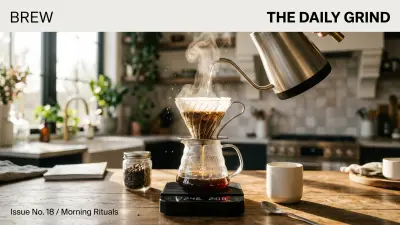
Achieving a balanced cup during pour-over operations demands complete liquid delivery control. Pouring directly from a standard wide-spout kitchen kettle dumps water unpredictably, disturbing the coffee bed and creating pathways of least resistance known as channeling. Channeling causes water to rush past portions of dry grounds while over-saturating others, degrading overall cup clarity. A gooseneck kettle features a curved, narrow spout that restricts water flow to a steady, predictable stream, giving you surgical control over pour rates, spiral patterns, and bed turbulence.
Pairing precise pour technique with a versatile brewer unlocks endless brewing experimentation. Among manual coffee equipment under $100, the AeroPress stands out for its exceptional flexibility, forgiving nature, and durability. Utilizing a hybrid extraction technique—combining full immersion with low-pressure plunger forcing—the AeroPress allows you to extract rich, full-bodied coffee in roughly 2 minutes. You can easily adjust variables like steep time, water temperature, and stir agitation to simulate espresso-style concentrates or ultra-clean filter brews.
For those looking to explore specific pour-over protocols like Hario V60 or Chemex setups, controlling flow rate alongside agitation plays an integral role in controlling contact time. A total brew time of 2:30 to 3:30 minutes for a standard 300 ml pour-over requires steady 5 to 7 g/s water distribution from your kettle. Investing in a stovetop gooseneck kettle—especially one featuring a built-in lid thermometer—enables smooth, repeatable pours while monitoring temperature drop throughout the brew phase.
- Enhanced Extraction Control: Steady, low-velocity water streams prevent bed disturbance and micro-channeling.
- Versatile Brewing Options: Switch effortlessly between immersion filter methods, bypass recipes, and concentrated shots.
- Travel-Ready Durability: Shatterproof poly-carbonate or food-grade silicone construction means you can take your coffee gear anywhere.
- Simplified Maintenance: Fewer mechanical parts mean quick rinsing, zero mineral scaling inside pumps, and decades of functional life.
Choosing affordable, manual equipment over complex electrical appliances also streamlines cleanup and maintenance. Gear like AeroPress immersion manual brewers or glass pour-over cones can be thoroughly rinsed in seconds without requiring descaling cycles or specialized detergent tablets. This hassle-free operation keeps your morning routine fast, clean, and entirely focused on enjoying high-quality flavor.
Clear Recommendation
If you are looking to make the absolute biggest leap in coffee quality today on a budget, prioritize buying a high-grade manual steel-burr grinder alongside a simple 0.1g digital scale with a timer. Grinding whole beans freshly right before brewing eliminates flavor loss from oxidation, while measuring your dry dosage (18 g) and water volume (300 g) guarantees a perfect 1:16.6 brew ratio every single time. Master these two foundational elements first, and you will immediately out-brew most standard drip machines without spending over $100.
Frequently Asked Questions
Is a manual burr grinder really better than an inexpensive electric blade grinder?
Yes, absolutely. Blade grinders chop coffee beans unevenly into a mixture of large chunks and tiny fines, causing simultaneous under-extraction and over-extraction. A manual burr grinder uses precision-machined steel or ceramic burrs to produce consistent, uniform particle sizes, resulting in significantly cleaner, sweeter, and more balanced coffee.
Do I really need a gooseneck kettle if I don't drink pour-over coffee?
If you primarily brew with a French press, AeroPress, or Moka pot, a gooseneck kettle is not strictly necessary, as precise water placement is less critical for full immersion methods. However, if you plan to brew with a Hario V60, Chemex, or Kalita Wave, a gooseneck kettle is essential for controlling pour rate and preventing channeling.
How long do whole coffee beans stay fresh inside an airtight canister?
Whole bean coffee typically tastes best between 7 and 28 days post-roast date. Storing your beans in an airtight container with a CO2 valve away from direct sunlight, moisture, and excess heat preserves delicate aromas and slows down flavor degradation, keeping your coffee tasting fresh for up to 4 to 6 weeks.
Sources
- Specialty Coffee Association (SCA) Standard Brewing Guidelines
- Wikipedia: Coffee Extraction Science
- AeroPress Official Product Specifications and Usage Manual