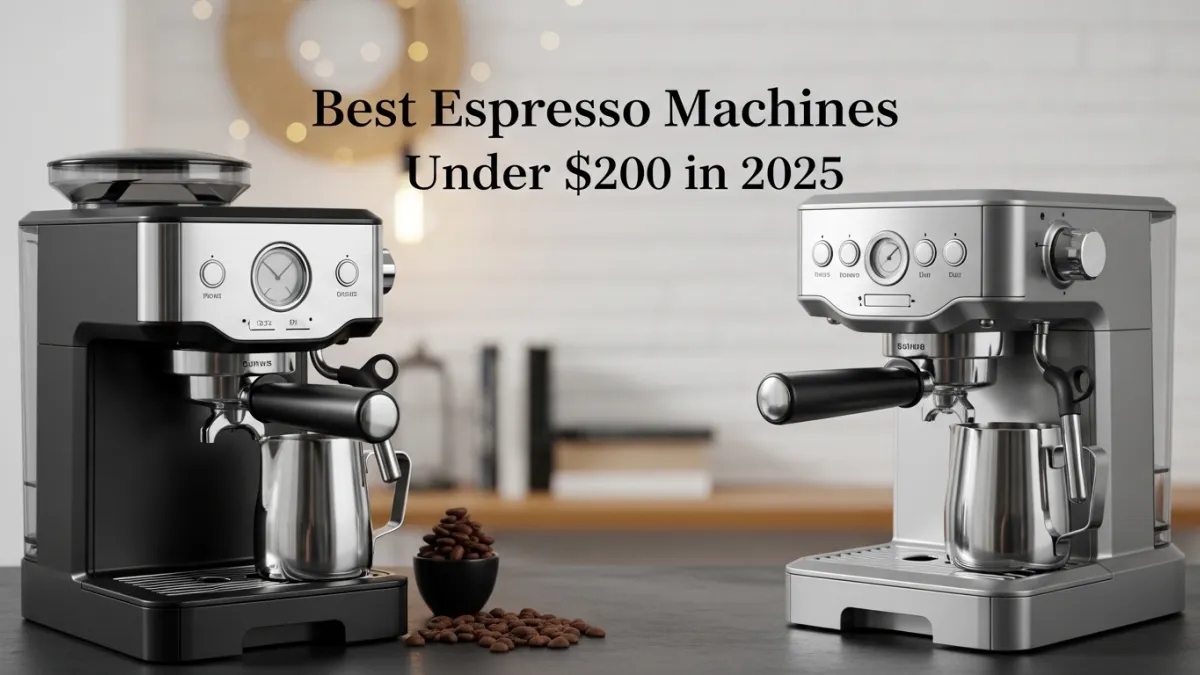
Quick answer: The De'Longhi Stilosa EC260BK and Casabrews CM5418 are the overall best espresso machines under 0 for 2025, balancing reliable 15-to-20-bar pressure pumps, compact counter footprints, and capable steam wands. For pure espresso purists willing to manually lever their shots, the Flair NEO Flex provides unmatched extraction quality at roughly half the maximum budget.
Understanding the Reality of Espresso Under $200
Buying an espresso machine on a tight budget requires adjusting your expectations regarding internal hardware and extraction mechanics. Professional coffee shop equipment relies on heavy brass commercial boilers, rotary pumps, and large 58mm portafilters that maintain steady thermal stability shot after shot. Budget consumer units rely on compact thermoblock heating elements or small aluminum boilers designed to heat water rapidly within 45 to 60 seconds. While these entry-level systems hit the required brewing temperature quickly, they require thermal management techniques, such as pulling a warm-up blank shot through an empty portafilter, to offset heat loss across successive extractions.
Pressure dynamics also differ significantly between commercial standards and entry-level home machines. While standard specialty espresso targets a steady 9 bars of pressure at the coffee puck, budget pump machines frequently advertise 15 to 20 bars of maximum pump capacity. This higher peak rating is designed to force water through dual-wall pressurized baskets (also known as pressurized portafilters), which artificially build backpressure to create a dense foam layer resembling crema. Pressurized baskets make life easy for beginners using pre-ground store-bought coffee, but upgrading to an unpressurized bottomless basket down the line unlocks true, nuanced espresso flavors.
Barista's tip: To get true café-quality body from a sub-$200 machine, toss the stock plastic tamper and pick up an inexpensive 51mm heavy steel tamper alongside an unpressurized basket. Weigh out an 18 g dose of freshly roasted beans (2 to 4 weeks off roast date), grind fine enough to achieve a 1:2 yield (18 g coffee to 36 g liquid espresso) in 25 to 30 seconds, and watch your crema transform from thin soapy bubbles to deep caramel microfoam.
Top 5 Budget Espresso Machines Reviewed for 2025
1. De'Longhi Stilosa EC260BK — Best Overall Pump Machine
The De'Longhi Stilosa EC260BK stands out as one of the most reliable entry-level pump machines on the market today. Equipped with a genuine 15-bar Italian pump and a durable stainless steel boiler, it delivers consistent water pressure and impressive thermal recovery for its price bracket. Its compact footprint (roughly 8 x 11 inches) fits seamlessly on crowded kitchen counters, while the removable 1-liter water tank simplifies daily maintenance and refilling. The manual steam wand features a removable sheath, allowing users to switch between thick cappuccinos foam and tighter latte milk texture.
2. Casabrews CM5418 — Best Feature Set & Build
Casabrews has made serious waves among budget coffee enthusiasts by pairing brushed stainless steel exterior paneling with modern digital functionality. The CM5418 features a built-in pressure gauge right on the front console, offering real-time visual feedback so you can see if your puck resistance is in the sweet spot during extraction. Powered by a 20-bar pump system and a rapid thermoblock heater, it preheats in under 30 seconds and offers pre-programmed single and double shot volumetric controls. The powerful commercial-style single-hole steam wand produces exceptional microfoam compared to typical panarello attachments.
3. Flair NEO Flex — Best Manual Espresso Purist Pick
If you prioritize shot quality over automated convenience and do not require milk frothing, the Flair NEO Flex is an unbeatable manual lever espresso maker. Because it operates purely via a mechanical lever arm without electrical heating elements or water pumps, every dollar goes directly into structural engineering and chamber tolerance. Operating at true 9-bar manual pressure, the NEO Flex accepts fine espresso grinds and utilizes a custom pressure-release valve chamber that prevents puck channeling. It yields shots with flavor complexity, acidity control, and rich crema that match machines costing $500 or more.
4. De'Longhi ECP3420 / ECP3630 — The Reliable Classic
A long-standing staple in home coffee bars, the De'Longhi ECP series provides robust functionality wrapped in a simple dial-operated chassis. Utilizing a 15-bar pump and a dual-option drip tray, this unit easily accommodates taller travel mugs up to 5 inches simply by removing the upper tray insert. Its self-priming operation reduces warm-up waiting time, and the dedicated hot water outlet function allows you to quickly purge the group head or make Americanos. The internal storage space under the lid neatly holds extra filter baskets and the included measuring scoop.
5. Gevi 20-Bar Compact Espresso Machine — Best High-Pressure Option
Designed specifically for fast weekday morning workflows, the Gevi 20-Bar Compact Machine packs high-pressure brewing into a narrow frame. It features dual temperature control thermostats that manage water temperature for espresso extraction (around 90–96 °C / 195–205 °F) and steam wand production independently. The simple button interface provides quick shot selection, and the quick-heating thermoblock allows users to transition from brewing to steaming in under 20 seconds. It is an excellent starter unit for those who make milk-forward drinks like lattes, mochas, and macchiatos on a tight schedule.
Feature Comparison & Specifications
To help you pick the right machine based on your kitchen footprint and brewing style, the table below outlines key technical specifications across our top recommended budget espresso models for 2025.
| Model | Pump Pressure | Heating System | Portafilter Size | Best For |
|---|---|---|---|---|
| De'Longhi Stilosa EC260BK | 15 Bar | Stainless Steel Boiler | 51 mm | Overall Value & Durability |
| Casabrews CM5418 | 20 Bar | Thermoblock System | 51 mm | Pressure Gauge & Aesthetics |
| Flair NEO Flex | Manual Lever (9 Bar) | Manual Pre-boil | 39 mm custom | Pure Shot Quality & Control |
| De'Longhi ECP3420 | 15 Bar | Stainless Steel Boiler | 51 mm | Tall Cup Clearance & Basics |
| Gevi 20-Bar Compact | 20 Bar | Fast Thermoblock | 51 mm | Quick Morning Milk Drinks |
How to Optimize Brew Quality on a Budget Machine
Maximizing performance on an entry-level espresso machine comes down to controlling the variables that you can influence outside of the machine's internal electronics. coffee bean freshness plays an outsized role in extraction quality; purchasing whole beans roasted within 2 to 4 weeks ensures active carbon dioxide degassing, which builds natural crema and body. Furthermore, pairing your machine with a capable conical burr grinder—such as a manual hand grinder with steel burrs—yields uniform particle sizing, avoiding the bitter fines produced by cheap blade choppers.
Thermal discipline is another crucial element when operating compact boilers and thermoblocks. Always lock your portafilter into the group head during preheating so the metal basket warms up along with the internal water circuit. Flushing a 3-second blank hot water shot through the group head directly into your shot glass prewarms your cup and stabilizes the shower screen temperature. When frothing milk, purge the steam wand into a rag for 2 seconds to discharge excess water condensation before submerging the tip into cold whole milk to achieve silky texture.
- Use fresh, whole bean coffee with clear roast dates rather than pre-ground grocery store bags.
- Always perform a pre-heat blank shot to warm your portafilter, group head, and coffee cup.
- Maintain strict brew ratios using a digital gram scale (18 g coffee input to 36 g liquid shot output).
- Descale your machine every 2 to 3 months using a mild citric acid solution to prevent mineral buildup in tiny boiler lines.
Choosing the Right Budget Setup
If your daily ritual centers around cappuccinos, lattes, or flavored milk drinks, selecting a compact pump machine like the De'Longhi Stilosa EC260BK or Casabrews CM5418 provides the ideal balance of reliable pressure, steam capability, and easy cleanup. Home baristas dedicated purely to learning the craft of straight espresso should pair the Flair NEO Flex with a quality manual burr grinder to achieve authentic 9-bar extractions that rival commercial coffee shops. Start by upgrading your basket and tamper, keep your water clean, and enjoy mastering espresso right on your kitchen counter.
Frequently Asked Questions
Can you make real espresso with a machine under $200?
Yes, you can pull genuine espresso shots under $200, especially when using manual lever machines like the Flair NEO Flex or pump machines upgraded with an unpressurized portafilter basket. Stock machines with pressurized baskets produce an espresso-style beverage topped with pressurized foam crema, which tastes great in lattes and cappuccinos.
What is the difference between a pressurized and non-pressurized basket?
A pressurized basket features a single tiny hole at the bottom exterior that creates artificial backpressure, making it forgiving with coarse or pre-ground store coffee. A non-pressurized basket features hundreds of micro-holes across the bottom, requiring a precise, uniform espresso grind to build natural puck resistance and yield true oils and crema.
Do I need a separate coffee grinder for these machines?
While pressurized baskets allow you to brew pre-ground coffee, investing in a dedicated coffee burr grinder dramatically improves shot flavor, sweetness, and consistency. A budget manual steel burr grinder or entry-level espresso burr grinder enables you to dial in your grind size for optimal extraction time.
How often should I descale a budget espresso machine?
Descaling should be performed every 2 to 3 months depending on water hardness and usage frequency. Mineral buildup restricts flow through tiny thermoblock passages and boiler valves, leading to reduced pressure, uneven heating, and potential heating element failure.