Hey there, fellow coffee enthusiast! If you've ever wondered why your home-brewed coffee sometimes falls short of your favorite cafe's, the answer might just be hiding in plain sight: your grinder. Or, more accurately, the type of grinder you're using. Today, we're diving deep into the fundamental difference between a burr grinder and a blade grinder, and why this choice is arguably the most crucial decision you'll make in your quest for a perfect cup.
Blade Grinders: The Budget-Friendly Introduction (and Why They Fall Short)
Let's start with the most common and often first-purchased grinder for many home brewers: the blade grinder. You might even have one in your kitchen right now, perhaps doubling as a spice grinder. And while it's fantastic for grinding cinnamon sticks or peppercorns, when it comes to coffee, it's generally a significant compromise.
How They Work
Imagine a tiny food processor. That's essentially what a blade grinder is. It uses a rapidly spinning blade (or blades) to chop and shatter coffee beans into smaller pieces. There are no adjustable settings for grind size beyond how long you hold down the button.
The Downsides for Coffee
- Inconsistent Grind: This is the blade grinder's biggest flaw. Because the blades chop rather than crush, you end up with a mix of very fine powder, medium chunks, and large fragments. This inconsistency leads to what we call "uneven extraction." The fine particles will over-extract (making your coffee bitter), while the large chunks will under-extract (making it sour and weak).
- Heat Generation: The high-speed blades generate friction and heat. This heat can "pre-brew" your coffee grounds, stripping away delicate aromatics and oils before they even hit the brewing water. The result? A duller, less vibrant cup.
- Static and Mess: The friction often creates static electricity, causing coffee grounds to cling to the grinder's walls, making cleanup a bit of a hassle.
While blade grinders are inexpensive and readily available (you can find basic models for $20-40 from brands like Cuisinart or Krups), for genuinely good coffee, they simply don't cut it. They might be okay in a pinch or for pre-grounding coffee for cold brew, where consistency is less critical, but for most brewing methods, you'll taste the difference immediately.
Burr Grinders: The Path to Superior Coffee
If you're serious about your coffee, a burr grinder is not an optional upgrade; it's a fundamental requirement. This is where precision meets flavor, allowing you to unlock the true potential of your beans.
How They Work
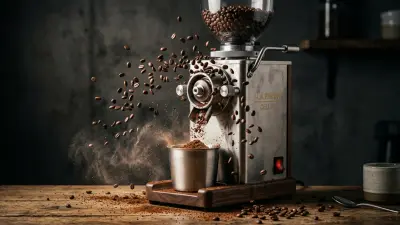
Instead of chopping, burr grinders use two abrasive surfaces (burrs) that grind coffee beans between them. One burr remains stationary, while the other rotates, crushing the beans into a uniform size. You adjust the distance between these burrs to change your grind setting, giving you incredible control.
Types of Burr Grinders
- Conical Burrs: These feature two cone-shaped burrs. They tend to operate at lower RPMs, producing less heat and static. They are excellent for a wide range of grind sizes, from espresso to French press.
- Flat Burrs: These use two flat, ring-shaped burrs. They often produce a very consistent grind, particularly good for espresso, though some argue they generate slightly more heat.
For home enthusiasts, both conical and flat burr grinders offer significant advantages over blade grinders. The choice between conical and flat often comes down to personal preference, budget, and specific brewing methods, but for most home users, conical burrs are a fantastic all-rounder.
The Advantages for Coffee
- Unmatched Grind Consistency: This is the holy grail. A burr grinder delivers a uniform particle size, meaning every tiny coffee particle extracts at roughly the same rate. This consistency ensures a balanced, delicious cup free from bitterness (over-extraction) or sourness (under-extraction).
- Flavor Control: With precise grind settings, you can dial in the perfect grind for your brewing method. Fine for espresso, medium for pour-over, coarse for French press – each setting optimizes extraction for that specific brew, enhancing flavor nuances.
- Minimal Heat Generation: burr grinders operate at lower speeds, significantly reducing heat buildup and preserving the delicate aromas and oils in your coffee.
Why Grind Consistency Truly Matters for Your Brew
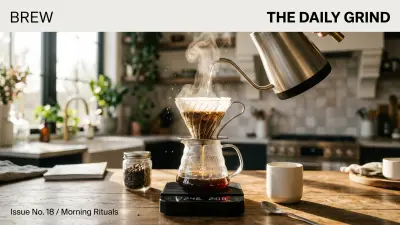
Let's talk a bit more about why consistency is king. Imagine brewing a pour-over. If your coffee grounds are inconsistent, water will flow unevenly through the coffee bed. It will rush through the coarse particles (channeling) and get bogged down in the fine powder, leading to uneven extraction and a muddled, less flavorful cup. A uniform grind allows for an even flow, ensuring every coffee particle contributes its best to your final brew.
Choosing the Right Burr Grinder for You
Investing in a burr grinder is a game-changer. Here are some recommendations for different budgets:
- Entry-Level Electric (Excellent Value):
- Baratza Encore: Often recommended as the gold standard entry-level electric burr grinder. It’s durable, easy to use, and offers 40 grind settings perfect for drip, pour-over, and French press. (Around $180)
- Capresso Infinity Conical Burr Grinder: Another solid choice known for its quiet operation and consistent grind quality across multiple settings. (Around $100)
- Entry-Level Manual (Portable & Budget-Friendly):
- Timemore C2/C3 or 1Zpresso Q2: If you're on a tighter budget or value portability, these manual grinders offer exceptional grind quality comparable to electric models costing significantly more. They require some elbow grease but are fantastic for single-cup brewing. (Around $70-100)
- Mid-Range Electric (More Features & Precision):
- Baratza Virtuoso+ or Fellow Ode Brew Grinder: These offer enhanced features, finer grind adjustment, and more robust construction for the discerning brewer looking for greater control and consistency, especially for pour-over. (Around $250-350)
A Final Word on Maintenance
To keep your burr grinder performing optimally, regular cleaning is key. Coffee oils can build up on the burrs, affecting grind quality and introducing stale flavors. A simple brush and occasional use of grinder cleaning tablets (like Urnex Grindz) will keep your burrs pristine.
So, there you have it. The difference between a blade grinder and a burr grinder isn't just a technical detail; it's the difference between merely drinking coffee and truly experiencing it. If you're ready to elevate your home brewing, ditch the blade and embrace the burr. Your taste buds will thank you!