Your Journey to Perfect Espresso Starts Here!
There's nothing quite like the rich, aromatic embrace of a perfectly pulled espresso shot. It's the foundation for lattes, cappuccinos, and a glorious standalone experience. While the idea of making café-quality espresso at home might seem daunting, I promise you, it's an incredibly rewarding journey. As your trusted barista friend, I'm here to guide you, step-by-step, to unlock that perfect shot in your own kitchen.
A "perfect" espresso shot is a beautiful balance of sweetness, acidity, and bitterness, with a luscious mouthfeel and a tiger-striped layer of crema on top. It's about precision, practice, and a little bit of passion. Let's get started!
Essential Equipment for Espresso Success
Before we dive into the steps, let's ensure you have the right tools. Think of these as your artist's palette and brushes.
Espresso Machine
You'll need a machine capable of producing sufficient pressure (around 9 bars) and consistent temperature. For home enthusiasts, semi-automatic machines offer the best balance of control and convenience.
- Entry-Level/Intermediate Examples: The Breville Bambino Plus is fantastic for beginners, heating up incredibly fast. The Gaggia Classic Pro is a popular choice for those wanting more control and modding potential.
Grinder
This is arguably the most critical piece of equipment. espresso demands an extremely fine and consistent grind. A high-quality burr grinder is non-negotiable; blade grinders will not do!
- Why a Burr Grinder? It crushes beans uniformly, unlike blade grinders that chop them unevenly. Consistency is key for even extraction.
- Recommended Examples: The Baratza Sette 270 or Eureka Mignon Specialita are excellent choices, offering precise adjustments for espresso.
Other Indispensable Tools
- Digital Scale (0.1g accuracy): For precise dosing of beans and measuring espresso yield.
- Tamper: A quality, heavy tamper that fits your portafilter basket snugly.
- Distribution Tool (optional but recommended): A WDT (Weiss Distribution Technique) tool helps break up clumps and evenly distribute grounds.
- Timer: Built into most espresso machines or a separate stopwatch.
- Freshly Roasted Beans: The fresher, the better! Look for a "roasted on" date, ideally within 2-4 weeks.
Step-by-Step Guide to Your Perfect Espresso Shot
Let's pull that glorious shot!
Step 1: Prep Your Machine
Turn on your espresso machine and allow it to heat up fully. This usually takes 20-30 minutes for optimal temperature stability. Once hot, perform a quick "flush" – run some hot water through the group head (where the portafilter attaches) to clear any old grounds and further stabilize the temperature.
Step 2: Weigh Your Beans
Consistency is crucial. For a double shot, a good starting point is 18 grams of whole bean coffee. Place your portafilter on your digital scale and weigh out your beans directly into it (if it fits) or into a dosing cup.
Step 3: Grind with Precision
Grind your 18 grams of beans. For espresso, you need a very fine grind, roughly the consistency of powdered sugar or fine table salt. It should feel slightly gritty, not like flour. If your grind is too fine, the shot will run too slowly or choke the machine. Too coarse, and it will gush out too fast.
Pro Tip: If this is your first time, start with a slightly coarser espresso setting and adjust finer in small increments until you hit the target time.
Step 4: Distribute and Tamp
Even distribution and level tamping are vital to prevent "channeling" – where water finds easy paths through unevenly packed coffee, leading to under-extraction.
- Distribute: Gently tap the portafilter on the counter to settle the grounds. For best results, use a WDT tool to stir the grounds and break up any clumps, ensuring an even bed.
- Tamp: Place the portafilter on a level surface. Apply firm, even pressure straight down with your tamper until the coffee feels solid and compacted. Aim for consistent pressure each time, rather than a specific poundage (e.g., 20-30 lbs is a common reference, but consistency matters most). Give it a gentle twist to polish the surface.
Step 5: Pull the Shot
Lock the portafilter firmly into the group head. Place your pre-warmed cup(s) on the drip tray with your scale underneath. Start your timer simultaneously as you press the brew button. Watch the magic happen!
- Target Ratio: A great starting point for espresso is a 1:2 ratio. This means if you put in 18g of coffee, you aim for 36g of liquid espresso out.
- Target Time: Aim for your shot to extract in 25-30 seconds from the moment the pump activates (or the first drip, depending on your machine and preference).
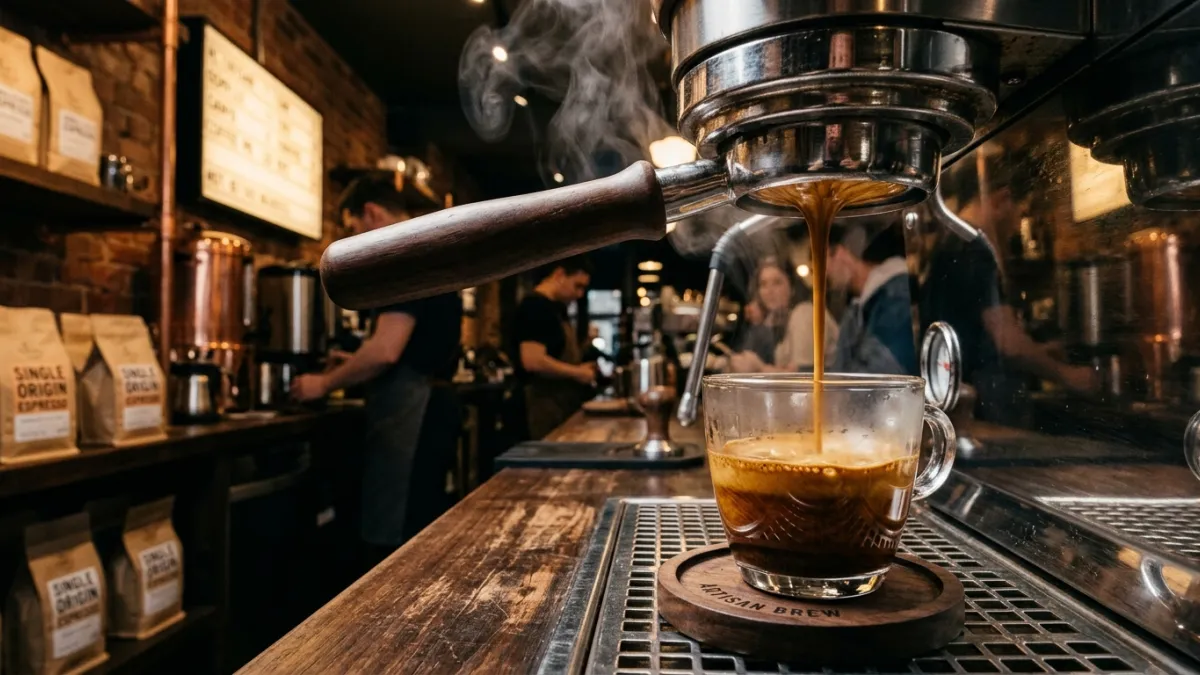
Observe the stream: it should start as a dark trickle, then thicken to a steady, honey-like flow, lightening in color as the shot progresses. Stop the shot once you reach your target yield (e.g., 36g).
Step 6: Evaluate and Adjust
This is where the true barista journey begins – tasting and dialing in!
- If your shot extracted too fast (e.g., 15-20 seconds) and tastes sour, watery, or thin: Your coffee is likely under-extracted. The grind is too coarse. Action: Grind finer.
- If your shot extracted too slow (e.g., 40+ seconds) and tastes bitter, harsh, or burnt: Your coffee is likely over-extracted. The grind is too fine. Action: Grind coarser.
Make small, incremental adjustments to your grind setting, one variable at a time, until you hit that sweet spot of taste, time, and yield.
Troubleshooting Common Espresso Issues
- Sour Taste: Grind finer, increase dose slightly, or try a slightly higher brew temperature (if adjustable).
- Bitter Taste: Grind coarser, decrease dose slightly, or try a slightly lower brew temperature.
- "Channeling" (spray from portafilter): Indicates uneven extraction. Focus on better distribution and tamping. A WDT tool can be a game-changer here.
- No Crema / Thin Crema: Could be old beans, too coarse a grind, or too low a brew temperature.
Enjoy Your Perfect Espresso!
Pulling a perfect espresso shot is a skill that develops with practice and patience. Don't be discouraged by a few less-than-perfect shots. Each one is a learning opportunity! Experiment with different beans, play with your grind settings, and most importantly, trust your taste buds.
Congratulations, home barista! You're now well on your way to mastering the art of espresso. Enjoy the rich rewards of your efforts, cup after delicious cup. Share your journey with us at Coffee Brew Hub – we love to hear about your espresso adventures!