Why Grind Size is Your Coffee's Secret Weapon
Ever brewed a cup that tasted weak and sour, or surprisingly bitter and astringent? Chances are, your grind size was the culprit! As your trusted barista friend, I'm here to tell you that mastering coffee grind size is one of the most crucial steps to unlocking truly delicious coffee at home. It directly impacts extraction – how much flavor, aroma, and body is pulled from your coffee grounds into the water.
- Under-extraction (too coarse for the brew method) often tastes sour, weak, watery, or salty. Not enough good stuff got out!
- Over-extraction (too fine for the brew method) often tastes bitter, hollow, astringent, or burnt. Too much got out!
The goal is always balanced extraction, and this comprehensive coffee grind size chart from Coffee Brew Hub will guide you every step of the way.
The Grind Spectrum: From Fine Dust to Chunky Rocks
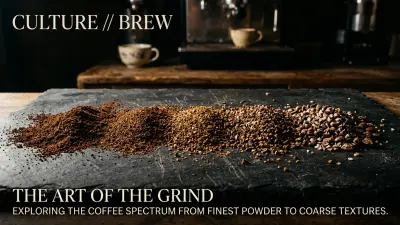
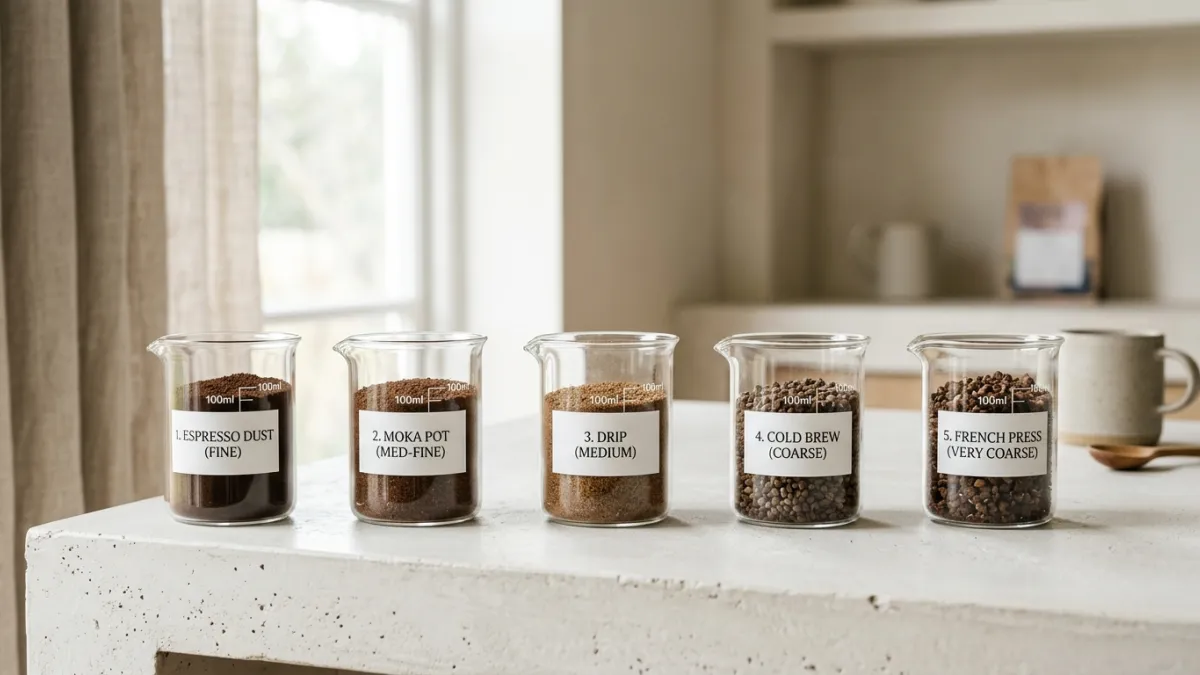
Think of coffee grind sizes as a spectrum, from super fine to super coarse. Each brewing method has an ideal grind size, primarily dictated by how long the water is in contact with the coffee (contact time) and the design of the brewer itself.
Extra Fine Grind (Powder-like)
Description: This grind is incredibly fine, like powdered sugar or flour. When you rub it between your fingers, it feels like dust and clumps together easily.
- Brewing Methods: Turkish Coffee
- Why: Turkish coffee is brewed by boiling finely ground coffee directly in water, so it requires maximum surface area for incredibly fast extraction.
Fine Grind (Sugar-like)
Description: Similar to table salt, but a bit finer. It feels smooth and slightly gritty between your fingers, not powdery but not individual grains either.
- Brewing Methods: Espresso, Moka Pot, Aeropress (for short, concentrated brews)
- Why: Espresso machines use high pressure and very short contact times (25-30 seconds). A fine grind creates enough resistance to slow the water flow, ensuring proper extraction under pressure. Moka pots also use pressure, albeit less, for a concentrated brew.
- Tip: For espresso, dialing in this grind is key. If your shot pulls too fast, go finer. Too slow, go coarser.
Medium-Fine Grind (Table Salt)
Description: This grind has a texture resembling table salt. You can clearly distinguish individual particles, but they are still quite small.
- Brewing Methods: Pour Over (e.g., Hario V60, Kalita Wave – for quicker drains), Aeropress (standard 1-2 minute brews)
- Why: This grind offers a good balance for methods where water slowly drips through the grounds. It allows for sufficient contact time without clogging the filter or allowing water to rush through too quickly.
Medium Grind (Sand-like)
Description: The most common grind size, resembling regular sand or coarse table salt. It feels gritty and distinct.
- Brewing Methods: Automatic drip coffee makers, Pour Over (Chemex, longer V60 brews), Siphon
- Why: This is the workhorse grind for many home brewers. It's ideal for drip machines where water drips through the grounds over a few minutes. It allows for good extraction without bitterness or sourness.
Medium-Coarse Grind (Rough Sand / Sea Salt)
Description: This grind looks like rough sand or fine sea salt. The particles are clearly visible and feel noticeably gritty.
- Brewing Methods: French Press, Chemex (for longer steep times), Percolators
- Why: For methods with longer immersion times, like the French Press (typically 4 minutes), a medium-coarse grind prevents over-extraction and sludge in your cup. It provides less surface area, slowing down the extraction process.
Coarse Grind (Sea Salt / Breadcrumbs)
Description: The particles are distinct and chunky, resembling coarse sea salt or breadcrumbs.
- Brewing Methods: French Press (for a cleaner cup, less sediment), Percolators (for optimal flow)
- Why: This grind is used for methods with extended contact times, reducing the risk of over-extraction and ensuring good water flow.
Extra Coarse Grind (Rock Salt / Cracked Pepper)
Description: Large, chunky particles, like cracked peppercorns or rock salt. They are very uneven and distinct.
- Brewing Methods: Cold Brew
- Why: Cold brew involves incredibly long immersion times (12-24 hours). An extra coarse grind minimizes surface area to prevent massive over-extraction and bitterness during this prolonged steep. It also makes straining much easier!
Your Grinder: The Most Important Tool
You can't achieve precise grind sizes without a good grinder. Blade grinders "chop" coffee beans inconsistently, creating a mix of fine dust and coarse chunks – a recipe for uneven extraction. Invest in a burr grinder (conical or flat burr). These grind beans uniformly, allowing you to consistently hit your target grind size. Brands like Baratza, Fellow, and Bodum offer excellent home burr grinders.
Dialing In Your Grind: Taste is Key!
This chart is a fantastic starting point, but every coffee bean, roast level, and even grinder is slightly different. Use your taste buds to make final adjustments:
- If your coffee tastes sour, weak, or watery: Your grind is likely too coarse. Go a little finer.
- If your coffee tastes bitter, astringent, or hollow: Your grind is likely too fine. Go a little coarser.
Don't be afraid to experiment! A small adjustment can make a world of difference. Happy brewing, fellow coffee enthusiast!