Master Your Brew: The Ultimate Coffee Grind Size Chart Guide
Welcome, fellow coffee enthusiasts! At Coffee Brew Hub, we believe the journey to an extraordinary cup begins long before the hot water meets the grounds. It starts with a fundamental, yet often overlooked, element: the coffee grind size. It's the unsung hero, the silent architect of flavor, dictating whether your brew sings with delightful notes or falls flat.
Think of grind size as the gatekeeper of extraction. Too fine, and your coffee can be bitter and over-extracted. Too coarse, and you're left with a weak, sour, under-extracted cup. The goal? To hit that "Goldilocks" zone where the water extracts just the right amount of soluble compounds, revealing your coffee's true potential. This comprehensive guide will demystify grind sizes, empowering you to master every brewing method and turn your kitchen into a personal café.
Why Grind Size is Crucial: The Science of Extraction
The magic behind grind size lies in its direct impact on two critical factors: surface area and contact time.
- Surface Area: Finer grounds have a greater total surface area exposed to water. This means water can extract flavors and aromas more quickly.
- Contact Time: Different brewing methods require varying amounts of time for water to interact with the coffee. A fine grind provides resistance to water flow, increasing contact time, while a coarse grind allows water to pass through quickly.
Achieving the perfect balance between these two factors is key to optimal extraction. Let's dive into the grind sizes!
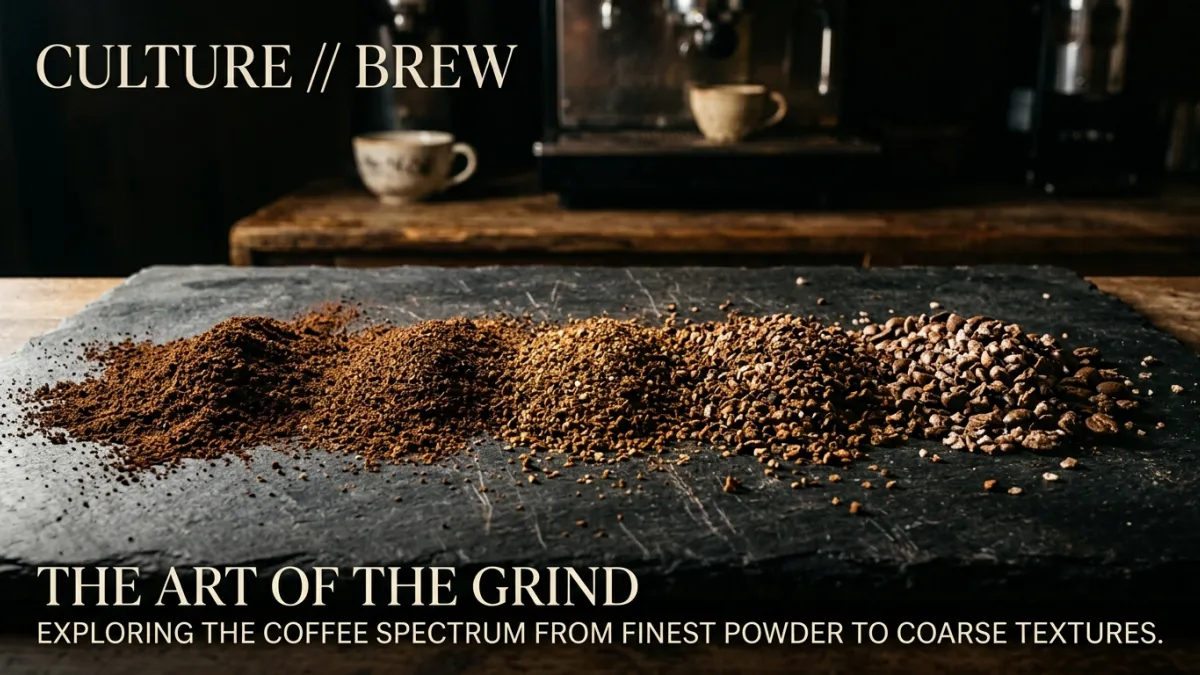
The Coffee Grind Size Chart: From Powder to Pebbles
Here’s a breakdown of common grind sizes, their textures, and the brewing methods they best suit:
1. Extra Fine (Powder-like)
- Texture: Resembles flour or powdered sugar. It's almost impossible to distinguish individual particles.
- Brewing Method: Turkish Coffee
- Why it works: Turkish coffee is unique because the grounds are suspended in the water and consumed. This ultra-fine grind allows for maximum extraction in a very short boiling process, creating its distinctive strong flavor and thick body.
2. Fine (Espresso)
- Texture: Slightly coarser than powdered sugar, similar to table salt or granulated sugar. When rubbed between your fingers, it should feel gritty but not chunky.
- Brewing Methods: Espresso, AeroPress (for short brew times), Moka Pot (sometimes, depending on preferred strength)
- Why it works: espresso machines use high pressure and very short contact times (25-30 seconds). A fine grind provides the necessary resistance for the water to extract quickly and efficiently under pressure, producing that rich, crema-topped shot.
3. Medium-Fine
- Texture: A bit coarser than fine, akin to fine sand. Individual particles are barely discernible.
- Brewing Methods: Moka Pot, Pour Over (some specific brewers like the Kalita Wave), Siphon, AeroPress (for longer brew times)
- Why it works: This grind offers a good balance for methods that have slightly longer contact times than espresso but still benefit from a relatively quick extraction. It prevents bitterness while ensuring sufficient flavor development.
4. Medium (Drip Coffee)
- Texture: Similar to regular sand or sea salt. You can clearly feel individual particles.
- Brewing Methods: Automatic Drip Coffee Makers, Pour Over (V60, Chemex), Siphon
- Why it works: This is the most versatile and common grind size. It's ideal for methods where water passes through the grounds by gravity for a moderate amount of time (2-5 minutes). It strikes the perfect balance for a clean, well-balanced cup.
5. Medium-Coarse
- Texture: Noticeably coarser, like rough sand or coarse sea salt. Distinct particles are easily felt.
- Brewing Methods: French Press (sometimes), Clever Dripper, Percolator (some models)
- Why it works: For brewing methods with longer immersion times (like the French Press, 4 minutes+), a medium-coarse grind prevents over-extraction and excessive bitterness. It also helps filter out fewer "fines," leading to a cleaner cup in immersion brewers.
6. Coarse (French Press)
- Texture: Resembles coarse sea salt or breadcrumbs. The particles are large and distinct.
- Brewing Methods: French Press, Percolator, Coffee Cupping
- Why it works: French Press brewing involves full immersion for several minutes. A coarse grind minimizes the surface area exposed to water, preventing over-extraction and bitterness during this extended contact time. It also reduces "sludge" in the bottom of your cup.
7. Extra Coarse
- Texture: Chunky, resembling cracked peppercorns or small pebbles.
- Brewing Method: Cold Brew
- Why it works: Cold brewing involves very long immersion times (12-24 hours) with cold water. An extra coarse grind is essential to prevent massive over-extraction and bitterness. The large particles ensure a slow, gentle extraction, yielding a smooth, low-acid concentrate.
Tips for Achieving the Perfect Grind
- Invest in a Burr Grinder: This is arguably the most important upgrade for any home barista. Blade grinders "chop" coffee, creating inconsistent particle sizes (fines and boulders), which leads to uneven extraction. A burr grinder (either conical or flat) crushes coffee uniformly, ensuring consistency and better flavor.
- Grind Fresh: Coffee begins to lose its aromatic compounds the moment it's ground. Always grind your beans just before brewing for the freshest, most flavorful cup.
- Adjust for Your Specific Brewer: Even within a category (e.g., "pour over"), different brewers or even slight variations in roast or bean density might require minor grind adjustments. Don't be afraid to fine-tune!
- Experiment and Taste: The best way to find your ideal grind is through trial and error. Pay attention to the taste of your coffee. If it's sour, try grinding finer. If it's bitter or hollow, try grinding coarser.
- Consistency is Key: A consistent grind size is paramount. Uneven particles will extract at different rates, leading to an unbalanced cup.
Your Grind, Your Masterpiece
Understanding and mastering coffee grind size is a game-changer. It's the secret weapon that allows you to unlock the full potential of your beans and tailor each brew to perfection. With this guide from Coffee Brew Hub, you're now equipped to experiment, adjust, and elevate your brewing game to new heights. Happy brewing, and enjoy transforming your kitchen into your very own personal café!