Quick answer: A 1:4 coffee-to-water ratio by weight (such as 200 grams of coarse coffee to 800 grams of water) yields the ideal cold brew concentrate. Steeping this mixture for 16 hours at room temperature extracts rich chocolate and nutty notes without excessive bitterness, allowing you to dilute the final liquid 1:1 with water, milk, or ice.
Understanding the Cold Brew Concentrate Ratio Matrix
Unlike traditional drip, pour-over, or espresso methods where hot water rapidly pulls solubles from grounds in seconds or minutes, cold brew relies on passive immersion over long durations. Because thermal energy is absent, the solvent power of cold or room-temperature water operates at a fraction of the speed. To compensate for this lower kinetic energy and build a versatile liquid foundation, we target a dense brew ratio rather than a ready-to-drink solution. Using mass instead of volume eliminates errors caused by bean density variations, roasting profiles, and air pockets between irregular particle shapes.
When measuring ingredients, a kitchen scale accurate to 0.1 grams is essential for repeatable results across batches. Standard volumetric measurements like cups and tablespoons introduce massive variances; for instance, a cup of light roast African beans can weigh nearly 15% more than a cup of dark roast South American beans due to bean expansion during roasting. Measuring 200 grams of coarse grounds to 800 grams of water gives you a clean 1:4 brewing ratio that yields roughly 600 to 650 milliliters of pure concentrate after accounting for natural liquid absorption by the grounds.
Barista's tip: Always account for water retention in your grounds when planning your total volume. Coarse coffee grounds absorb roughly double their weight in water during immersion steeping; if you use 200 grams of dry coffee, expect your grounds to hold onto roughly 400 grams of water, which makes squeezing the filter bag tempting—resist that urge, as pressing grounds forces fine silt and bitter micro-particles into your clean concentrate.
| Target Yield | Coffee Dose (g) | Water Weight (g) | Brew Ratio | Steep Time (Room Temp) |
|---|---|---|---|---|
| Small Batch (~300 ml) | 100 g | 400 g | 1:4 | 14–16 Hours |
| Standard Pitcher (~600 ml) | 200 g | 800 g | 1:4 | 16 Hours |
| Large Party Batch (~1200 ml) | 400 g | 1600 g | 1:4 | 16–18 Hours |
Grind Size, Extraction Physics, and Water Dynamics
The grind profile for cold brew concentrate must be significantly coarser than what you would use for a standard French press or drip machine. Aim for a particle distribution around 1000 to 1200 microns, which visually resembles coarse kosher salt or cracked peppercorns. Using a quality burr grinder, such as a Baratza Encore or Fellow Ode, minimizes the production of microscopic fragments known as "fines." Excess fines dissolve far too quickly during a 16-hour steep, clogging fine-mesh metal strainers and muddying the final cup with chalky bitterness.
water chemistry plays an equally decisive role in extracting sweetness while keeping off-flavors at bay. Since water accounts for roughly 85% of your final concentrate and 92% of your diluted cup, tap water loaded with chlorine or high mineral hardness will ruin delicate origin flavors. Adhering to Specialty Coffee Association (SCA) water guidelines—targeting total dissolved solids (TDS) between 75 and 150 ppm with neutral pH—ensures optimal solvent activity. Filtered water from a standard carbon pitcher or reverse osmosis setup with added minerals allows dark chocolate, stone fruit, and caramel notes to shine through cleanly.
Temperature control during the steeping phase directs the speed and flavor profile of the extraction. Steeping at ambient room temperature (68°F to 72°F / 20°C to 22°C) encourages a full-bodied profile within 14 to 16 hours. If you prefer to steep inside a refrigerator (around 38°F to 40°F / 3°C to 4°C) to prevent any thermal spikes, you must extend the steep duration to 20 or 24 hours to achieve an equivalent total dissolved solids target of 7% to 10% in your concentrate.
Step-by-Step Cold Brew Concentrate Process
Crafting exceptional cold brew concentrate requires systematic execution to maintain cleanliness and extraction balance from start to finish. Follow this standardized protocol to eliminate guesswork from your home bar setup:
- Weigh and Grind: Measure 200 grams of fresh whole-bean coffee on a digital scale. Set your burr grinder to its coarsest setting and process the beans.
- Saturate the Grounds: Place the coarse coffee into a clean glass mason jar, Toddy system, or French press. Pour 800 grams of filtered water (at approximately 68°F / 20°C) slowly in circular motions over the grounds, ensuring every particle makes contact with water.
- Gently Stir: Take a wooden or bamboo spoon and gently agitate the crust for 10 to 15 seconds to submerge floating grounds without over-agitating the slurry.
- Steep: Seal or cover the vessel tightly to protect it from stray odors. Let the vessel rest undisturbed at ambient room temperature for 16 hours.
- Primary Filtration: Drain the liquid through the built-in filter, felt pad, or coarse stainless steel mesh into a clean holding pitcher.
- Secondary Polishing (Optional): Pass the strained concentrate through a rinsed paper coffee filter or cloth bag to capture lingering fines for a crystal-clear body.
Once your concentrate is filtered, transfer it into an airtight glass bottle or swing-top flask and store it immediately in the refrigerator. A properly filtered concentrate maintains peak flavor freshness for up to two weeks when kept consistently cold. Inspect the container periodically; fresh cold brew should remain aromatic, smooth, and clear without developing sour oxidation notes.
Serving, Dilution Formulas, and Flavor Customization
Because a 1:4 cold brew concentrate features high total dissolved solids and a punchy caffeine concentration, drinking it straight isn't recommended unless you want an intensely heavy shot over ice. The true beauty of a 1:4 concentrate lies in its flexibility as a culinary base. A standard baseline dilution is a 1:1 ratio—mixing equal parts concentrate and diluent—which brings your effective brew ratio to roughly 1:8, matching standard ready-to-drink cold brew specifications.
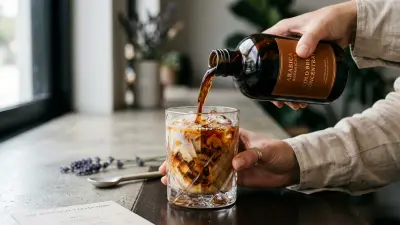
- Classic Iced Cold Brew: Mix 100 ml of concentrate with 100 ml of cold filtered water, then pour over a glass filled with large ice cubes.
- Creamy Oat Milk Cold Brew: Combine 120 ml of concentrate with 120 ml of barista-series oat milk or full-cream dairy milk for a naturally sweet iced latte alternative.
- Hot Cold Brew: Combine 120 ml of concentrate with 120 ml of freshly boiled water (200°F / 93°C) for a ultra-smooth, low-acid hot cup on chilly mornings.
- Cold Brew Tonic: Pour 90 ml of concentrate over 150 ml of chilled tonic water and ice, garnished with an orange peel for a refreshing citrus kick.
Experimenting with bean varieties expands your flavor horizon immensely. Medium to dark roasts from Colombia, Sumatra, or Guatemala offer timeless notes of baker's chocolate, toasted walnut, and molasses. Alternatively, naturally processed Ethiopian or Central American medium roasts introduce unexpected fruity undertones of blueberry, dried fig, and floral jasmine that remain distinct even after filtration.
Frequently Asked Questions
Why is my cold brew concentrate tasting bitter or astringent?
Bitterness in cold brew usually stems from an excessively fine grind size or an over-extended steep time exceeding 20 hours at room temperature. Fine particles extract too quickly and unleash harsh polyphenols, so adjust your grinder to a coarser setting and stick to a strict 16-hour steep window.
Can I make cold brew concentrate in a standard French press?
Yes, a French press is ideal for small batches of cold brew concentrate. Simply combine your coffee and water using the 1:4 ratio inside the glass carafe, rest the plunger assembly on top without pressing down, steep for 16 hours, and gently depress the plunger before pouring through a paper filter for extra clarity.
How long does homemade cold brew concentrate stay fresh in the fridge?
When stored in a sealed, clean glass vessel at cold temperatures (below 40°F / 4°C), high-strength concentrate stays fresh for 10 to 14 days. If you notice a sharp sour taste or flat aroma, the liquid has begun to oxidize and should be discarded.
Is cold brew concentrate higher in caffeine than regular hot coffee?
Per fluid ounce, cold brew concentrate contains significantly more caffeine than regular drip coffee due to the high mass of coffee used per unit of water. However, once diluted 1:1 with water or milk, a standard 8-ounce serving delivers a caffeine level comparable to a traditional drip coffee or a double-shot latte.
To start brewing immediately, invest in a digital scale, grab a bag of freshly roasted medium-dark beans, set your grinder to a coarse pepper-like grind, and steep a 1:4 batch on your countertop overnight for an effortless café-quality draft at home.