Quick answer: To use a coffee scale effectively, place your brewer and vessel on the scale, tare (zero) it, add your freshly ground coffee, and tare it again. Start your timer as you pour water according to your target brewing ratio (typically 1:15 to 1:17), tracking both weight in grams and total contact time to ensure perfectly balanced extraction every single session.
Why Weighing Coffee Changes Everything
Precision is the backbone of exceptional coffee extraction. According to standards established by the specialty coffee association (SCA), optimal extraction yields between 18% and 22% solubles from the dry grounds into your hot water, target total dissolved solids (TDS) landing between 1.15% and 1.45%. Reaching this ideal balance consistently is virtually impossible without controlling your water-to-coffee mass. When you weigh your ingredients in grams, you eliminate variables related to bean size, roast density, and air gaps within scoops, laying down an immovable baseline for your recipe.
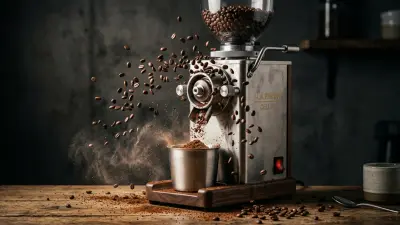
Using a scale also unlocks the full potential of high-performance tools like conical and flat burr grinders. When dialed in, premium grinders from manufacturers like Baratza or Fellow deliver exceptional particle size uniformity. However, if your dry dose fluctuates by even a single gram, the water-to-coffee ratio shifts, completely altering contact time, thermal mass, and fluid dynamics during extraction. Weighing dry coffee before grinding (single-dosing) and wet output while pouring ensures your carefully calibrated grind size performs exactly as intended.
Finally, tracking mass in real time allows you to control the flow rate during manual brewing methods like the Hario V60 or Chemex. Water weight directly dictates extraction speed; pouring too fast creates turbulence and channeling, while pouring too slowly leads to over-extraction and bitter, astringent off-flavors. A digital scale responsive to 0.1-gram increments provides instant visual feedback, helping you maintain a steady flow of roughly 3 to 5 grams per second throughout your pouring stages.
Barista's tip: Always watch out for grinder retention when weighing beans. If you weigh out exactly 18.0 grams of whole beans, your grinder might hold back 0.3 grams inside the chamber, causing you to brew with 17.7 grams. Weigh your ground coffee in the brew basket after grinding—not just the whole beans before—to maintain absolute accuracy and avoid frustrating extraction shifts.
Key Features of a Quality Coffee Scale
While a basic kitchen scale weighing in whole grams works for baking or large-batch meal prep, specialty coffee brewing requires specific features designed around fast-paced fluid dynamics. coffee extraction happens rapidly, meaning slow sensors will lag behind your pour rate, causing you to overshoot your target yield. Investing in a tool built specifically for hot beverages streamlines your workflow and drastically lowers error rates.
When selecting a scale, prioritize rapid response times, 0.1-gram resolution, and a built-in timer. Advanced options like the Acaia Pearl or timemore black mirror offer auto-timing features that begin the countdown the exact second hot water hits the bed. Waterproof or heat-resistant silicone pads are also vital, as hot water spillage and residual steam can damage delicate internal load cells over time.
| Scale Type | Resolution | Built-in Timer | Primary Best Use |
|---|---|---|---|
| Standard Kitchen Scale | 1.0 g | No | Batch French Press, Cold Brew mass prep |
| Entry-Level coffee scale (e.g., Hario Drip) | 0.1 g | Yes | Pour-over (V60, Chemex), AeroPress |
| Smart/Pro Scale (e.g., Acaia, Timemore) | 0.1 g (high speed) | Yes (Auto-start) | espresso extraction, flow-rate profiling, pour-over |
Step-by-Step Guide to Pour-Over Brewing with a Scale
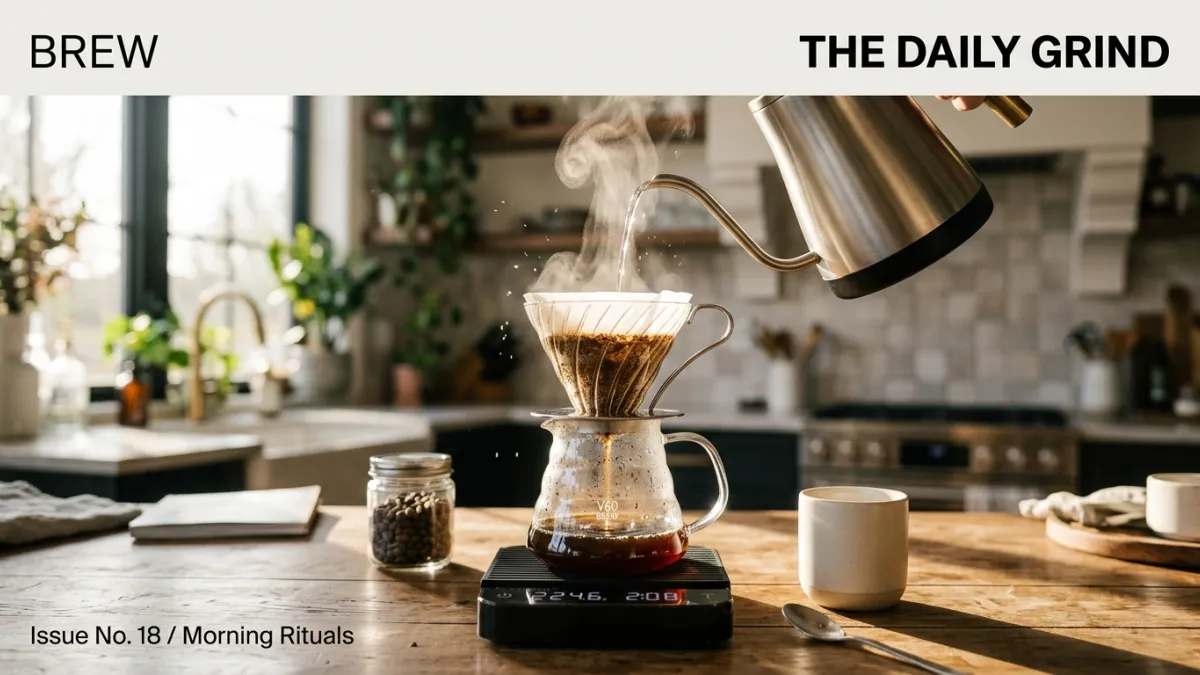
To see how a scale functions in a live setting, let's look at a standard 1:16 ratio pour-over routine on a Hario V60. For this recipe, we will use an 18.0-gram dose of medium-fine coffee (roughly 600–700 microns) ground on a quality burr grinder, requiring a final poured water weight of 288 grams at 93°C (200°F).
- Set up and rinse: Place your glass server and V60 cone with a paper filter onto the center of the scale platform. Pour hot water over the filter to rinse away paper taste and preheat the gear, then discard the rinse water from the server.
- Dose and Tare: Return the rinsed server and brewer to the scale. Add your 18.0 grams of ground coffee into the filter cone. Gently tap the sides to level the ground bed, then press the Tare button to zero out the scale display.
- The Bloom Phase: Start your scale's timer and immediately pour roughly 50 grams of water (about 3 times the dose weight) in circular motions over the grounds. Allow the coffee to bloom for 45 seconds; this allows trapped carbon dioxide gas from roast gasification to escape.
- Main Pour Stages: At 0:45, begin your main pours in steady concentric circles, keeping the water stream direct and stable. Pour until the scale reads 170 grams by 1:15, then pause briefly. Resume pouring until you reach your final weight target of 288 grams at around 2:00.
- Drawdown and Finish: Give the brewer a gentle swirl to keep the bed flat and prevent grounds from clinging to the filter walls. Let the water fully drain through. The total brew time should land cleanly between 2:30 and 3:15.
This systematic process can be easily adapted to virtually any manual brewing device. By maintaining strict control over mass and time, adjusting your scales and measurement techniques becomes a predictable science rather than random guesswork.
Golden Brew Ratios Across Different Methods
Different extraction styles demand different concentration levels and contact times. Understanding how to scale your coffee-to-water ratio opens up incredible flexibility, allowing you to tailor beverage strength to suit specific origin profiles or personal taste preferences. The standard baseline ratio for filter coffee sits around 1:15 (stronger, fuller body) to 1:17 (brighter, lighter body, higher clarity).
- Espresso: 1:1.5 to 1:2.5 ratio (e.g., 18 g dry dose yielding 36 g liquid espresso in 25–30 seconds).
- AeroPress: 1:11 (concentrated bypass style) to 1:14 (standard steep and press).
- Hario V60 / Pour-over: 1:15 to 1:16.6 (e.g., 18 g dose to 270–300 g water in 2:30–3:30 minutes).
- French Press: 1:14 to 1:15 (steep for 4:00 minutes before plunging for rich body).
- Chemex: 1:16 to 1:17 (thick filters benefit from slightly longer, lighter liquid ratios).
When switching between light roasts and dark roasts, keeping your dose steady on the scale while tweaking water temperature (90–96°C or 195–205°F) or grind size allows you to highlight delicate fruit acidity or reduce harsh bitter notes without disturbing your core balance.
Troubleshooting Common Brewing Errors
Even with a precision digital scale on your counter, unexpected flavor issues can still pop up. The advantage of using weight measurements is that you instantly eliminate fluid volume as a source of confusion, allowing you to isolate other crucial variables like grind size, water chemistry, or bean freshness.
If your final beverage tastes hollow, overly sour, or salty, you are likely experiencing under-extraction. Assuming your weight and water ratio (e.g., 1:16) were exact, keep the dose completely unchanged and try grinding finer or increasing water temperature slightly. Conversely, if your cup leaves a dry, lingering, bitter sensation on the back of your tongue, over-extraction has occurred; keep your scale measurements identical next time, but coarsen your grind to speed up total contact time.
Bean freshness plays a massive secondary role in water flow dynamics. Freshly roasted coffee (ideally 2 to 4 weeks past the roast date) off-gasses vigorously during the bloom phase, slowing water passing through the bed. As beans age and lose carbon dioxide, water flows through much faster. Having a live timer and real-time scale readout lets you spot these shifts instantly, signaling when it's time to adjust your grinder tighter to maintain brew parameters.
Frequently Asked Questions
Do I really need a 0.1-gram scale, or is a 1-gram scale fine?
For filter coffee, pour-over, and French press, a standard 1-gram resolution scale can work in a pinch. However, for espresso—where half a gram of liquid yield completely changes the balance—or for single-cup pour-overs, a 0.1-gram precision scale is strongly recommended for true consistency.
Should I weigh my whole coffee beans or the ground coffee?
It is best practice to weigh your dry grounds inside your brew basket or filter immediately after grinding. Grinders often retain tiny fragments of coffee inside their burr chambers, meaning an 18-gram whole bean input might yield only 17.5 grams of usable ground coffee.
How do I calculate how much water to use for my coffee dose?
Multiply your dry coffee weight in grams by the target ratio number. For example, if you want a 1:16 ratio using 15 grams of ground coffee, multiply 15 by 16 to get 240 grams of total water required.
Why does my brew time change even though my water weight is exact?
If your water mass remains constant but brew time fluctuates, your grind size distribution, pour flow rate, or level of agitation (swirling/stirring) is shifting. Ensure your burr grinder is clean and aim for smooth, uniform pouring technique during every stage.
For immediate improvements in your daily cup, start by purchasing a reliable 0.1-gram digital scale with an integrated timer, set your grinder to dial in an 18-gram dose at a 1:16 ratio, and stick precisely to that baseline until your brew techniques are completely repeatable.