Troubleshooting Common Coffee Brewing Problems: Bitter, Sour, Weak Coffee Fixes
Ever take that first sip of your morning brew, expecting pure bliss, only to be met with something... off? We've all been there. Whether it's an unpleasant bitterness, a sharp sourness, or just a general lack of oomph, perfecting your coffee at home can sometimes feel like a puzzle. But don't worry, my friend, as your trusted barista, I'm here to help you crack the code!
Most brewing issues boil down to extraction – the process of dissolving desirable flavors from your coffee grounds into water. Too much extraction (over-extraction) leads to bitterness, while too little (under-extraction) results in sourness. Weakness often comes from not extracting enough flavor overall, or simply not using enough coffee. Let's get you brewing better!
The Bitter Truth: When Your Coffee Tastes Burnt or Hollow
If your coffee tastes acrid, harsh, burnt, or even like ash, you're likely dealing with over-extraction. This means you've pulled too many undesirable compounds from the coffee grounds, often the bitter ones that appear at the end of the extraction process.
Why it Happens:
- Grind is Too Fine: Smaller particles expose more surface area to water, speeding up extraction.
- Brew Time is Too Long: The water is in contact with the coffee for an excessive period.
- water temperature is Too High: Very hot water extracts compounds more aggressively.
- Too Much Agitation: Excessive stirring or turbulence can accelerate extraction.
- Dirty Equipment: Old coffee oils can become rancid and contribute to bitterness.
Your Action Plan:
- Coarsen Your Grind: This is often the first and most effective fix. Make your grind slightly coarser. For a pour-over, if it's too fine, go a notch or two coarser. For French Press, ensure it's coarse enough to resemble sea salt.
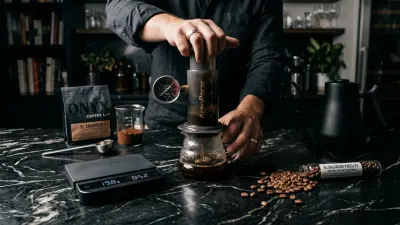
- Shorten Your Brew Time: If you're using a method with variable brew time (like French Press or AeroPress), reduce it. For drip machines or pour-over, a coarser grind will naturally shorten the contact time if other variables are constant.
- Lower water temperature: Aim for water between 195-205°F (90-96°C). If you don't have a temperature-controlled kettle, let your boiled water sit for 30-60 seconds off the boil before brewing.
- Clean Your Equipment: Regularly clean all your brewing gear. Coffee oils build up and can go rancid, imparting a bitter taste. A simple rinse isn't enough; use soap and water, and consider descaling your machine periodically.
Pucker Up: Taming Sour, Under-Extracted Coffee
A sour, tart, or grassy taste, sometimes described as tasting like "lemon" or "under-ripe fruit," points to under-extraction. This means you haven't dissolved enough of the good stuff – the sugars, acids, and oils that give coffee its sweetness and complexity – from your grounds.
Why it Happens:
- Grind is Too Coarse: Larger particles have less surface area, slowing down extraction.
- Brew Time is Too Short: The water doesn't have enough time to dissolve sufficient flavors.
- water temperature is Too Low: Cooler water doesn't extract efficiently.
- Insufficient Coffee Dose: Not enough coffee for the amount of water, leading to dilute extraction.
Your Action Plan:
- Fine Tune Your Grind: Go a notch or two finer. This will increase the surface area and allow for more efficient extraction.
- Lengthen Your Brew Time: Allow the coffee and water to interact for a longer period. If using a pour-over, slow down your pour to extend the total brew time. For French Press, consider an extra minute or two.
- Increase water temperature: Ensure your water is hot enough, ideally 195-205°F (90-96°C). If you're using a basic kettle, pour immediately after it boils.
- Increase Your Coffee Dose: If your coffee still tastes weak and sour, you might not be using enough coffee. Try increasing your coffee-to-water ratio slightly.
The Faint Flavor: Revitalizing Weak Coffee
Weak coffee lacks body, flavor, and intensity. It's often described as watery or dilute, and it can be frustrating when you're looking for a rich, satisfying cup.
Why it Happens:
- Insufficient Coffee-to-Water Ratio: Simply not using enough coffee for the amount of water.
- Grind is Too Coarse: Similar to sour coffee, a coarse grind can lead to under-extraction and a weak flavor.
- Brew Time is Too Short: Not enough contact time for adequate flavor extraction.
- Stale Beans: Old beans have lost much of their flavor compounds.
Your Action Plan:
- Adjust Your Coffee-to-Water Ratio: This is the most common culprit. A good starting point for most brewing methods is a 1:15 to 1:18 ratio (e.g., 1 gram of coffee to 15-18 grams of water). If your coffee is weak, try moving towards the 1:15 end or even slightly lower (e.g., 1:14).
- Finer Grind: A slightly finer grind allows for more efficient extraction, pulling more flavor into your cup. Be careful not to go too fine, or you'll introduce bitterness!
- Check Brew Time and Temperature: Ensure your brew time isn't too short and your water temperature is within the optimal range of 195-205°F (90-96°C) to maximize extraction.
- Use Fresh Beans: Coffee is best brewed within a few weeks of its roast date. If your beans are old, no amount of tweaking will bring back their vibrancy. Store them properly in an airtight container away from light, heat, and moisture.
Beyond the Fixes: Pro Tips for Consistent Brewing
To truly master your brew and minimize troubleshooting, consistency is key. Here are some tools and habits that will elevate your coffee game:
- Invest in a Digital Scale: Measuring by volume (scoops) is inconsistent. A good digital kitchen scale (like the Hario V60 Drip Scale or a simple kitchen scale from Amazon) allows you to precisely measure your coffee grounds and water, ensuring repeatable results.
- Get a Quality Burr Grinder: A consistent grind is fundamental. Blade grinders "chop" coffee unevenly, leading to a mix of fine and coarse particles that will result in both over- and under-extraction simultaneously. A burr grinder (like the Baratza Encore for electric or the Timemore C2 for manual) provides uniform particles.
- Use Filtered Water: Your coffee is 98% water! Tap water, especially if it's hard or chlorinated, can negatively impact flavor. A simple Brita filter or similar can make a significant difference.
- Keep Notes: When you adjust something, write it down! Note your coffee type, grind setting, water temperature, coffee weight, water weight, brew time, and how the final cup tasted. This helps you learn what works best for each coffee.
Don't be discouraged by a few less-than-perfect cups. Every brewing "mistake" is an opportunity to learn and refine your technique. With these tips from Coffee Brew Hub, you're well on your way to consistently delicious coffee at home. Happy brewing!