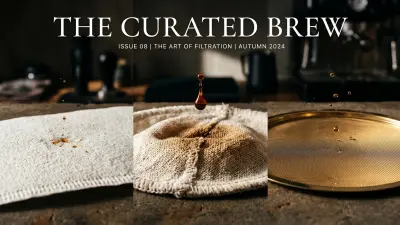
Quick answer: paper filters yield the cleanest cup with vibrant acidity by trapping insoluble micro-fines and coffee oils (cafestol). Metal filters let these oils and sediment pass through, producing a full-bodied, heavy mouthfeel with zero ongoing paper waste. Cloth filters sit perfectly in the middle, offering a juicy, velvety body with absolute sediment clarity, though they demand meticulous daily cleaning and wet storage.
The Physics of Filtration: How Filters Affect Flavor
At a microscopic level, extraction is a dual process: dissolving soluble solids into hot water and managing insoluble particles and hydrophobic lipids. Unbleached or bleached paper, woven stainless steel meshes, and tightly knit organic cotton fibers all interact differently with hot liquid. When hot water between 90–96 °C (195–205 °F) contacts a 18 g dose of ground coffee, it dissolves sugars, acids, and bitter compounds while suspending micro-fines and diterpenes like cafestol and kahweol.
Paper filters feature extremely dense cellulose fibers capable of capturing particles down to 5–20 microns. Furthermore, paper naturally absorbs lipid compounds. This mechanical and chemical trapping yields a total dissolved solids (TDS) reading that highlights sweet, delicate notes and crisp fruit acidity. It prevents fine particles from muddying the brew bed, ensuring that pour-over cone setups achieve stable draw-down times during the standard 2:30–3:30 minute window.
Conversely, metal mesh filters feature laser-cut apertures typically ranging from 50 to 150 microns. While water passes through easily, insoluble solids and aromatic oils slide directly into the carafe. This extra particulate matter boosts tactile mouthfeel and body, though it slightly lowers brightness. Cloth weaves act like a microscopic labyrinth, holding back micro-fines just like paper does, yet letting soluble lipids slide through for a lush, silky mouthfeel.
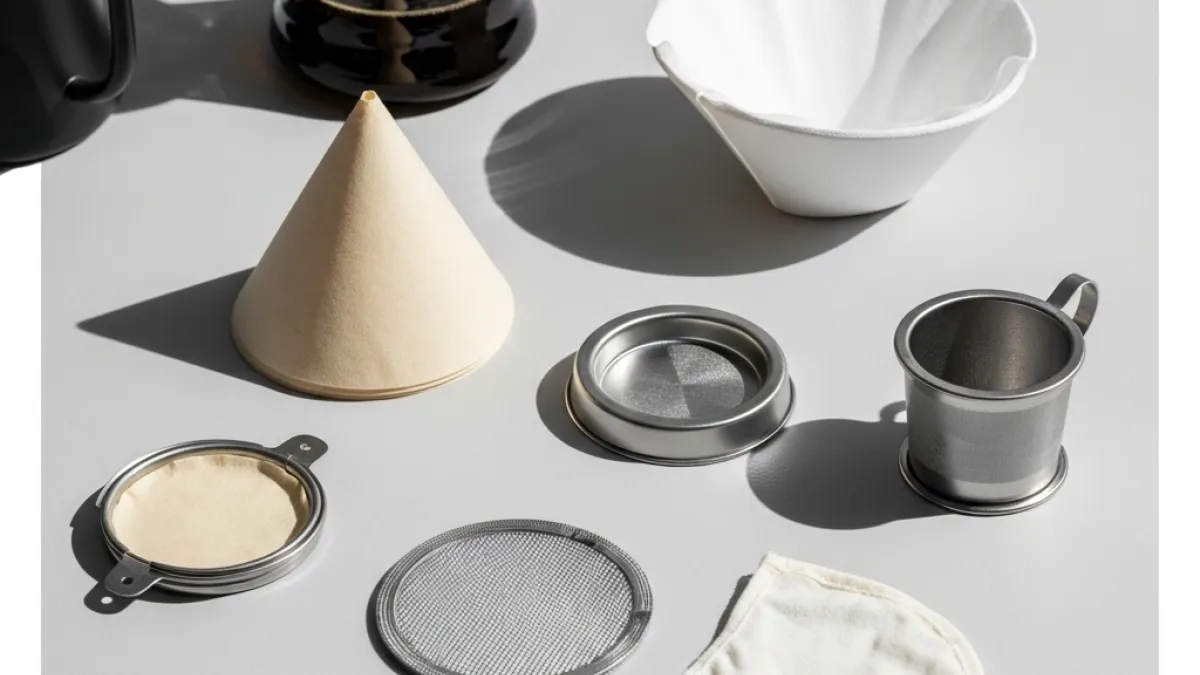
Paper Coffee Filters: Precision, Clarity, and Convenience
Paper remains the global standard for drip machines and pour-over cones like the Hario V60 or Chemex. Available in oxygen-bleached white or unbleached brown cellulose, these filters are cheap, disposable, and engineered for high clarity. Bleached paper undergoes a thorough wash process that removes natural wood fibers without leaving chlorine residues, making it the preferred choice among specialty coffee purists.
Unbleached brown paper filters retain a distinct woody aroma that can transfer directly into your coffee bed during the bloom stage. To mitigate this off-flavor, you must thoroughly rinse unbleached paper with at least 100 mL of hot water before loading your grounds. Proper rinsing warms your brewer, flushes out loose fibers, and helps the paper seal tightly against the walls of your dripper basket.
Barista's tip: When using thick paper like Chemex or double-fluted pour-over filters, failing to pre-rinse with boiling water causes severe thermal loss. Cold paper can drop your initial slurry temperature by up to 3 °C right during the crucial 30-second bloom phase, stalling the extraction of sweet floral and fruit compounds.
Paper filters also vary significantly by sizing standards. Matching the correct shape and scale prevents structural bypass, where water skips the coffee bed entirely and flows around the edges of the basket. Selecting the right size ensures an even extraction column and prevents overflowing mid-brew.
- Size 1 (#1): Formulated for single-cup drippers and small manual pour-over cones (100–150 mL yield).
- Size 2 (#2): The sweet spot for standard 1–2 cup pour-overs like the V60-02 or small automatic drip machines.
- Size 4 (#4): Designed for standard household 8–12 cup drip machines and wide-angle flat-bottom baskets.
- Chemex Filters: Heavyweight, 20–30% thicker bonded paper designed to slow down flow and remove virtually all sediment.
Metal Coffee Filters: Sustainability and Deep Body
Stainless steel metal filters—ranging from photo-etched cones to fine dual-layer mesh inserts—eliminate single-use waste. By purchasing a single reusable stainless steel filter, a daily home barista can keep hundreds of paper cones out of landfills each year while saving money over time. Beyond sustainability, metal filters drastically alter coffee character by allowing natural oils into the cup.
Because stainless steel mesh does not absorb lipids, the brewed liquid has an opaque appearance and a heavy mouthfeel similar to a French press or Moka pot. This rich body pairs exceptionally well with medium-to-dark roasts, chocolatey origins, and milk-based drinks. However, because fine silt passes through mesh openings, the final sip usually contains a light dusting of sediment, and extraction can continue in the server if left standing.
When dialing in your grinder for metal filters, dial back to a medium-coarse setting (700–900 microns). Using a fine grind suited for paper will clog the mesh pores, cause uneven pooling, and pass excessive sludge into your mug. Top manufacturers like Fellow, Able Brewing, and Hario design specific metal discs and cones engineered to maximize flow control while keeping sediment to a minimum.
| Filter Type | flavor profile | Sustainability | Best For |
|---|---|---|---|
| Paper (bleached) | Clean, crisp | Single-use | Drip machines, pour-over |
| Paper (unbleached) | Slightly earthy | Single-use | Eco-conscious buyers |
| Metal (reusable) | Bold, full-bodied | Long-term use | French press, pour-over |
| Cloth (reusable) | Smooth, balanced | Washable | Traditional brewers |
| Indian steel filter | Strong, aromatic | Reusable | South Indian coffee |
Cloth Coffee Filters: The Historic Sweet Spot
Originating in traditional Latin American sock drippers (chorreador) and refined by Japanese Nel Drip culture, cloth filters offer a unique balance between paper and metal. Typically sewn from unbleached cotton, hemp, or linen, cloth filters capture tiny microscopic silts while letting aromatic lipids glide straight into the server. The result is a luminous, high-clarity brew with a luxurious, velvety body.
However, cloth filters require strict maintenance. Coffee oils left on cotton fibers rapidly oxidize when exposed to air, causing rancid, stale flavors in subsequent brews. After every single use, you must rinse the cloth thoroughly under warm water without using scented hand soap or harsh dishwasher detergents. Storing the damp filter inside a clean container filled with water in the refrigerator prevents mold growth and stops organic matter from drying out within the weave.
With careful handling, a quality cotton filter lasts anywhere from 100 to 150 brews before the fibers stretch out or degrade. If you are willing to spend an extra minute on daily cleanup, cloth yields an incredible cup that highlights subtle origin characteristics alongside a dense, buttery body.
Head-to-Head Comparison: Paper vs Metal vs Cloth
To help you choose the right filter for your Morning coffee routine, the table below compares key attributes like flavor profile, maintenance demands, environmental footprint, and target grind sizes across all three materials.
| Feature | Paper Filter | Metal Filter | Cloth Filter |
|---|---|---|---|
| Flavor Profile | Clean, bright, high acidity, crisp notes | Full-bodied, heavy mouthfeel, rich oils | Juicy, complex, smooth with light lipids |
| Sediment Level | Zero (micro-fines trapped completely) | Moderate to high silt at the bottom | None to negligible micro-fines |
| Oil Retention | Absorbs almost all diterpenes/oils | Passes 100% of coffee oils | Passes selective oils while catching silt |
| Cleanup Effort | Instant (compost or toss immediately) | Easy (dump grounds, rinse mesh under tap) | High (wash thoroughly, store damp in fridge) |
| Lifespan | Single use per filter | 3–5+ years of daily use | 100–150 brews before replacement |
| Ideal Grind Size | Medium-fine to Medium (500–700 µm) | Medium-coarse (700–900 µm) | Medium (600–800 µm) |
Matching Your Filter to Your Equipment and Beans
Choosing the right filter depends on your brewing gear and bean choice. Light-roast Ethiopian or Colombian coffees roasted within 2–4 weeks off roast bloom beautifully through paper cones. Paper removes heavy lipids that can mask delicate jasmine aromas, bergamot notes, and lemon-like acidity, helping you evaluate micro-lots cleanly according to specialty coffee Association (SCA) tasting standards.
If you prefer rich, chocolatey Guatemalan or Sumatran beans paired with dark roast profiles, a stainless steel metal filter or traditional South Indian stainless filter helps accentuate heavy body and spice notes. Furthermore, metal filters excel in outdoor settings or travel setups like the AeroPress, where packing disposable paper stacks can be impractical.
Finally, manual pour-over fans using conical drippers who want to balance texture and acidity should consider cloth filters. Pairing a 1:15 brew ratio (18 g coffee to 270 g water) with an organic cotton filter produces a round, balanced cup that highlights sweetness without feeling thin or gritty.
If you prefer vibrant acidity, zero sediment, and quick cleanup, stick with bleached paper filters on a classic pour-over setup. For a eco-friendly brew with deep body and zero paper waste, invest in a fine stainless steel mesh filter and widen your grind size. If you want a rich, smooth mouthfeel with crystal-clear flavor, try a cloth filter—just keep a dedicated water container in your fridge for storage.
Frequently Asked Questions
Are unbleached paper filters better than bleached paper filters?
Unbleached paper filters are slightly less processed, but they leave a noticeable cardboard-like taste if not rinsed thoroughly with hot water prior to brewing. Oxygen-bleached white paper filters are widely preferred by specialty baristas because they are taste-neutral and leave no paper residue in the cup.
Do metal filters increase cholesterol levels?
Metal filters allow diterpenes like cafestol and kahweol to pass directly into your coffee cup. These natural coffee oils can elevate LDL cholesterol levels if consumed in high daily quantities. Paper filters trap nearly all of these lipid compounds, making them a better choice for health-conscious drinkers.
How do I know when it is time to replace a cloth coffee filter?
You should replace your cloth filter when the fabric remains dark brown even after a deep boil wash, or when you notice a persistent off-flavor in your cup. Additionally, if water drains too quickly due to stretched cotton fibers, it is time to grab a fresh filter.
Can I wash and reuse standard paper coffee filters?
While high-quality unbleached or thick paper filters can technically be rinsed and reused once, it is not recommended. Reusing paper degrades the structural cellulose fibers, drastically slows flow rates, and introduces stale coffee oils into your fresh brew bed.
Sources
- Specialty Coffee Association Standards
- Wikipedia: Coffee Filter Materials and History
- Hario V60 & Dripper Operational Specifications Manual