Ever Wonder Why Your Coffee Tastes So Different?
Hey there, fellow coffee enthusiasts! Have you ever brewed two different coffees from the same region, perhaps even the same varietal, only to find they taste wildly different? One might be bright and zesty, while the other is a rich, fruity explosion. What gives? While origin, roast, and brewing technique all play a crucial role, there's another hidden hero (or villain, depending on your preference!) in the flavor game: coffee bean processing methods.
This isn't just some technical jargon for industry insiders; understanding how coffee cherries are processed after harvest is key to unlocking the flavors you love. It's truly a profound step that shapes the final taste in your cup. At coffee brew hub, we believe knowing this empowers you to choose beans more intelligently and appreciate the craft behind every sip. Today, we're diving deep into the three most common methods: Washed, Natural, and Honey.
What is Coffee Processing?
After coffee cherries are picked, the green bean needs to be separated from the surrounding layers of fruit. How this separation happens – and for how long the bean interacts with the fruit – drastically impacts its chemical composition and, consequently, its flavor. Think of it like making wine: the fermentation process with the grape skins hugely influences the final product.
The Washed Process (Wet Process): Clean, Bright, and Classic
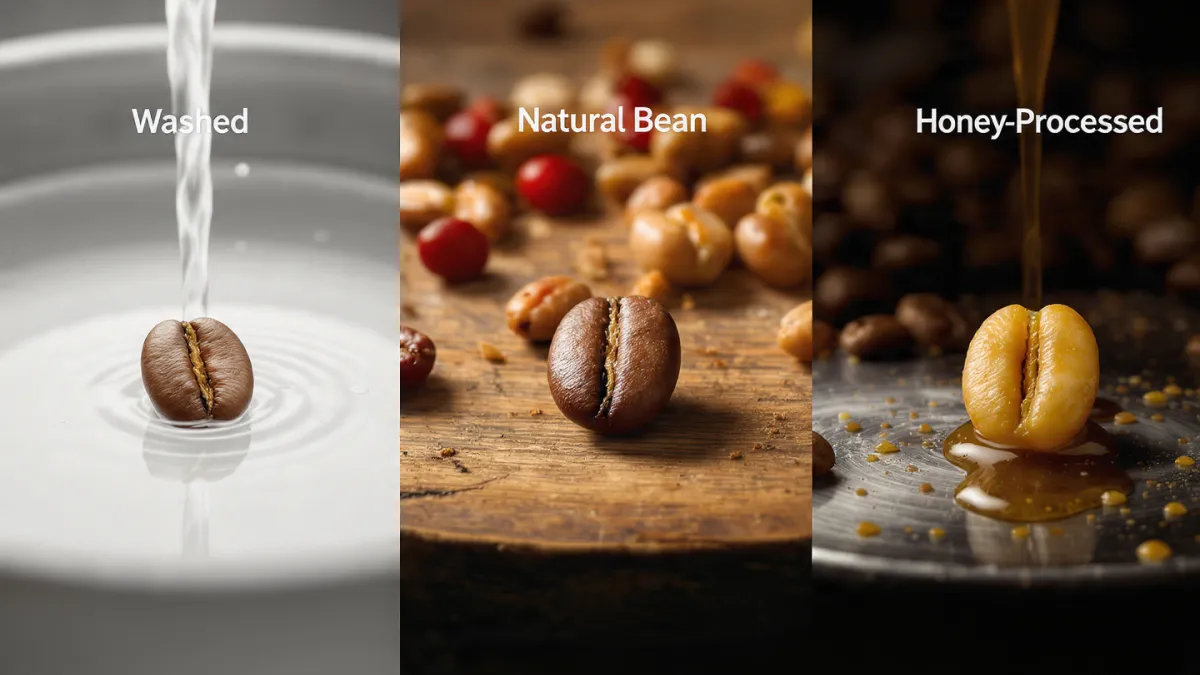
The washed process is perhaps the most widely used method globally, prized for producing consistently clean and bright coffees.
How it Works:
- Harvest & Sort: Ripe cherries are hand-picked or mechanically harvested, then sorted (often by floating in water) to remove unripe or overripe cherries and debris.
- Depulping: The cherries are fed into a machine called a depulper, which removes the outer skin and most of the fruit pulp, leaving the bean encased in a sticky, sugary layer called mucilage and a parchment layer.
- Fermentation: The mucilage-covered beans are then submerged in water tanks for 12-48 hours. During this controlled fermentation, enzymes break down the sticky mucilage.
- Washing & Drying: After fermentation, the beans are thoroughly washed to remove any remaining mucilage. Finally, they are dried on patios, raised beds, or in mechanical driers until they reach an optimal moisture content.
Flavor Profile:
- Clean & Bright: Expect crisp, clear acidity, often reminiscent of citrus or delicate florals.
- Distinct Varietal: This method allows the inherent characteristics of the coffee bean itself to shine through, showcasing its origin and varietal.
- Lighter Body: Generally has a lighter, tea-like body compared to other methods.
Actionable Tip: Washed coffees are fantastic for pour-overs, Aeropress, or any method where you want to highlight nuanced flavors and a clean finish. If you love a bright, "classic" coffee taste, look for washed beans!
The Natural Process (Dry Process): Fruity, Bold, and Sweet
Natural processing is the oldest method, originating in regions with arid climates where water is scarce. It’s also often considered the most "rustic" and labor-intensive in its traditional form, but modern practices ensure consistency.
How it Works:
- Harvest & Sort: Ripe cherries are picked and meticulously sorted to remove any under- or over-ripe fruit, as defects can easily transfer flavor.
- Whole Cherry Drying: The entire coffee cherry, skin and all, is laid out to dry. This typically happens on large concrete patios or, more commonly for specialty coffee, on raised beds. The cherries are raked and turned frequently to ensure even drying and prevent mold.
- Fermentation & Drying: Over several weeks (often 3-5), the fruit slowly dries around the bean. During this time, natural fermentation occurs within the cherry, allowing the sugars and flavors of the fruit to infuse directly into the coffee bean.
- Hulling: Once completely dry, the brittle, shriveled cherry is sent to a dry mill where mechanical hullers remove all the dried outer layers, revealing the green bean.
Flavor Profile:
- Fruity & Jammy: Expect intense fruit flavors, from berries and tropical notes to stone fruits. Often described as "wine-like" or "boozy" due to the extended fermentation.
- Fuller Body & Sweetness: Naturals tend to have a heavier body, syrupy mouthfeel, and pronounced sweetness.
- Lower Acidity: Acidity is generally more muted than washed coffees, often presenting as a pleasant, mellow tartness.
Actionable Tip: Naturals excel in espresso, French Press, or cold brew, where their bold flavors and heavy body can truly shine. If you're looking for a coffee that tastes like a fruit bomb, natural is your go-to!
The Honey Process (Pulped Natural): The Best of Both Worlds
The honey process, often called "pulped natural," is a fascinating hybrid method, largely developed in Central America. It aims to strike a balance between the cleanliness of washed coffees and the sweetness/body of naturals.
How it Works:
- Harvest & Sort: As with other methods, ripe cherries are picked and sorted carefully.
- Depulping (Partial): Cherries are depulped, similar to the washed method, to remove the outer skin and some of the pulp. However, a specific amount of the sticky mucilage layer is intentionally left on the bean. This is where the "honey" comes from – not actual honey, but the sticky, honey-like feel of the mucilage!
- Drying: The mucilage-coated beans are then dried on raised beds, much like natural processed coffees. This is a critical and delicate stage, as the sticky beans require constant turning and careful monitoring to prevent spoilage and ensure even drying.
- Hulling: Once dry, the remaining mucilage and parchment layer are removed.
The "Colors" of Honey Process:
You might see terms like "Yellow Honey," "Red Honey," or "Black Honey." These refer to the amount of mucilage left on the bean and the drying conditions, which influence the final flavor:
- Yellow Honey: Least mucilage left (around 25%). Dries faster, often producing brighter cups with more clarity.
- Red Honey: More mucilage left (around 50%). Dries slower, leading to more pronounced sweetness and a fuller body.
- Black Honey: Most mucilage left (75-100%). Dries very slowly, often in shaded conditions, resulting in the deepest sweetness, heaviest body, and most fermentation-driven fruit notes, sometimes approaching natural characteristics.
Flavor Profile:
- Balanced Sweetness & Clarity: Honey processed coffees offer a beautiful middle ground. You get the sweetness and body from the mucilage interaction, but often with more of the clean acidity and distinct character of washed coffees.
- Complex Fruit & Caramel: Expect notes of tropical fruit, stone fruit, caramel, and sometimes chocolate. Acidity is typically mellow.
Actionable Tip: Honey processed coffees are incredibly versatile and excellent for any brew method. If you're looking for a coffee that offers both sweetness and complexity without being overly wild or overtly clean, a honey process is a fantastic choice.
Choosing Your Beans: What to Look For
Now that you're armed with this knowledge, here's how to put it into practice:
- Read the Bag: Most specialty coffee roasters will proudly display the processing method on their bags. This is your first clue!
- Match to Your Mood: Craving a bright, invigorating cup? Go washed. Want a sweet, bold, fruity experience? Grab a natural. Looking for something balanced and versatile? Honey is your friend.
- Experiment! The best way to understand these differences is to taste them side-by-side. Try a washed, a natural, and a honey from the same origin if you can find them. You'll be amazed at the spectrum of flavors.
Unlock a World of Flavor!
Understanding coffee processing methods truly adds another layer of appreciation to your home barista journey. It explains why some coffees sing with citrus notes while others explode with berry sweetness. So next time you're browsing for beans, take a moment to consider the processing method. It's a secret ingredient that profoundly impacts your final cup.
Happy brewing, and enjoy exploring the incredible diversity of coffee!