As passionate home baristas and coffee enthusiasts, we at Coffee Brew Hub often encounter a persistent question: "Which has more caffeine, light roast or dark roast coffee?" It's a common query, often leading to surprising answers that challenge long-held beliefs. Many assume that the bolder, more intense flavor of a dark roast must equate to a more powerful caffeine kick. But is this really the case?
Let's dive deep into the fascinating world of coffee roasting and caffeine to uncover the truth and empower you to choose your brew with confidence.
What is Coffee Roasting and How Does It Affect the Bean?
Coffee roasting is an art and a science, transforming green, unroasted coffee beans into the aromatic, flavorful gems we all love. During this process, beans undergo significant physical and chemical changes:
- Moisture Loss: Beans lose water content, causing them to decrease in weight.
- Expansion: As moisture evaporates and gases build up, the beans expand in size and become less dense.
- Flavor Development: Sugars caramelize, acids break down, and volatile compounds are created, leading to the complex flavors and aromas specific to each roast level.
The longer and hotter the roast, the darker the bean, the more mass it loses, and the more it expands.
Does Roasting Destroy Caffeine?
This is a crucial point often misunderstood. Caffeine is a remarkably stable compound. While a very small, negligible amount of caffeine might sublimate (turn directly from solid to gas) during the intense heat of roasting, the vast majority of caffeine content remains intact. The difference in caffeine loss between a light and dark roast is so minimal it doesn't significantly impact the final caffeine concentration. So, the idea that dark roasts "burn off" caffeine is largely a myth.
The Main Question: Light Roast vs. Dark Roast — Which Has More Caffeine?
Here’s where it gets interesting, and the answer isn't as straightforward as you might think. The truth hinges on how you measure your coffee.
Why Light Roast Usually Wins (Per Gram)
If you measure your coffee by weight (e.g., in grams), a light roast typically has slightly more caffeine than a dark roast.
Here’s why:
- During roasting, beans lose mass as water evaporates and some organic compounds burn off.
- Darker roasts undergo more extensive roasting, meaning they lose more mass than lighter roasts.
- Since caffeine is stable, the actual amount of caffeine in each bean remains largely the same.
- Therefore, if you take one gram of light roast beans and one gram of dark roast beans, the gram of light roast contains more original bean material (and thus, slightly more caffeine) because it has lost less mass overall.
The Volume Conundrum (Per Scoop)
If you measure your coffee by volume (e.g., using a scoop), a light roast also tends to have more caffeine than a dark roast.
Let's break it down:
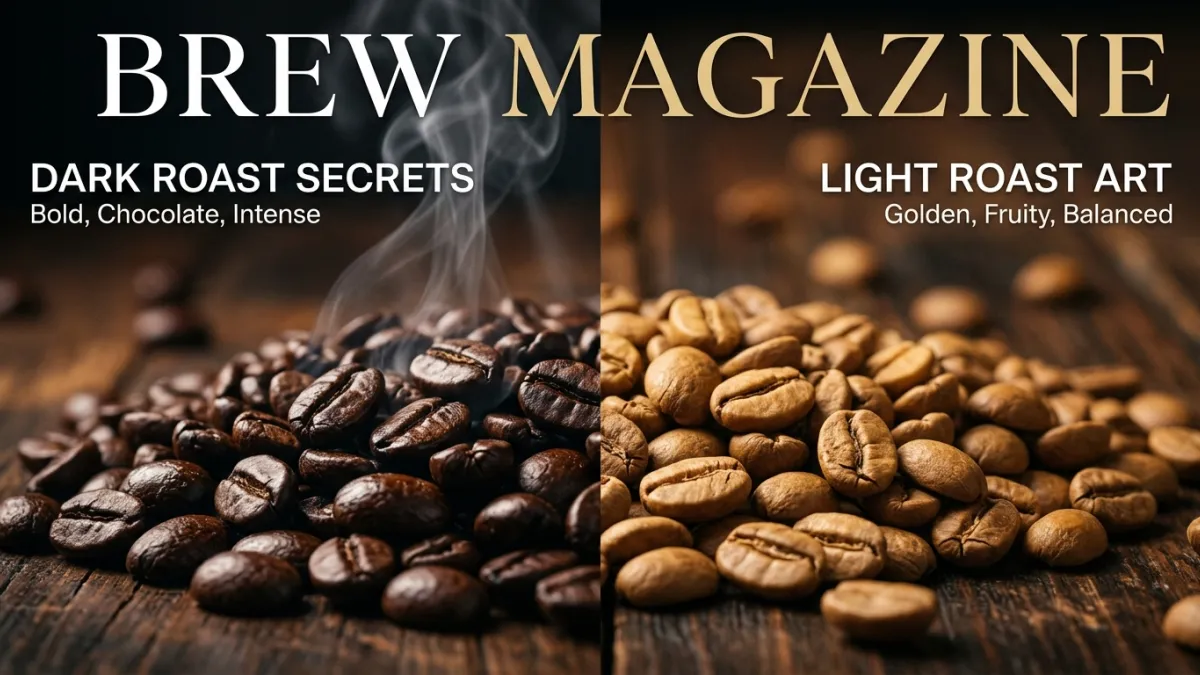
- As coffee beans roast, they expand and become less dense. Dark roasts expand more than light roasts.
- This means that a given volume (like a standard coffee scoop) will hold more individual light roast beans (because they are denser and smaller) than dark roast beans (which are lighter and larger).
- Consequently, a scoop of light roast coffee will weigh more than a scoop of dark roast coffee.
- Since light roast coffee also has a slightly higher caffeine concentration per gram (as explained above), a scoop of light roast will contain a greater total amount of caffeine than a scoop of dark roast.
So, contrary to popular belief, whether you measure by weight or volume, light roast coffee generally contains slightly more caffeine than dark roast coffee. The difference isn't massive, but it's consistent.
Why Do People Think Dark Roast Has More Caffeine?
The misconception likely stems from the intense, bold, and sometimes bitter flavor profile of dark roasts. Many associate this strong taste with a stronger jolt of caffeine. However, flavor intensity is due to the breakdown of acids and development of smoky, roasted notes, not an increased caffeine content. In fact, some lighter roasts, with their brighter acidity, can sometimes taste "livelier" even with similar caffeine levels.
What Factors Really Influence Caffeine Levels in Your Cup?
While roast level plays a minor role, several other factors have a much more significant impact on the caffeine content of your final brew:
- Bean Variety: This is arguably the biggest factor. Robusta beans naturally contain about twice as much caffeine as Arabica beans. Most specialty coffee is 100% Arabica.
- Brewing Method:
- Contact Time: Longer contact time between water and coffee grounds generally extracts more caffeine. (e.g., Cold Brew often has high caffeine due to long steep times).
- Water Temperature: Hotter water extracts caffeine more efficiently.
- Grind Size: Finer grinds offer more surface area for extraction, potentially leading to more caffeine in the cup for the same contact time.
- Serving Size: This one's obvious! A larger cup of coffee will naturally contain more total caffeine, regardless of roast.
The Coffee Brew Hub Recommendation
Ultimately, the choice between light and dark roast should primarily be about your taste preference, not caffeine content. If you crave that bright acidity and nuanced floral notes, a light roast is your friend. If you prefer a robust, chocolatey, or smoky profile, a dark roast will hit the spot.
Don't let caffeine myths dictate your coffee journey. Empower yourself with knowledge, experiment with different roasts and brewing methods, and discover what truly makes your kitchen a personal café. At Coffee Brew Hub, we believe the best coffee is the one you enjoy the most.
So, next time you're wondering which roast to pick for that energy boost, remember the nuances. While light roasts hold a slight edge in caffeine, focusing on bean variety and brewing technique will give you more control over your morning jolt.