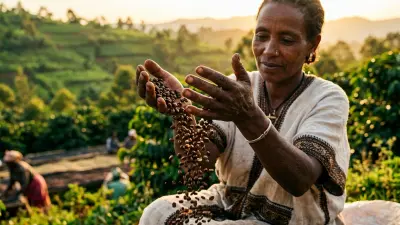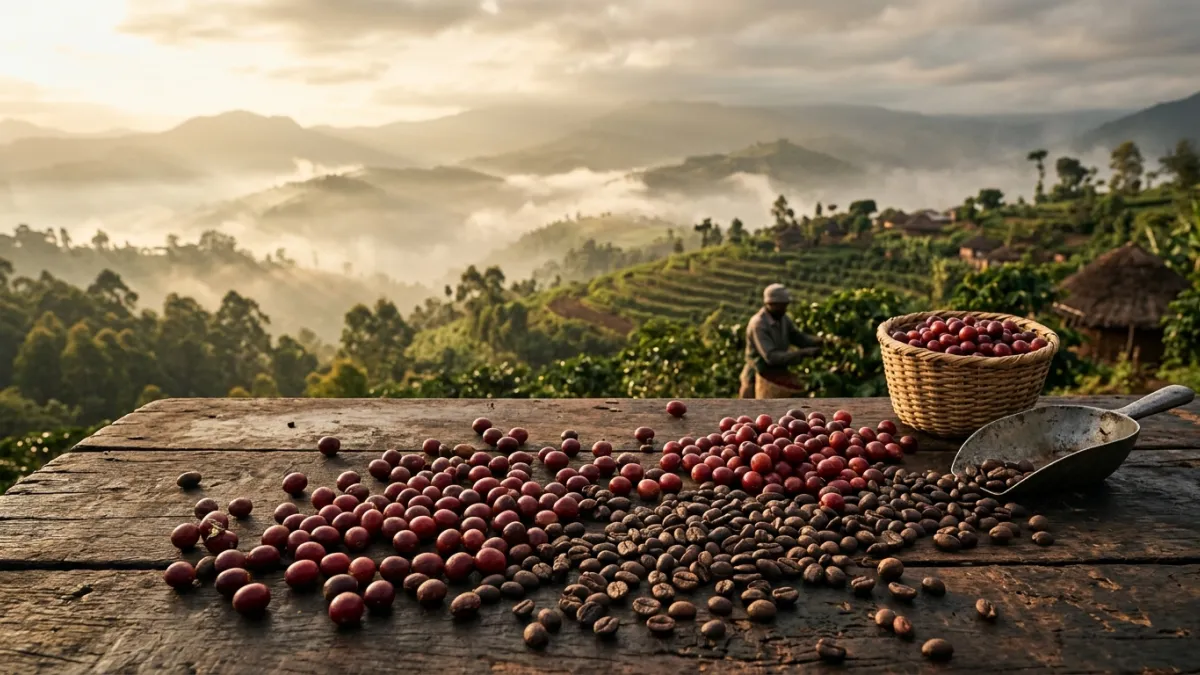
Stepping into the world of Ethiopian coffee feels less like preparing a routine morning beverage and more like unearthing a rich historical treasure. As the recognized ancestral birthplace of wild Arabica, Ethiopia yields coffees that defy traditional expectations of roastiness or bitterness, replacing them with sparkling acidity, wild floral aromas, and vivid fruit notes. Mastering these beans in your kitchen requires an appreciation for how terroir, microclimate, and regional processing methods shape the extraction in your brewer. When you dial in a fresh Ethiopian single-origin roast, you are engaging with centuries of agricultural heritage crafted into a extraordinarily vibrant cup.
Quick answer: To unlock the full potential of Ethiopian coffee, use a pour-over method like the Hario V60 with a 1:16 brew ratio (18 g coffee to 288 g water) and hot water off the boil around 94–96 °C (201–205 °F). Opt for light-to-medium roasts to preserve the bean's delicate jasmine florality and bright berry acidity, ensuring a medium-fine grind size around 500–600 microns to account for high bean density.
The Genetic Cradle of Arabica: Why Ethiopian Beans Stand Alone
Unlike most coffee-producing countries where farms cultivate cloned or strictly controlled cultivars like Bourbon or Typica, Ethiopia is home to thousands of wild, indigenous coffee varieties collectively classified as "heirloom." These plants have spent millennia naturally adapting to high-altitude microclimates ranging from 1,800 to over 2,200 meters above sea level. This immense genetic diversity yields dense, smaller beans packed with complex organic acids, sugars, and aromatic compounds that simply do not exist in standard mono-crop plantations elsewhere in the world.
The altitude and cool mountain temperatures dramatically slow down the coffee cherry's growth cycle. This extended maturation window allows the fruit to accumulate higher concentrations of sucrose and delicate malic and citric acids. When roasted lightly, these organic compounds translate into distinct notes of bergamot, lemongrass, peach, and lavender rather than deep chocolate or heavy nuttiness. The inherent density of high-altitude heirloom beans also means they absorb thermal energy rapidly during roasting, requiring home baristas to pay close attention to grind uniformity and water temperature during extraction.
Processing methods in Ethiopia heavily dictate the final character in the cup. The two primary methods—washed (wet) and natural (dry)—alter the chemistry of the green bean before it ever touches a roaster. Washed Ethiopian coffees undergo mechanical pulping followed by aqueous fermentation to remove mucilage, producing ultra-clean cups with tea-like bodies, pronounced citrus acidity, and lingering floral perfumed notes. Conversely, natural process coffees are sun-dried inside the whole intact cherry on raised wooden beds for two to three weeks. This prolonged contact with fruit pulp imparts heavy sugars, winey complexity, and explosive berry aromas directly into the seed structure.
Exploring Ethiopia's Premier Coffee Regions and Terroirs
Understanding Ethiopian coffee requires navigating its legendary growing zones, each offering a distinct flavor landscape shaped by soil chemistry, elevation, and regional processing traditions. While dozens of micro-regions exist across the country, three prominent regions set the global standard for specialty coffee quality and profile consistency.
Yirgacheffe, nestled within the greater Gedeo Zone, is world-famous for producing coffees with unparalleled delicacy and floral elegance. Grown at elevations topping 2,000 meters, washed Yirgacheffe lots routinely display intense jasmine aromatics, vibrant lemon zest, and bergamot acidity, finishing with a silky green tea mouthfeel. Natural Yirgacheffes retain this floral backbone while layering intense blueberry and dried apricot sweetness across the palate. For home baristas seeking maximum clarity and ethereal aromatics, Yirgacheffe remains the ultimate benchmark.
Bordering Yirgacheffe, the vast Sidama (or Sidamo) zone produces remarkably balanced coffees characterized by juicy stone fruit, dark red berries, and vibrant citrus acidity. Sidama coffees often present a rounder body and a touch more sweetness than typical Yirgacheffe lots, making them exceptionally versatile across different brew methods. Further east, the arid high plateaus of Harrar offer rustic, sun-dried natural coffees with heavy body, complex spice, dark dried fruit, and pronounced blueberry notes that offer a wildly distinct tasting experience from southern Ethiopian origins.
| Region | Primary Process | Elevation (MASL) | Key Flavor Characteristics | Recommended Brew Tool |
|---|---|---|---|---|
| Yirgacheffe | Washed / Natural | 1,850 – 2,200m | Jasmine, Bergamot, Lemon Zest, Peach | Hario V60 / Chemex |
| Sidama | Washed / Natural | 1,500 – 2,200m | Strawberry, Apricot, Milk Chocolate, Citrus | AeroPress / Pour Over |
| Guji | Natural / Washed | 1,900 – 2,300m | Tropical Fruit, Mango, Meyer Lemon, Sweet Tea | Hario V60 / Kalita Wave |
| Harrar | Natural (Dry) | 1,400 – 2,100m | Wild Blueberry, Cardamom, Wine, Dark Cocoa | French Press / Moka Pot |
Dialing In Ethiopian Coffee: Ratios, Grind Sizes, and Water Chemistry
Brewing light-roasted Ethiopian heirloom beans presents specific technical challenges for home baristas. Because high-altitude beans are exceptionally dense, they shatter irregularly under grinder burrs, creating higher proportions of microscopically tiny coffee particles known as "fines." If ignored, these fines easily clog paper filters, stalling drawdown times and causing uneven extraction, astringency, and dry bitter finishes. Using high-quality flat or conical burr grinders from reputable makers like Baratza or Fellow helps maintain consistent particle distribution around 500 to 650 microns.
To highlight the brilliant acidity without over-extracting bitter tannin compounds, a brew ratio between 1:15 and 1:16.6 works best. A standard target recipe uses 18 grams of freshly ground coffee to 288 grams of water (1:16 ratio), providing enough dilution to separate distinct floral notes while maintaining sufficient body and total dissolved solids (TDS) within the ideal specialty coffee Association (SCA) target range of 1.25% to 1.40%. Choosing soft water with low total hardness (roughly 50–70 ppm) and low alkalinity prevents stripping away delicate fruit acids during extraction.
Barista's tip: High-density Ethiopian heirloom beans generate more fines during grinding than soft, low-altitude beans. If your V60 drawdown stalls past 3:30 minutes and the cup tastes bitter or dry, do not coarsen your grind drastically; instead, reduce gentle pour agitation and switch to hotter water around 95 °C to keep the slurry mobile without channeling through packed fines.
water temperature plays a critical role in unlocking complex organic acids locked inside dense bean structures. Light-roasted Ethiopian beans benefit from higher slurry temperatures compared to dark roasts. Aim for brew water heated to 94–96 °C (201–205 °F) straight from a temperature-controlled gooseneck kettle. The elevated thermal mass encourages full extraction of complex sugars and bright malic acids during the short contact window typical of drip filtration.
Step-by-Step Brewing Guides for Peak Extraction
Selecting the right manual brewer allows you to emphasize specific characteristics of your chosen Ethiopian bean. Pour-over drip cones remain the gold standard for clarity, whereas immersion brewers add body and balance to intense natural process lots. Below are precise, field-tested recipes tailored specifically for light heirloom beans.
The Precise Hario V60 Pour-Over Recipe
The conical design and spiral ribs of the Hario V60 allow for rapid flow control, making it ideal for washed Yirgacheffe and Guji coffees where vibrant aromatics and crisp acidity are paramount.
- Dose & Yield: 18 g coffee to 288 g water (1:16 ratio).
- Grind Size: Medium-fine (roughly 550 microns, similar to fine table salt).
- Water Temp: 95 °C (203 °F) using filtered soft water.
- Total Target Time: 2:45 to 3:15 minutes.
- Place a paper filter in your V60 and rinse thoroughly with boiling water to purge paper taste and preheat the brewer; discard the rinse water.
- Add 18 grams of freshly ground coffee, tap the sides gently to level the bed, and tare your digital scale.
- Start your timer and pour 50 grams of water in slow, concentric circles for the bloom phase. Gently swirl the brewer three times to fully saturate all grounds, allowing carbon dioxide to escape for 45 seconds.
- At 0:45, pour continuously until reaching 180 grams by 1:15, keeping your kettle spout low to maintain steady, low-agitation flow.
- At 1:30, complete your final pour up to 288 grams. Give the slurry one single, smooth swirl and let it draw down completely through the flat bed by roughly 3:00 minutes.
The Immersion-Pressure Hybrid AeroPress Technique
The AeroPress shines when brewing natural process Ethiopian beans like Sidama or Harrar. Full immersion tames aggressive fruit acidity, extracting rich berry sweetness while building a silky, rounded mouthfeel.
Use the standard (non-inverted) orientation with a fine metal or rinsed paper filter. Grind 17 grams of coffee slightly finer than pour-over size. Add 238 grams of water at 93 °C (200 °F) rapidly to achieve a 1:14 brew ratio. Stir vigorous five times to fully combine, insert the plunger slightly to create a vacuum lock, and let it steep for 2 minutes. At 2:00, gently swirl the brewer, wait 10 seconds for grounds to settle, and press steadily for 30 seconds into your mug.
Choosing, Buying, and Storing Ethiopian Beans Fresh
Finding exceptional Ethiopian coffee requires buying whole beans from specialty roasters who transparently state single-origin details, altitude ranges, region names, and specific processing stations. Avoid bags labeled generically as "Ethiopian Blend" or dark roasts where oily sheen on the surface indicates scorched cellular structure, which destroys delicate floral esters and native fruit flavors.
Because dense high-altitude seeds age gracefully, optimal flavor balance develops after a brief resting period post-roast. Allow light-roasted Ethiopian beans to rest for 7 to 14 days after the stamped roast date before brewing. This resting period lets excess trapped carbon dioxide escape without oxidizing delicate aromatic compounds. Store whole beans in air-tight, opaque canisters equipped with a one-way degassing valve, placed far away from heat, moisture, and direct sunlight.
When selecting between different bags at your local roaster or specialty online store, match your brewing hardware and flavor preferences to the regional profile and processing method. Pick washed Guji or Yirgacheffe if you use precision pour-over cone equipment like the Hario V60 or Chemex and prefer crisp, tea-like floral clarity. Choose natural process Sidama or Harrar if you prefer sweet, juice-like body and rich berry notes extracted through full-immersion methods like an AeroPress or French press with a Baratza or Fellow burr grinder fine-tuned for minimal fines.
Frequently Asked Questions
Why does my Ethiopian coffee stall my pour-over filter?
Ethiopian heirloom coffee beans are extremely dense and brittle, causing them to generate a higher quantity of fine particles (fines) during grinding. These fines settle at the bottom of your filter cone and block water flow. You can fix this by using a burr grinder with uniform particle distribution, reducing pour agitation, or grinding slightly coarser while using hotter water.
Are washed or natural Ethiopian coffees better for beginners?
Natural process Ethiopian coffees are often the most memorable for beginners because they feature bold, unmistakable fruit flavors like fresh blueberry and strawberry. Washed coffees offer more subtle, delicate tea-like and floral flavors that appeal to drinkers who prefer crisp acidity and high cup clarity.
What water temperature is best for brewing light roast Ethiopian coffee?
Light-roasted Ethiopian coffee extracts best at higher temperatures between 94 °C and 96 °C (201–205 °F). High thermal energy helps dissolve dense sugars and sweet organic acids without needing an overly fine grind size that risks clogging your filter paper.
Can I make espresso with Ethiopian single-origin coffee beans?
Yes, Ethiopian single-origin beans make vibrant, highly aromatic espresso shots. However, because of their high acidity and density, they require precise dial-in parameter tuning, slightly longer extraction ratios (such as 1:2.5 or 1:3), higher brewing temperatures, and long pre-infusion steps to avoid sour or overly sharp shots.