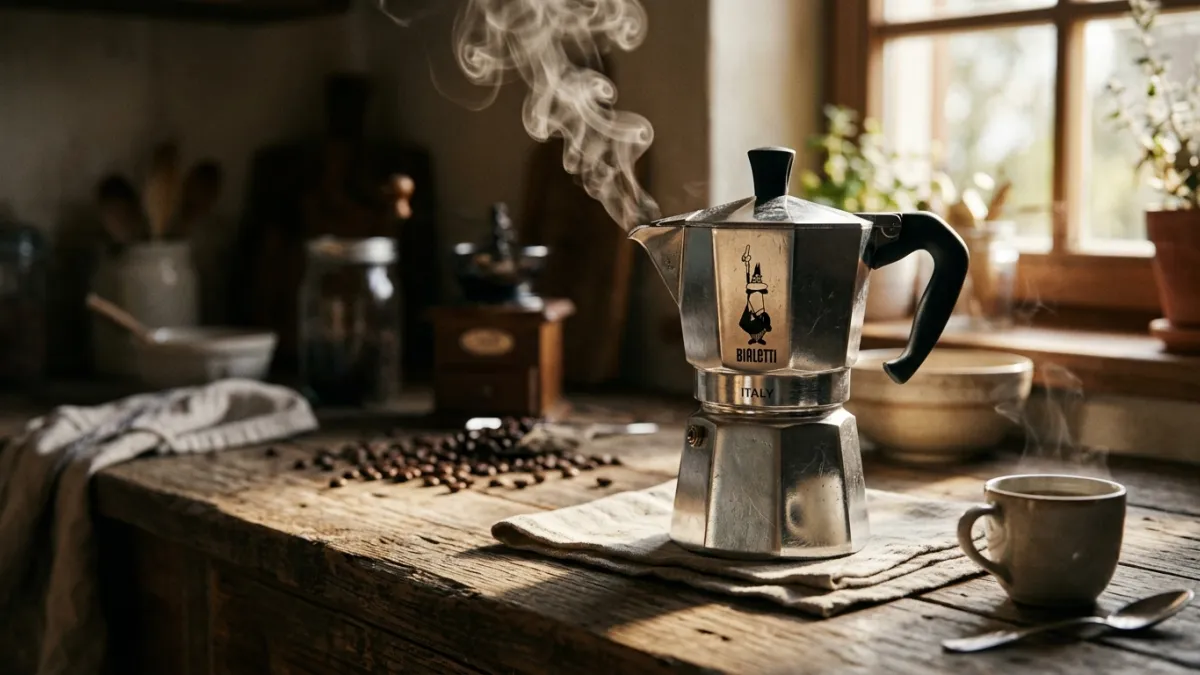
The iconic Moka pot has been a cornerstone of home coffee brewing since Alfonso Bialetti patented his octagonal aluminum design in 1933. Capable of yielding a dense, velvety brew with a texture approaching authentic espresso, this elegant device relies on thermodynamic force rather than complex electrical pumps. However, because it relies on direct stovetop thermal energy, small variances in heat control or grind size can turn an anticipated rich cup into a harsh, metallic sludge or a watery, sour liquid. Mastering this classic Italian brewer requires understanding the delicate interplay between water pressure, thermal transfer, and particle size.
Quick answer: To eliminate bitter or burnt Moka pot coffee, start with boiling water in the bottom chamber, use a fine-medium grind resembling table salt (400–600 microns), and brew on medium-low heat. Immediately quench the base with a cold towel or cold bath when the brew begins to sputter to freeze extraction and preserve sweet, balanced flavors.
The Physics of Stovetop Extraction: How the Moka Pot Works
Understanding why your Moka pot yields undesirable flavors starts with the physical mechanics inside the chamber. Unlike standard pour-over devices that depend entirely on gravity, or commercial espresso machines that rely on motorized pumps to deliver 9 bars of pressure, the Moka pot operates as a closed thermal system. As water heats up in the sealed lower chamber, saturated steam expands in the headroom above the water line. This expanding gas creates trapped pressure, pushing the hot water down toward the bottom of the dip tube and forcing it upward through the basket filled with coffee grounds.
Most classic aluminum and stainless steel Moka pots achieve an internal pressure between 1.5 and 2.5 bars. While this is significantly lower than commercial espresso, it is substantial enough to extract deep, full-bodied compounds and subtle emulsified oils. The water passes upward through the puck, travels up the central column, and cascades smoothly into the upper collection reservoir. If the water becomes excessively hot before building sufficient pressure, it extracts harsh phenolic compounds that ruin the balance of your cup.
According to research from the Specialty Coffee Association, ideal coffee extraction sits between 18% and 22% total dissolved solids (TDS) yielding a balanced solubles yield. When Moka pot water contacts grounds at temperatures exceeding 96 °C (205 °F) for prolonged periods, extraction spikes beyond 22%, dissolving wood fiber compounds and creating acrid, burnt notes. Balancing heat, pressure, and flow rate is the secret to extracting sweet sugars while leaving bitter tannins behind.
Eliminating Bitterness and Scorched Flavors
Over-extraction and physical burning are the two primary causes of bitter stovetop coffee. When coffee tastes harsh, dark, and lingeringly astringent, your brew cycle has exposed the grounds to excessive heat or prolonged contact time. A frequent mistake is starting with cold water in the bottom reservoir. When you place a cold Moka pot over a flame, the entire metal vessel heats up gradually, baking the ground coffee in the filter basket long before water actually flows through it. Thermal conductivity causes the dry grounds to toast, destroying delicate aromatic compounds.
Another major issue stems from leaving the pot on the burner once the liquid reaches the final extraction phase. As the water level in the lower boiler drops, pressurized steam begins blowing directly through the central column. This causes the characteristic loud sputtering noise and introduces superheated steam directly to the extracted liquid, scorching the brew in seconds. Heat management must be proactive rather than passive throughout the entire brew process.
To eliminate these harsh profiles, always pre-heat your water in a kettle to roughly 95 °C (203 °F) before pouring it into the lower chamber. Use a towel or oven mitt to hold the hot base securely while screwing on the top section tightly. Place the pot on a low-to-medium thermal setting, ensuring direct flames do not wrap around the sides of the chamber. The liquid should flow out smoothly and steadily, resembling warm honey. The moment the liquid lightens in color and begins to foam or sputter, remove the pot from the heat source and cool the base under running tap water or on a cold damp towel to arrest thermal extraction instantly.
Rescuing Thin, Sour, or Weak Stovetop Coffee
On the opposite end of the spectrum, under-extracted Moka pot coffee presents itself as thin, watery, excessively sharp, or unpleasantly sour. Under-extraction occurs when water travels through the coffee grounds too quickly, or when the water temperature fails to reach the energy threshold required to dissolve complex carbohydrates and sugars. Instead of getting a full-bodied cup with a rich mouthfeel, you get an acidic brew lacking body and balance.
Grind size plays a central role in weak extractions. Using a coarse grind meant for a French press coffee guide leaves massive channels between coffee particles. Water follows the path of least resistance, rushing through the basket without interacting sufficiently with the cellular structure of the coffee bean. Furthermore, under-dosing the basket—filling it only halfway—prevents proper resistance, causing water to channel freely without creating the necessary pressure build-up inside the lower chamber.
To fix thin or sour coffee, check your dosage and grind settings. Fill the basket completely to the rim without pressing or tamping the grounds. Level the grounds flat using the flat edge of a butter knife or your finger to ensure an even bed density. Make sure your grind particle size sits between true espresso and pour-over drip coffee. If the flow finishes in under 60 seconds after reaching the top spout, fine-tune your grind finer on your burr grinder to slow down flow velocity and increase contact time.
Dialing in Moka Pot Parameters: Grind, Ratio, and Thermal Control
Precision yields consistency when brewing on the stovetop. While traditional Italian recipes often rely on visual cues, measuring key variables with modern kitchen tools elevates your results dramatically. Utilizing a dedicated conical or flat burr grinder, such as models from Baratza or Fellow, grants precise control over particle distribution, minimizing micro-fines that clog filters and boulders that cause uneven extraction.
Barista's tip: Never tamp your Moka pot grounds like you would for an espresso machine. Tamping creates excessive resistance that forces pressurized water to channel around the edges of the filter basket or explode past the safety release valve. Instead, gently tap the side of the basket with your hand to distribute the grounds evenly, then swipe off the excess so the rubber gasket forms a perfectly airtight seal.
The ideal dose for a standard 3-cup Bialetti Moka pot ranges between 15 grams and 18 grams of coffee, matching a water volume of approximately 150 to 180 milliliters in the lower chamber. This yields an effective brewing ratio between 1:8 and 1:10, which concentrates solubles into a bold, velvety drink. Below is a comparative specification guide for dialing in your equipment against other classic brewing devices.
| Brewing Method | Grind Size (Microns) | Brew Ratio | Target Water Temp | Average Extraction Time |
|---|---|---|---|---|
| Moka Pot | Fine-Medium (400–600 µm) | 1:8 – 1:10 | 90–95 °C (194–203 °F) | 2–4 minutes |
| Espresso | Fine (200–300 µm) | 1:2 – 1:2.5 | 91–94 °C (195–201 °F) | 25–30 seconds |
| V60 Pour-Over | Medium-Fine (600–800 µm) | 1:15 – 1:17 | 92–96 °C (198–205 °F) | 2:30–3:30 minutes |
| French Press | Coarse (900–1200 µm) | 1:12 – 1:15 | 94–96 °C (201–205 °F) | 4:00–5:00 minutes |
Maintaining clean equipment is equally vital for optimal flavor. Coffee oils coat the inner aluminum or stainless walls over time, turning rancid when exposed to heat and oxygen. Wash all components with warm water after every brew session, inspecting the rubber safety gasket and metal filter plate monthly for oil buildup or wear. Replacing degraded rubber gaskets ensures the lower chamber maintains complete pneumatic sealing without pressure leaks.
Recommendations for Stovetop Mastery
If you want to achieve smooth, sweet, and heavy-bodied coffee consistently, pair fresh medium-roasted coffee beans (roasted within 2 to 4 weeks) with a high-quality burr grinder set to a fine-medium table salt texture. Start by pre-heating near-boiling water in your kettle, filling the lower vessel right up to the bottom edge of the safety valve, leveling 16 grams of grounds loosely in the basket, and brewing over medium-low flame. The moment your coffee transitions from a dark hazelnut stream to a pale golden foam, remove the pot and dunk the base in cold water to deliver a sweet, perfectly balanced cup every morning.
Frequently Asked Questions
Why does my Moka pot sputter aggressively and spray coffee?
Sputtering happens when water in the lower boiler boils too rapidly or when air leaks past the center seal. Ensure you tighten the upper and lower chambers firmly together, replace worn rubber gaskets, and use medium-low stovetop heat so water rises smoothly instead of boiling wildly.
Should I use light, medium, or dark roast coffee in a Moka pot?
While traditional Italian tradition favors dark roasts, medium to medium-dark roasts offer the best balance of rich chocolate notes and subtle sweetness without scorching easily. Light roasts often require higher extraction temperatures and very fine grinds, making them trickier to dial in without tasting sour.
Can I make commercial-style espresso crema with a Moka pot?
Standard Moka pots generate roughly 1.5 to 2 bars of pressure, which creates a light layer of transient foam rather than dense, persistent espresso crema (which requires 9 bars). Models featuring pressurized valves (like the Bialetti Brikka) can generate temporary foam, but true crema remains exclusive to pump espresso machines.
How do I clean coffee mineral scale and oil buildup from aluminum?
Rinse your pot thoroughly with hot water after each use and dry completely. Avoid harsh dishwashers or abrasive chemical soaps on aluminum models, as they destroy the protective oxide layer; instead, clean stubborn scale occasionally using a gentle solution of equal parts water and white vinegar, followed by a thorough rinse.