Disclosure: As an Amazon Associate, we earn from qualifying purchases.
Few brewing methods carry as much living history, cultural depth, and sensory delight as Turkish coffee. Long before modern espresso machines or pour-over drippers existed, traditional copper pots were creating rich, velvety, unfiltered coffee topped with a dense layer of micro-foam. Achieving that iconic cup at home does not require expensive high-tech gear, but it does demand a fundamental understanding of your central tool: the traditional Turkish coffee pot. Choosing the right vessel and mastering its heat management turns a simple morning routine into an authentic, deeply satisfying ritual.Quick answer: The traditional Turkish coffee pot (known natively as a cezve) uses a wide base and narrow neck design to build a thick, velvety foam layer during a slow, gentle extraction. Choosing an authentic tin-lined copper pot or a durable stainless steel model allows you to brew world-class Turkish coffee at home with precise heat control.
Understanding the Cezve: Anatomy and Materials
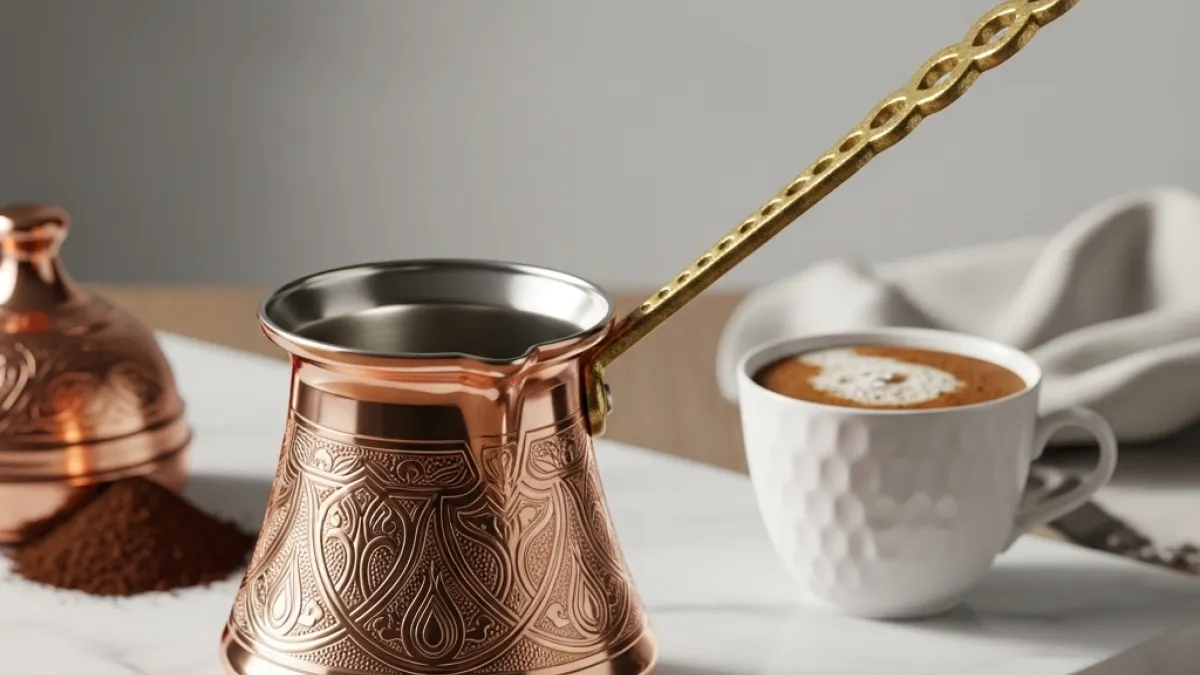
To understand why Turkish coffee tastes so distinct from drip or espresso, one must look closely at the architecture of the brewing vessel itself. Known historically as a cezve (or ibrik in some Western and Levant regions), the pot features a flat, wide bottom that tapers upward into a narrow neck before flaring out slightly at the rim. This specific geometry serves an essential physical function during the brewing cycle. As the cold water heats up, coffee oils and ultrafine grounds trap expanding gases, creating a rising emulsion. The narrow neck accelerates and concentrates this foam upward, creating a protective thermal seal that traps aromatic compounds inside the liquid below.
The choice of material dictates how quickly and evenly heat transfers through the grounds. Copper remains the undisputed gold standard for serious home baristas due to its unmatched thermal conductivity. High-quality copper pots are heavy, typically featuring a wall thickness between 1.5 mm and 2.0 mm, and must be lined inside with food-grade tin or silver to prevent reactive copper toxicity. Stainless steel serves as a lower-maintenance modern alternative; while it conducts heat less uniformly than copper, high-grade 18/10 stainless steel is virtually indestructible, rust-resistant, and dishwasher-safe. Brass is another traditional alloy, cherished for its aesthetic warmth and solid heat retention, though it heats slightly slower than pure copper.
Capacity is equally critical when choosing your pot. Unlike standard drip carafes, a cezve cannot be filled halfway or up to the absolute brim for a successful extraction. To achieve proper foam dynamics, the pot must be filled to roughly two-thirds of its total volume, right where the body narrows into the neck. Choosing a pot sized specifically for the number of cups you intend to prepare—typically ranging from single-serve 100 ml capacities up to family-sized 400 ml models—ensures consistent results every time.
| Material Type | Heat Conductivity | Maintenance Level | Pros | Cons |
|---|---|---|---|---|
| Solid Copper (Tin-Lined) | Exceptional (Fast & Uniform) | High (Hand-wash, periodic relining) | Superior foam production, traditional aesthetics, precise temperature control | Requires careful handling; lining wears down over years |
| 18/10 Stainless Steel | Moderate (Risk of hot spots) | Very Low (Dishwasher safe) | Highly durable, rust-proof, non-reactive, affordable | Heats unevenly; foam can rise abruptly if unmonitored |
| Heavy Brass | Good (Steady retention) | Moderate (Polishing required) | Beautiful decorative finish, durable structure, smooth heat rise | Heavier than copper; takes longer to cool down |
| Electric Cezve | Internal Heating Element | Low (Wipe down only) | Rapid brewing, automatic shut-off options, great for travel | Lacks manual heat control; non-traditional aesthetic |
The Science of Extra-Fine Extraction and Brewing Ratios
Brewing Turkish coffee relies on full-immersion extraction, but with an important distinction: the coffee beans are ground into a fine powder that remains unfiltered in the final cup. The Specialty Coffee Association (SCA) notes that standard espresso grounds sit around 200–300 microns in particle size, whereas Turkish coffee requires an extra-fine powder below 100 microns. At this microscopic size, the surface area exposed to water increases exponentially, accelerating extraction rates significantly even at lower temperatures.
Brew Like an Artisan: Authentic Hand-Hammered Copper Cezve

Precision measurement is vital to achieving a balanced cup that yields rich body without overwhelming bitterness. The standard golden ratio for Turkish brewing sits between 1:10 and 1:12 (coffee-to-water by weight). For a standard 70 ml demitasse serving (often called a fincan), target 6 to 7 grams of extra-fine coffee paired with 65 to 70 grams of cold water. If sugar is desired, it must be added at the very beginning of the brewing process alongside the cold water and coffee grounds, as stirring the cup later will destroy the delicate crema and disturb the settling grounds.
Barista's tip: Never let your Turkish coffee reach a rolling, violent boil. The ideal extraction temperature ranges from 88 °C to 92 °C (190 °F to 198 °F). Overheating destroys the delicate volatile oils, yielding an unpleasantly harsh, burnt flavor. As soon as you see the dark foam swell gracefully toward the rim of the neck, remove the pot immediately from the flame.
Water quality plays a dramatic role in the final extraction percentage and sensory profile. Always start with cold, soft filtered water (ideally with a total dissolved solids or TDS level between 75 and 125 ppm). Cold water gives the coffee grounds sufficient time to hydrate fully as the heat gradually climbs over a total target brew duration of 2.5 to 3.5 minutes. If your brew time is under two minutes, your heat is too high; if it stretches past four minutes, your coffee risks over-extraction and extreme astringency.
Traditional Stovetop Methods vs. Electric Innovations
The classical ritual of preparing coffee on a stovetop or over hot sand offers total manual control over every brewing variable. Sand brewing (historically performed in a kumda kahve setup) uses a deep pan filled with fine sand heated over an open flame. By pushing the copper cezve deeper into the hot sand or lifting it toward the cooler surface, baristas adjust heat transfer with micro-precision. On modern kitchen ranges, home baristas achieve similar control using low gas flames or electric burners fitted with heat-diffusing plates.
For coffee lovers balancing authentic flavor with a busy lifestyle, electric Turkish coffee pots have emerged as a hugely popular modern alternative. These units pair a specialized brewing carafe with a rapid internal heating plate. Modern electric models, offered by recognized Turkish appliances brands such as Arzum Okka, Beko, and Grundig, frequently feature optical sensors positioned above the rim. These sensors detect the precise millimetric rise of the foam, automatically shutting off power before the pot boils over—solving one of the most frustrating challenges beginners face.
While an electric pot offers convenience and consistent heating cycles, traditional copper models remain favored by purists who prefer to pour off micro-foam into cups midway through the brew. Manual pots also allow you to create custom multi-stage foam rises, gently skimming the velvety top layer into demitasse cups before returning the pot to heat for a final expansion.
Step-by-Step Guide: Brewing Authentic Turkish Coffee at Home
The Historic Gold Standard: Authentic Mehmet Efendi Coffee

Mastering the technique requires patience, observation, and an eye for subtle shifts in foam texture. Follow this standardized recipe to achieve café-quality results in your kitchen:
- Measure Water and Coffee: Pour 70 ml of room-temperature or cold filtered water into your cezve per serving. Add 7 grams (about one heaped teaspoon) of pulverized, flour-fine coffee per cup. Add sugar at this stage if desired (1/2 tsp for medium sweetness).
- Initial Immersion Mix: Stir the water, coffee, and sugar thoroughly with a small wooden spoon for 10–15 seconds until all grounds are fully saturated and no dry clumps remain. Crucial step: Remove the spoon and do not stir again during the brewing process.
- Apply Low Heat: Place the pot on your burner set to low-medium heat. Allow the mixture to warm gradually over a target timeframe of 2.5 to 3 minutes.
- Monitor the Rise: As the temperature reaches roughly 88 °C (190 °F), a thick, dark ring of foam will begin to form around the edges and climb smoothly toward the narrow neck.
- First Foam Pour: Just as the foam rises to the top rim, remove the pot from the heat. Carefully spoon or pour a portion of the thick surface foam directly into your serving demitasse cup.
- Final Heat Flash and Serve: Return the pot to low heat for 5–10 seconds to let the remaining liquid rise once more, then remove it permanently. Slowly pour the remaining coffee down the inner side of the cup to preserve the delicate foam layer on top.
- Resting Period: Allow the cup to sit undisturbed for 1.5 to 2 minutes before drinking. This lets the micro-grounds settle completely to the bottom, leaving a silky, rich liquor above.
Choosing, Caring for, and Maintaining Your Equipment
Investing in a well-crafted Turkish coffee pot is a long-term commitment. Handcrafted copper pots adorned with intricate hand-chased engravings offer striking display beauty alongside stellar performance, but they require proper care. Always hand-wash copper and brass vessels using warm water, mild dish soap, and a non-abrasive soft sponge. Avoid aggressive scrubbers or metallic pads, which strip away the thin internal tin lining. Over years of daily use, the bright silver tin lining inside a copper pot may wear thin, exposing the dark pinkish copper underneath; when this happens, send the pot to a artisan coppersmith to be re-tinned.
If low maintenance is your main priority, high-grade 18/10 stainless steel pots eliminate the need for relining and easily handle daily dishwasher cycles. When purchasing online through major platforms like Amazon or specialty importers, check the construction specs closely. Avoid ultra-thin stamped aluminum or cheap tinplate pots, as they heat unevenly, scorch grounds quickly, and deform under direct heat.
To create a complete serving experience, consider acquiring a traditional Turkish coffee set. A full set typically includes an authentic tin-lined copper cezve, matching porcelain demitasse cups housed in ornate brass or copper holders (known as zarf), a small delight dish for serving Turkish delight (lokum), and an engraved metal tray. Serving a cold glass of fresh water alongside the coffee is essential—cleansing the palate with water before drinking allows you to appreciate the full flavor profile of the brew.
Frequently Asked Questions
What is the difference between a cezve and an ibrik?
In Turkey, the pot is universally called a cezve. The term ibrik comes from an Arabic root and historically referred to a tall ewer or pitcher with a long spout and handle used for storing liquids. However, in many Western countries and parts of the Levant, the word ibrik has become a common synonym for the traditional Turkish coffee pot.
Complete the Ritual: Ottoman-Inspired Cups & Saucers

Can I grind coffee for Turkish brewing with a standard burr grinder?
Most standard electric burr grinders designed for drip, pour-over, or espresso cannot grind fine enough for authentic Turkish coffee. Turkish coffee requires an impalpable powder texture similar to flour or cocoa powder. To achieve this fine grind, you need a high-end burr grinder capable of Turkish-range adjustments or a specialized manual brass Turkish mill with steel burrs designed for ultra-fine grinding.
Why did my Turkish coffee fail to form foam on top?
Lack of foam usually stems from three common factors: stale coffee, incorrect heat management, or over-stirring. Turkish coffee requires fresh, dark- or medium-roasted beans to create micro-bubbles. Additionally, heating the coffee too quickly on high heat burns off the foam before it can rise, while stirring the pot after it has started heating destroys the emulsion layer prematurely.
Do I drink the sediment at the bottom of the Turkish coffee cup?
No, you should never drink the thick layer of grounds (called telve) that settles at the bottom of the cup. After pouring your coffee, wait 90–120 seconds before taking your first sip. This allows all suspended grounds to settle neatly into a sludge layer at the base, leaving clear, velvet-smooth coffee above for drinking.
For home baristas seeking rich flavor and deep tradition, investing in a heavy-gauge, tin-lined copper cezve paired with fresh, flour-fine coffee grounds provides the ultimate authentic experience. Start with a classic 1:10 brewing ratio, keep your stove heat low and gentle, and enjoy the rewarding art of crafting world-class Turkish coffee at home.
Sources
- Wikipedia: Turkish Coffee History and Culture
- Specialty Coffee Association (SCA) Standard Brewing Parameters
- UNESCO Intangible Cultural Heritage: Turkish Coffee Culture and Tradition
Looking for the Right Brewing Gear?
Check out our verified Top Coffee Brewing Essentials on Amazon.
As an Amazon Associate, we earn from qualifying purchases.