Indonesia's sprawling archipelago spans over 17,000 tropical islands, positioning it as the fourth-largest coffee producer globally according to International Coffee Organization data. Nestled directly along the equator, these islands offer rich volcanic soil, high altitudes, and unique microclimates that give rise to some of the most distinct coffee profiles on the planet. For home baristas aiming to expand their sensory palate beyond typical Central American or East African profiles, delving into Indonesian beans opens up a fascinating world of heavy bodies, intricate spice notes, and low-acidity comfort brews. Understanding how regional terroirs and traditional post-harvest methods shape these beans will transform your morning routine and elevate your daily cup.
Quick answer: Indonesian coffees are defined by regional processing techniques and volcanic terroir, ranging from the earthy, heavy-bodied profiles of wet-hulled Sumatran beans to the clean, balanced sweetness of fully washed Javas, and the complex, fruit-forward notes of Sulawesi's Toraja region. Each origin excels in specific manual extraction methods like the French press, pour-over, or espresso depending on its unique density and moisture characteristics.
Understanding Indonesian Terroir and the Famous Wet-Hulling Method
To truly appreciate Indonesian coffee, one must first look at the island nation's drastic humidity and tropical rain patterns. Traditional fully washed or dry natural processing methods struggle in regions where afternoon downpours are a daily reality. Coffee farmers in the Dutch colonial era had to innovate to prevent beans from rotting on drying beds, which ultimately led to the development of unique localized handling techniques. Today, understanding these raw handling steps is essential for dialing in your burr grinder, as bean moisture and physical density vary wildly between Indonesian regions compared to washed high-altitude beans from Colombia or Ethiopia.
The defining process behind most Indonesian specialty beans—particularly those from Sumatra and parts of Sulawesi—is known locally as Giling Basah, or wet-hulling. In standard washed processing, parchment coffee dries inside its protective outer husk until reaching a stable moisture content around 10% to 12% before hulling. In contrast, Giling Basah removes the protective parchment layer when the inner seed is still soft and holding a high moisture level of roughly 30% to 35%. The naked, greenish-blue seeds are then laid directly on patio floors or tarps to finish drying exposed to the elements.
This early exposure dramatically alters the cellular structure and chemical profile of the green coffee bean. It mutes tart citric acidity while dramatically building body, yielding rich notes of dark chocolate, cedar, pipe tobacco, and fresh damp forest earth. When roasting these beans, roasters must account for their uneven drying dynamics. For home baristas, this unique structure translates to coffee that provides exceptional crema, thick mouthfeel, and low perceived sourness across virtually all brewing methods.
Sumatra: The Earthy, Heavy-Bodied Heavyweight
Sumatra produces the most widely recognized Indonesian origins, including famous sub-regions like Aceh (Gayo Highlands), Lintong around Lake Toba, and Mandheling. High altitude plantations in the Gayo region sit between 1,200 and 1,600 meters above sea level, providing ideal conditions for Arabica cultivars like Ateng, Bergendal, and Bourbon. Sumatran coffees are world-renowned for their dense, syrupy body, structural complexity, and minimal acidity, making them a staple base ingredient in dark roast espresso blends across world competition circuits.
When tasting a specialty-grade Sumatran coffee, expect a sensory profile dominated by unsweetened dark chocolate, molten molasses, freshly chopped cedar, and warm kitchen spices like nutmeg or clove. The aroma off the crust of a cupping bowl immediately reveals deep forest floor notes and damp moss rather than bright floral notes. The total dissolved solids (TDS) extracted from Sumatran beans often skew higher due to soluble compounds formed during the wet-hulling process, giving drinks an almost creamy tactile feel on the tongue.
Barista's tip: Sumatran beans are notoriously low in density due to wet-hulling. When using a flat burr grinder like a Fellow Ode or Baratza Virtuoso+, decrease your grinder setting slightly finer (around 500–600 microns) compared to washed Central American beans. Because Sumatran beans produce fewer fines during grinding, you can increase your water temperature to 94°C (201°F) without risking immediate over-extraction or harsh bitter astringency.
Optimal Brewing Recipe for Sumatra
To extract the luscious sweetness of a Sumatran Gayo bean while preserving its syrupy structure, immersive extraction using a French Press remains unbeatable. Use an 18 g dose of coarsely ground coffee to 270 g of warm water, adhering to a precise 1:15 brew ratio to highlight mouthfeel.
- Coffee Dose: 18 grams (medium-coarse grind, ~700 microns)
- Water Mass & Temp: 270 grams at 93°C (200°F)
- Bloom Phase: 50 grams water pour, mild stir, bloom for 45 seconds
- Total Brew Time: 4 minutes steep, gentle press, rest for 1 minute before pouring
Java: Clean, Elegant, and Steeped in History
The island of Java represents the historic heart of global commercial coffee cultivation. Introduced by the Dutch East India Company in the late 17th century, Java coffee gained such immense global popularity that "java" became a ubiquitous slang term for coffee itself. The majority of high-grade specialty coffee from Java originates from large state-owned estates situated on the eastern side of the island around the Ijen Plateau, including historic estates such as Kayumas, Blawan, and Djampit at elevations reaching 1,400 meters.
Unlike Sumatra, Java coffee historically shifted away from wet-hulling toward large-scale washed processing. Coffee cherries undergo mechanical depulping, controlled fermentation tanks to break down mucilage, thorough clean water washing, and patio or mechanical drying to 11% moisture before parchment removal. This strict handling protocol produces a far cleaner cup profile that allows the subtle sweetness of the volcanic soil to shine without overwhelming earthy or herbal tones.
In the cup, washed Java coffees present a classic balance. You will notice a refined medium-to-full body paired with bright, pleasant acidity resembling green apple or lemon zest, quickly giving way to toasted walnuts, dark cocoa powder, and sweet pipe tobacco. Because of its structural clarity and balanced acidity according to specialty coffee Association (SCA) cupping standards, Java acts as an excellent standalone origin for morning filter coffee, providing an approachable transition for drinkers accustomed to clean Central American cups.
Sulawesi: Complex, Sweet, and Delicately Balanced
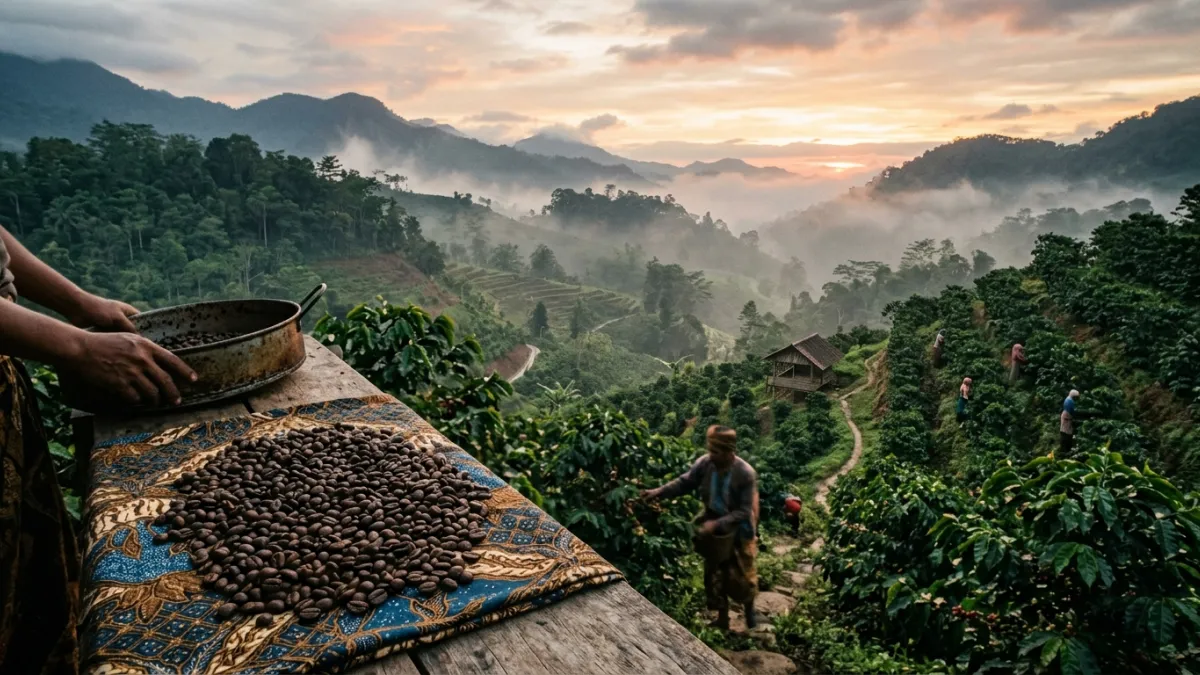
Located east of Borneo, the orchid-shaped island of Sulawesi produces extraordinary, highly prized coffees in its mountainous central interior region known as Toraja. Grown at extreme altitudes ranging between 1,400 and 1,900 meters around Mount Sesean, Toraja coffee is cultivated primarily by smallholder farming families on steep, terraced hillsides. The remote geography and microclimates create a extended ripening period for coffee cherries, resulting in elevated sugar concentration within the seed.
Processing in Sulawesi is diverse, sitting at a fascinating crossroads between Sumatran tradition and Javanese washing. While traditional Giling Basah remains popular among rural smallholders, boutique washing stations across Tana Toraja increasingly process coffees using fully washed or honey (semi-washed) methods with extended fermentation cycles. This careful attention during post-harvest processing yields a truly unique hybrid flavor profile combining deep body with surprising vibrant fruitiness.
A well-prepared Sulawesi Toraja exhibits extraordinary balance. The cup bursts with vibrant notes of ripe red plum, sweet black cherry, and caramelized brown sugar, anchored by a smooth cocoa finish and faint herbal accents reminiscent of fresh lemongrass. It possesses a silky, rounded body with medium acidity that sits higher than Sumatra but remains softer than bright African origins like Kenya. Exploring these beans offers home baristas a rewarding dive into how coffee origins redefine expectations of Asian flavor profiles.
Indonesian Origins Head-to-Head Comparison
Comparing these three iconic origins side-by-side highlights how processing decisions, geographic microclimates, and regional traditions create dramatically different taste profiles across a single country. The table below outlines key specifications to help you select the ideal bean for your personal preference and equipment setup.
| Origin / Region | Primary Processing | Flavor Profile | Acidity & Body | Best Brewing Method |
|---|---|---|---|---|
| Sumatra (Aceh, Lintong, Mandheling) | Wet-Hulled (Giling Basah) | Dark chocolate, cedar, herbs, earth, nutmeg | Low Acidity / Heavy, Syrupy Body | French Press, Espresso, Moka Pot |
| Java (Ijen Plateau, Kayumas) | Fully Washed | Dark cocoa, pipe tobacco, toasted walnut, apple | Medium Acidity / Smooth, Medium Body | V60 Pour-Over, Drip Machine, Aeropress |
| Sulawesi (Tana Toraja) | Washed & Semi-Washed | Red plum, brown sugar, cocoa, lemongrass | Medium-Mild Acidity / Silky, Balanced Body | Chemex, Pour-Over, Aeropress |
Mastering the Brew: Dialing in Indonesian Coffees at Home
Extracting the optimal flavors from Indonesian beans requires subtle adjustments to standard filter recipes. Because many wet-hulled beans display softer interior structures, aggressive agitations during pour-over brewing can generate micro-fines that clog filter papers, leading to slow draw-down times and unwanted over-extraction bitterness. Controlling water temperature, agitation, and grind size will keep your brew clean, vibrant, and aromatic.
When brewing with paper filter pour-over devices like the Hario V60 or Chemex, aim for a brew ratio between 1:15 and 1:16. Using a standard 18 g dose of coffee to 288 g of water at 92°C (198°F), initiate a 45-second bloom phase with 50 g of water. Follow with two gentle spiral pours, minimizing kettle height to avoid overly churning the bed of coffee. Aim for an overall target extraction yield between 19% and 21%, which ensures you capture sweet chocolate undertones without over-extracting astringent woody phenols. Refining these mechanical variables forms a core pillar of mastering the pour-over technique in home environments.
For espresso enthusiasts, dark-roasted Sumatran beans serve as an unmatched crema generator. Prepare an 18 g dose in a double basket, aiming for a 36 g liquid yield in 28 to 32 seconds at 93°C (200°F). The resulting shot will feature a dense, tiger-striped crema layer with velvety mouthfeel and notes of dark dark chocolate truffle, making it an incredible foundation for milk-based drinks like flat whites and lattes.
To experience the distinct highlights of Indonesian coffees at home, start with a freshly roasted, single-origin Sulawesi Toraja processed via the washed method. Brew it using an AeroPress or Hario V60 with a clean 1:16 ratio and water filtered to SCAA standards (~150 ppm total hardness). This reveals the hidden sweetness and clean fruit notes of Indonesian coffee while giving you a pristine benchmark to compare against darker, heavy wet-hulled Sumatrans.
Frequently Asked Questions
Why is wet-hulled (Giling Basah) coffee unique to Indonesia?
Wet-hulling was developed out of necessity to adapt to Indonesia's high tropical humidity and frequent rain patterns. By removing the outer parchment layer early while the seed is wet (30-35% moisture), farmers speed up overall drying times significantly compared to traditional washed methods.
Are Indonesian coffees naturally low in acidity?
Yes, particularly wet-hulled Sumatran and Sulawesi coffees. The early removal of the parchment layer during Giling Basah processing alters organic acid development, significantly lowering perceived citric brightness and yielding a mellow, easy-on-the-stomach brew profile.
What is the ideal roast level for Sumatran coffee beans?
Medium to dark roasts perform exceptionally well on Sumatran beans. Medium roasts accentuate sweet herbal spice and dark chocolate nuances, whereas darker roasts highlight heavy body, low acidity, and deep smoky cocoa notes perfect for rich espresso drinks.
How long should I age Indonesian beans after the roast date?
Because dense wet-hulled seeds degas somewhat differently than washed beans, allowing Indonesian coffees to rest for 7 to 10 days post-roast allows CO2 levels to stabilize fully. This leads to cleaner flavor clarity during pour-over extractions and far less volatile channeling in espresso baskets.