Unlocking the Mystery: What Makes Kenyan Coffee Truly Special?
For discerning coffee enthusiasts and home baristas, Kenyan coffee often stands out as a beacon of exceptional quality and unparalleled flavor complexity. Its reputation precedes it, often evoking images of intensely bright, fruit-forward cups that dance on the palate. But what exactly is behind this illustrious reputation? At coffee brew hub, we believe in empowering you to understand and master every bean, and today, we're taking a deep dive into the unique world of Kenyan coffee, with a special focus on the coveted AA grade beans.
The Terroir: Nature's Masterpiece in the Rift Valley
Kenya's unique coffee characteristics begin with its extraordinary geography. Nestled in the highlands east of the Great Rift Valley, coffee is primarily grown on plateaus at altitudes ranging from 1,400 to 2,000 meters above sea level. This high altitude means cooler temperatures, which slow down the maturation of the coffee cherries. This extended ripening period allows the beans to develop a richer, more concentrated array of sugars and complex acids.
Couple this with fertile, deep red volcanic soil – rich in organic matter – and consistent rainfall, and you have an almost perfect environment for producing world-class coffee. This unique combination of altitude, soil, and climate forms the bedrock of Kenya's distinctive flavor profile.
Varietals & Processing: Crafting the Flavor Symphony
Star Varietals: SL-28 and SL-34
The vast majority of Kenya's premium coffee comes from specific Arabica varietals, most notably SL-28 and SL-34. Developed in the 1930s by Scott Agricultural Laboratories (hence "SL"), these varietals were selected for their drought resistance, high yield, and exceptional cup quality. They are largely responsible for the signature blackcurrant and citrus notes associated with Kenyan coffee. Newer varietals like Ruiru 11 and Batian have also been introduced for disease resistance, while still striving for quality.
The Meticulous Washed Process
Kenyan coffee's brilliance is further amplified by its rigorous processing methods. Almost all Kenyan specialty coffee undergoes a fully washed (wet) process, but with a unique twist:
- Harvesting: Cherries are hand-picked only when perfectly ripe.
- Pulping: The outer skin and pulp are removed.
- Fermentation: The beans are typically fermented in water for 12-72 hours, which helps break down the mucilage layer. Many Kenyan coffees undergo a double fermentation (first dry, then wet) or a soak after fermentation, which is believed to enhance acidity and complexity.
- Washing: The beans are thoroughly washed to remove all remaining mucilage.
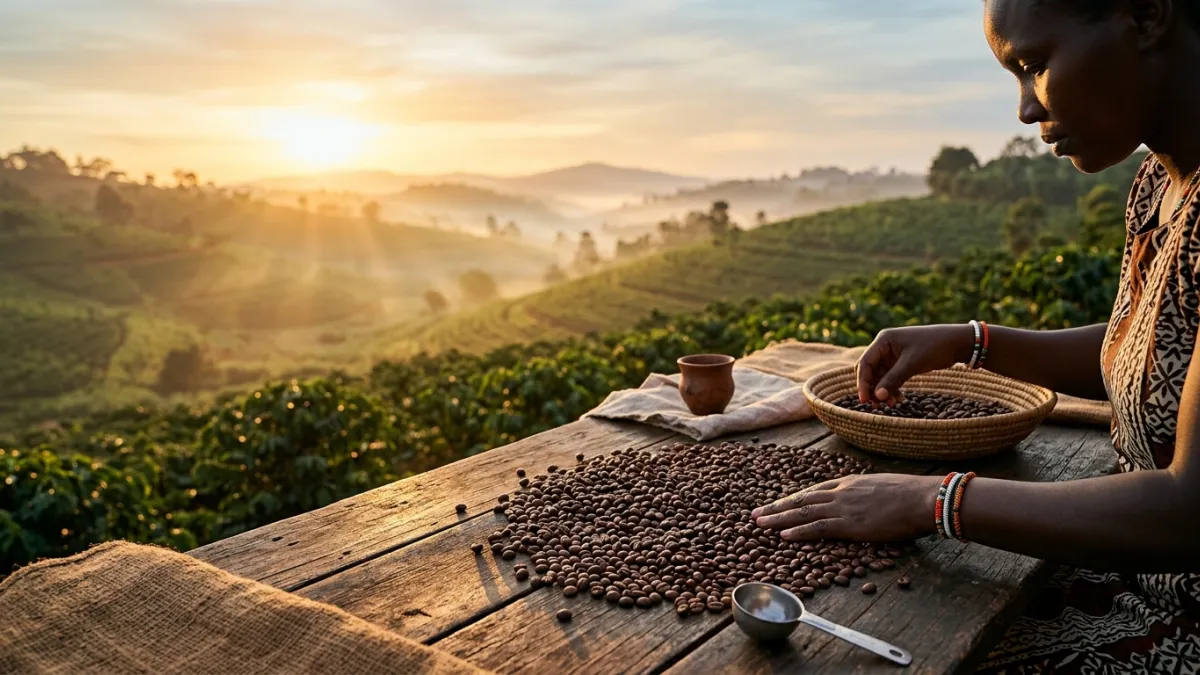
- Drying: They are then slowly dried on raised African beds, allowing for even drying and further development of flavors. This entire process is meticulously controlled, contributing significantly to the coffee's clean, bright, and vibrant cup profile.
The Kenyan Coffee Grading System: Unpacking AA Grade Beans
Kenya employs a unique and highly organized system for grading and marketing its coffee, largely driven by a weekly auction system. Coffee is graded primarily by bean size after processing, which is often a proxy for density and uniformity, though not a direct measure of cup quality alone.
What Does "AA" Truly Mean?
The "AA" designation is the most common and widely sought-after grade for Kenyan coffee. It refers to beans that are larger in size, typically measuring 7.20 millimeters or 18 screen size. While size isn't everything, larger, denser beans often indicate a slower development on the tree, potentially leading to more complex sugars and acids. They also tend to roast more evenly, which is crucial for achieving optimal flavor extraction at home.
Other common grades include:
- AB: A mix of A and B beans (slightly smaller than AA).
- C: Smaller beans.
- PB (Peaberry): A natural mutation where only one seed develops inside the cherry, resulting in a rounder bean.
- TT: Light beans that are separated by air current.
- T: Broken or very small beans.
While AA is highly prized for its consistency and often superb cup quality, don't dismiss other grades like AB or PB, which can also offer exceptional flavors. However, AA remains the benchmark for many, guaranteeing a certain level of physical quality and uniformity.
Flavor Profile: A Symphony in Your Cup
So, what can you expect when you brew a cup of Kenyan AA coffee? Prepare for an experience unlike any other:
- Acidity: Bright, sparkling, and lively, often described as wine-like or effervescent.
- Body: Medium to full, often silky or juicy.
- Flavor Notes: The signature notes are often intense blackcurrant, blackberry, or other dark berries. You'll also frequently find notes of grapefruit, lemon, tomato, savory spice, and even subtle chocolate undertones.
- Finish: Clean, sweet, and lingering, often with a pleasant dryness.
This complex interplay of fruit, acidity, and body makes Kenyan coffee a truly dynamic and memorable experience.
Brewing Your Perfect Kenyan Cup at Home
To truly appreciate the nuances of Kenyan AA coffee, precision in brewing is key. We recommend methods that highlight its bright acidity and complex flavors:
- Pour-Over (e.g., Hario V60, Chemex): This method is ideal for clarity and showcasing the intricate flavor notes. Use a medium-fine grind and a water temperature of 200-205°F (93-96°C).
- AeroPress: Offers versatility. Experiment with different ratios and immersion times to find your preferred balance of body and brightness.
- French Press: For those who prefer a fuller body, the French Press can bring out the richer, savory notes while still allowing the fruit to shine. Use a coarser grind and a slightly longer steep time.
Always use freshly ground beans and high-quality filtered water. Pay attention to your brew time and extraction; a slightly over-extracted Kenyan can become astringent, while under-extraction will mute its vibrant character.
Conclusion: Embrace the Kenyan Excellence
Kenyan coffee, especially the esteemed AA grade, is a testament to perfect growing conditions, meticulous processing, and dedicated cultivation. Its unique terroir, specific varietals, and rigorous grading system converge to produce a coffee that is intensely flavorful, uniquely bright, and utterly captivating. We encourage you to seek out high-quality Kenyan AA beans on your next coffee adventure. Brew a cup, savor its complexity, and let your kitchen transform into a personal café, courtesy of this extraordinary African gem. Happy brewing from your friends at coffee brew hub!