Disclosure: As an Amazon Associate, we earn from qualifying purchases.
Optimal coffee brewing requires extracting 18% to 22% of soluble solids from roasted beans into water heated between 195°F and 205°F (90.5°C to 96°C) using a brew ratio between 1:15 and 1:17 (coffee to water by weight). According to the Specialty Coffee Association (SCA) Golden Cup Standard, achieving a Total Dissolved Solids (TDS) strength of 1.15% to 1.35% produces a balanced cup without unpleasant bitterness or sour sharpness. Whether using a manual pour-over cone, a full-immersion French press, or a high-pressure espresso machine, controlling water temperature, grind particle size, agitation, and contact time dictates your final flavor profile.
The Golden Golden Rules of Extraction
Every coffee brewing device operates on the same core chemical principle: water dissolves organic acids, sugars, aromatics, and bitter compounds from ground coffee in a predictable sequence. Bright fruit acids and subtle floral notes dissolve first, followed by sweet caramels and chocolates, ending with harsh woodiness and tannic bitterness if over-extracted.
1. Digital Weight vs. Volume Measurements
Measuring coffee by tablespoons leads to wild inconsistencies because light roasts are denser than dark roasts. A single level tablespoon of light roast beans can weigh 7 grams, whereas the same scoop of dark roast might weigh under 5 grams. Using a digital gram scale accurate to 0.1g eliminates variable cup strength and ensures reproducible results every morning.
2. Water Quality and Mineral Balance
Brewed coffee is approximately 98.5% water. Distilled or zero-TDS water lacks the calcium and magnesium ions necessary to bind with flavorful coffee solubles, resulting in flat, astringent brews. Tap water with high carbonate hardness buffers coffee acids excessively, leaving the cup muddy and dull. Aim for filtered tap water or remineralized reverse-osmosis water containing 75 to 150 ppm (parts per million) total mineral content with neutral pH.
3. Temperature Control
Water temperature changes how quickly compounds dissolve. Darker roasts feature broken cellular structures that extract rapidly; they taste best when brewed at lower temperatures around 195°F to 200°F (90.5°C to 93°C) to prevent scorched bitterness. Denser light roasts require maximum thermal energy—between 203°F and 208°F (95°C to 97.8°C)—to release dense fruit sugars and vivid acids.
Precision Golden Ratios: TIMEMORE Black Mirror Mini Scale

Comparing Popular Home Brewing Methods
Choosing the right technique depends on your preference for body, clarity, preparation time, and milk compatibility. The table below outlines standard operational parameters across major brewing formats.
| Brewing Method | Recommended Ratio | Grind Size | Brew Time | Cup Profile |
|---|---|---|---|---|
| Pour-Over (V60 / Kalita) | 1:15 to 1:17 | Medium-Fine (Table Salt) | 2.5 – 3.5 minutes | High clarity, light body, crisp acidity |
| French Press (Immersion) | 1:14 to 1:15 | Coarse (Kosher Salt) | 4.0 – 5.0 minutes | Heavy body, rich texture, low sediment filtering |
| AeroPress | 1:11 to 1:16 | Fine to Medium | 1.5 – 2.0 minutes | Versatile, medium body, low acidity, clean |
| Espresso | 1:2 to 1:2.5 | Very Fine (Powder) | 25 – 30 seconds | Intense concentration, thick crema, viscous |
| Cold Brew | 1:8 (Concentrate) | Extra Coarse (Breadcrumbs) | 12 – 18 hours | Smooth, heavy sweet notes, zero bite, very low acid |
How to Dial In Your Pour-Over
Manual pour-over drippers like the Hario V60 or Chemex give home baristas direct control over flow rate, bed saturation, and extraction balance. Follow this standardized recipe to establish a reliable baseline brew.
- Weigh and Grind: Dose 20 grams of whole bean specialty coffee and grind to a medium-fine consistency reminiscent of sea salt.
- Rinse Filter: Place a paper filter in your dripper and flush with 100ml of hot water to wash away paper taste and preheat the vessel. Discard the rinse water.
- The Bloom Phase: Add the grounds to the filter, create a slight indentation in the center, set your scale to zero, and start a timer. Pour 60 grams of water (3x coffee weight) heated to 200°F (93°C) in gentle concentric circles. Allow the coffee to bloom for 45 seconds as trapped carbon dioxide gas escapes.
- Main Pour Sequence: At 0:45, pour continuously in steady, spiral motions until your scale reads 200 grams. At 1:30, pour the final installment until reaching 320 grams total water (a 1:16 ratio).
- Drawdown: Give the dripper a gentle single swirl to level the coffee bed. Let water filter completely through. Total drawdown time should land between 2:45 and 3:15.
Immersion vs Filter Brewing: Pros and Cons
Understanding the mechanical differences between percolation (water passing through grounds) and full immersion (grounds soaking in water) helps you decide which equipment fits your morning routine.
Pour-Over (Percolation)
Flow Rate & Thermal Precision: Fellow Stagg EKG Kettle

- Pros: Exceptional flavor separation, highlights complex single-origin notes, clean sediment-free cup.
- Cons: Requires a gooseneck kettle, sensitive to inconsistent technique and uneven grind sizes.
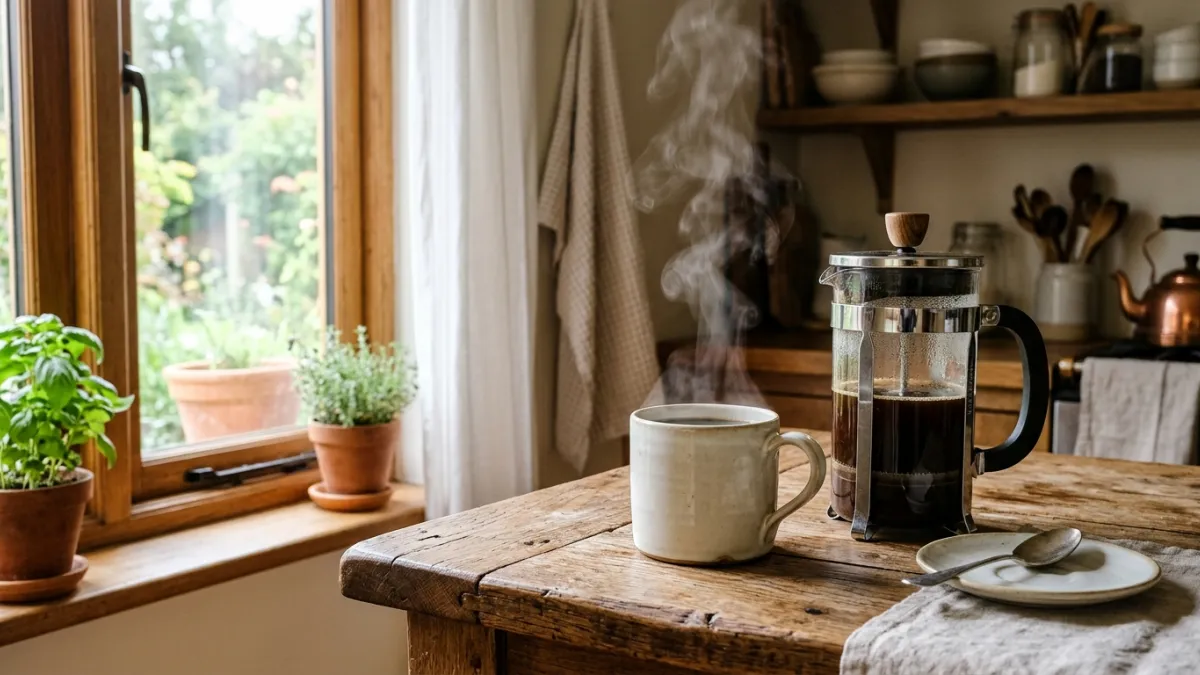
French Press (Immersion)
- Pros: Extremely forgiving, no paper filters required, preserves essential coffee oils for maximum mouthfeel.
- Cons: Fines pass through metal mesh screens, leading to silt at the bottom of the mug and faster muddying as it sits.
Troubleshooting Common Flavor Flaws
When a brew tastes unpleasant, adjusting one variable at a time allows you to correct extraction errors immediately without discarding beans.
Fixing Sour, Thin, or Weak Coffee
Sourness indicates under-extraction. Water moved through the coffee bed too quickly or failed to dissolve sufficient sugars. To fix this, make your grind setting finer to slow down water flow, increase water temperature by 2–4°F, or extend the overall contact time.
Fixing Bitter, Astringent, or Drying Coffee
Excessive bitterness and a dry coating feeling on the tongue stem from over-extraction. Water dissolved harsh polyphenols from ground particles that spent too much time in contact with water. Adjust your grinder coarser, drop your water temperature, or pour slightly faster to shorten total contact time.
Multi-Method Grind Uniformity: KINGrinder K6 Manual Grinder

Frequently Asked Questions
What is the ideal coffee-to-water ratio for daily drip machines?
For standard automatic drip coffee makers, a 1:16 ratio (approx. 60 grams of medium-ground coffee per 1,000 grams/1 liter of fresh water) strikes an ideal balance between body and sweetness without clogging filter baskets.
Why does fresh coffee expand and bubble during the bloom phase?
Freshly roasted coffee beans store carbon dioxide absorbed during the roasting process. When hot water contacts fresh grounds, CO2 rapidly degasses, creating bubbles. Blooming removes this gas, allowing water to properly penetrate cellular walls for even extraction.
Can I pre-grind coffee beans the night before brewing?
Grinding coffee drastically increases surface area exposure to oxygen. Within 15 minutes of grinding, volatile aromatics begin dissipating rapidly. Fresh whole-bean coffee ground immediately before brewing delivers noticeably more vibrant aromas and complex fruit notes.
Sources
- Specialty Coffee Association (SCA) - Standards & Resource Library
- SCA Golden Cup Standard Protocol (SCAA Standard 2015 / SCA 310-2021)