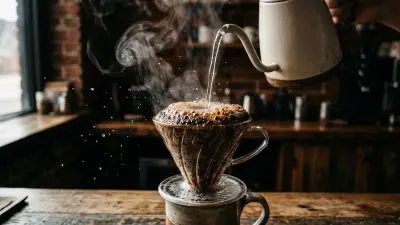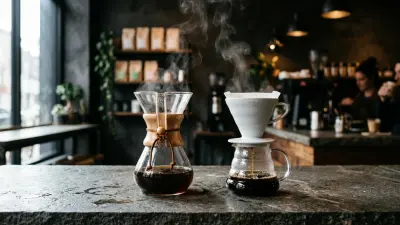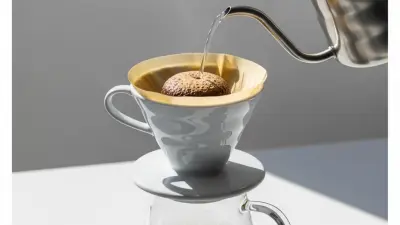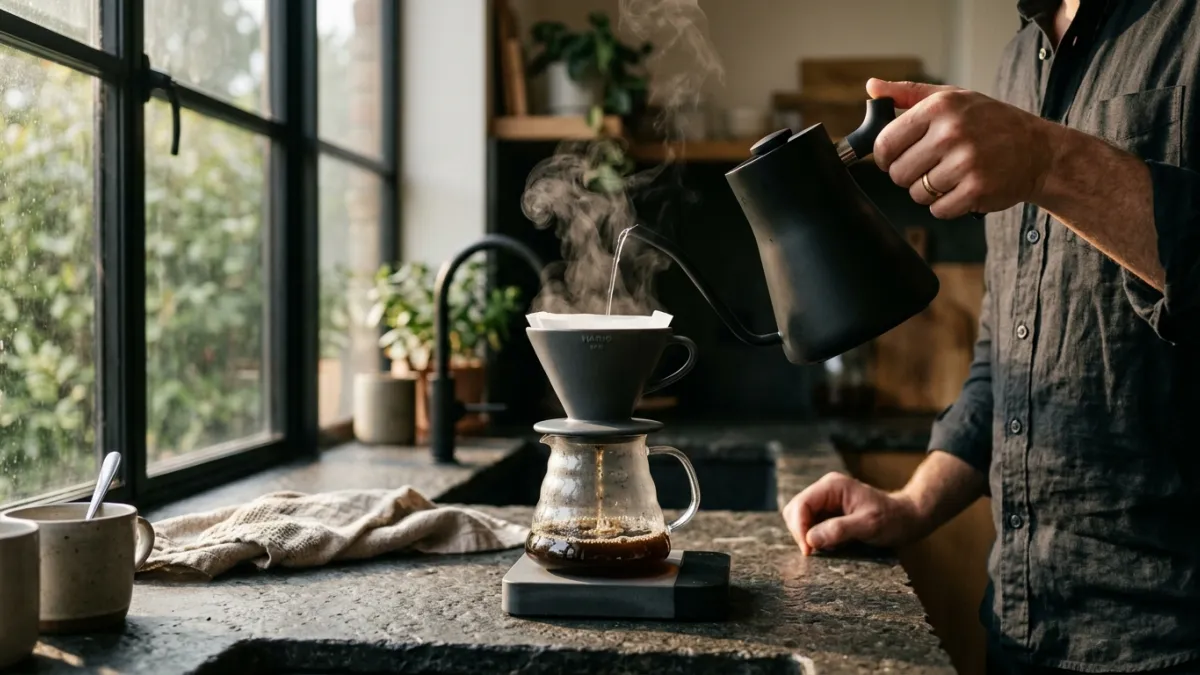
Quick answer: For absolute flavor clarity and control, the iconic Hario V60 remains the best overall choice for experienced brewers. Beginners seeking consistent, sweet extractions without demanding extreme pouring precision will benefit most from a flat-bottom dripper like the Kalita Wave 185 or Fellow Stagg EKG Companion Drippers.
Understanding Geometry and Flow Rate in Modern Drippers
The shape of your pour-over device is far more than an aesthetic choice; it fundamentally alters fluid dynamics during extraction. Conical drippers, such as the classic conical style, feature steep 60-degree walls that create a deeper coffee bed. Water travels vertically through a thicker mass of grounds, which means your pouring technique directly influences how evenly the coffee extracts. If your kettle flow is erratic, you risk creating channels where water bypasses the coffee, leading to a sour, under-extracted cup alongside localized over-extraction.
Flat-bottom drippers utilize a vastly different approach to extraction dynamics. By spreading the grounds across a flat surface with multiple small drainage holes or restricted flow valves, these devices maintain a uniform bed depth. Water pools slightly above the coffee bed, equalizing hydrostatic pressure across the entire surface. According to research aligned with specialty coffee association (SCA) standards, flat-bottom geometry naturally minimizes channeling, making it significantly easier to achieve an optimal extraction yield between 18% and 22% without requiring hyper-precise kettle work.
Material composition also plays a massive role in thermal stability throughout your 3-minute brew cycle. Plastic drippers, contrary to popular belief, possess the lowest thermal conductivity, meaning they do not steal heat from your water during the crucial early bloom phase. Ceramic and thick glass drippers offer beautiful aesthetics and high thermal mass, but they require extensive pre-heating with boiling water to prevent thermal shock from dropping your slurry temperature below the ideal range of 90°C to 96°C (195°F to 205°F).
Top Pour Over Drippers of 2025 Reviewed
Navigating the crowded marketplace can be daunting, but several standout models continue to define excellence for home baristas this year. Below, we break down the leading drippers tested across strict parameters including thermal retention, drain speed consistency, and cup clarity.
1. Hario V60 (02 Size)
The Hario V60 remains the gold standard for high-clarity brewing. Featuring internal spiral ribs that allow air to escape along the sides, this conical dripper maximizes flow rate control. It relies entirely on the barista's grind size and pour pattern to govern drawdown speed. When paired with a quality burr grinder like the Baratza Encore or Fellow Ode, the V60 highlights articulate acidity and delicate aromatics that other devices tend to mute.
2. Kalita Wave 185
Crafted from polished stainless steel, ceramic, or heat-resistant glass, the Kalita Wave 185 uses a flat-bottom design with three precision-drilled drainage holes. Paired with its signature wave-shaped paper filters, the device suspends grounds away from the outer walls to maintain consistent temperature. It excels at delivering rich body, pronounced sweetness, and forgiving brew cycles, making it the perfect daily driver for both beginners and busy enthusiasts.
3. Fellow Stagg XF Dripper
Designed for those who want fast, repeatable brews, the Stagg XF features a steep interior wall angle and a double-wall vacuum-insulated stainless steel body. This insulation keeps the brew temperature exceptionally stable from the first pour to final drawdown. Its fill-up brew method allows users to pour larger water volumes at once without risking bitter over-extraction, blending speed with modern minimalist design.
Barista's tip: A common mistake when brewing with conical drippers like the V60 is failing to swirl or stir during the bloom. Pour 3 times the coffee weight in water (e.g., 54g water for an 18g dose), then give the dripper a gentle swirl to ensure every grain is saturated. Unsoaked dry pockets cause severe channeling and uneven drawdown times.
Specifications and Performance Comparison
To help you select the ideal match for your kitchen counter, the table below outlines core technical specifications across our top picks for 2025.
| Dripper Model | Geometry | Primary Material | Ideal Dose Range | Target Brew Time | Skill Level Required |
|---|---|---|---|---|---|
| Hario V60 (02) | 60° Cone | Plastic / Ceramic / Glass | 15g – 30g | 2:30 – 3:15 min | Intermediate / Advanced |
| Kalita Wave 185 | Flat-Bottom | Stainless Steel / Glass | 20g – 35g | 3:00 – 3:45 min | Beginner / Intermediate |
| Fellow Stagg XF | Steep Cone / Flat | Double-Wall Steel | 18g – 45g | 2:30 – 3:30 min | Beginner / Intermediate |
| Chemex 6-Cup | Classic Cone | Borosilicate Glass | 30g – 50g | 4:00 – 5:00 min | Intermediate |
Dialing In Your Brew Parameters for Success
Owning a top-tier dripper is only half the equation; mastering your extraction recipe transforms good beans into extraordinary coffee. A reliable starting point for any pour-over method is a coffee-to-water brew ratio between 1:15 and 1:17. For a standard single cup, weigh out 18 grams of medium-coarsely ground coffee (around 600–800 microns) and target 300 grams of water. Make sure your water temperature rests precisely between 92°C and 94°C for medium roasts, dropping closer to 90°C for darker origins to avoid extracting harsh, bitter compounds.
Your pour structure should always be deliberate. Start with a bloom phase using 50g to 60g of water, resting for 45 seconds to allow trapped carbon dioxide gas to escape from fresh beans (ideally 2 to 4 weeks past their roast date). Follow with two or three staged concentric pours, moving gently from the center outward while avoiding directly spraying the paper filter walls. total dissolved solids (TDS) tests show that maintaining a gentle, steady flow rate prevents agitation-induced clogging, yielding a clean beverage with optimal clarity.
Investing in a high-quality conical or flat burr grinder is equally important as choosing the dripper itself. Blade grinders smash coffee into uneven fragments, creating fine dust ("fines") that clogs filter pores alongside large chunks ("boulders") that under-extract. Consistent particle size distribution allows for uniform water flow, preventing bitter astringency and revealing sweet, balanced acidity in your final cup. Mastering these adjustments allows you to troubleshoot off-flavors easily: if your brew tastes hollow or sour, grind finer; if it tastes astringent or dry, coarsen your grind setting.
For best results, pair your preferred dripper with a precise gooseneck kettle and a digital scale sensitive to 0.1 grams. Taking control of these variables turns daily morning coffee from a basic routine into an authentic café-quality experience right at home.
Frequently Asked Questions
Why does my pour-over coffee taste sour or weak?
Sourness is a classic sign of under-extraction. This usually happens because your grind size is too coarse, your water temperature is too low, or your brewing time was too fast. Try grinding finer or raising your water temperature to 94°C to extract more sweetness and balance.
Is plastic really better than ceramic for pour-over coffee makers?
In terms of thermal efficiency, yes. BPA-free plastic drippers absorb very little thermal energy from hot water, keeping slurry temperatures stable without heavy pre-heating. They are also virtually indestructible, lightweight, and ideal for travel.
Can I use regular standard coffee filters in a specialized dripper?
It is not recommended. Specialized filters, like folded V60 cones or pleated Kalita Wave papers, are precisely sized to match the wall angle and drainage speed of specific drippers. Using improper filters can cause tearing, bypass leaks, or slow drawdowns that ruin extraction balance.