Unlock Peak Flavor: Why Calibrating Your Coffee Grinder is Essential
At Coffee Brew Hub, we believe that the journey to an extraordinary cup of coffee starts long before the hot water hits the grounds. It begins with the grind. While many home baristas focus on bean quality or brewing technique, the often-overlooked secret weapon for consistency and peak flavor is a properly calibrated coffee grinder.
Think of your grinder as the heart of your coffee setup. Even the finest beans can be ruined by an inconsistent or incorrect grind. Calibration isn't just for professional baristas; it's a fundamental skill that empowers you to truly master your coffee brewing, turning your kitchen into a personal café where every cup sings.
What Exactly is Grinder Calibration?
In simple terms, calibrating your grinder means establishing a reliable zero point and understanding how your grinder's settings translate into actual grind size. Many grinders come with numbered settings, but these numbers are often relative and can shift over time due to wear, cleaning, or even manufacturing tolerances. Calibration helps you find your grinder's true starting point and map out its capabilities, ensuring you can consistently reproduce ideal grinds for espresso, pour-over, French press, and beyond.
Why Calibration Matters for Your Coffee
- Optimal Extraction: The right grind size ensures water extracts the perfect balance of flavors from your coffee. Too fine, and you get bitterness (over-extraction); too coarse, and you get sourness or weakness (under-extraction).
- Consistency: Once calibrated, you can reliably return to specific settings for your favorite brew methods, eliminating guesswork and ensuring repeatable deliciousness.
- Troubleshooting: A calibrated grinder helps you diagnose brewing issues more accurately. If your espresso is running too fast, you know precisely how much finer to go.
- Unlocking Flavor Potential: Ultimately, calibration allows you to fully appreciate the nuances and character of your coffee beans, maximizing their flavor potential.
Tools You'll Need
- Your Coffee Grinder: Burr grinders (flat or conical) are essential for quality; blade grinders are not suitable for precise calibration.
- Fresh Whole Bean Coffee: Preferably a consistent, medium-roast bean you're familiar with.
- Your Preferred Brewing Device: Espresso machine, pour-over dripper, French press, etc.
- Digital Scale: For precise coffee and water measurements.
- Timer: For brew time consistency.
- Small Brush/Vacuum: For cleaning your grinder.
- Notebook or Digital Log: To record your findings.
The Calibration Process: A Step-by-Step Approach
Step 1: Clean Your Grinder Thoroughly
Before you begin, ensure your grinder is spotless. Old coffee grounds and oils can affect grind consistency and burr alignment. Unplug your grinder, remove the hopper and top burr, and use a brush or vacuum to clear out any residue. Some grinders also benefit from grinder cleaning tablets.
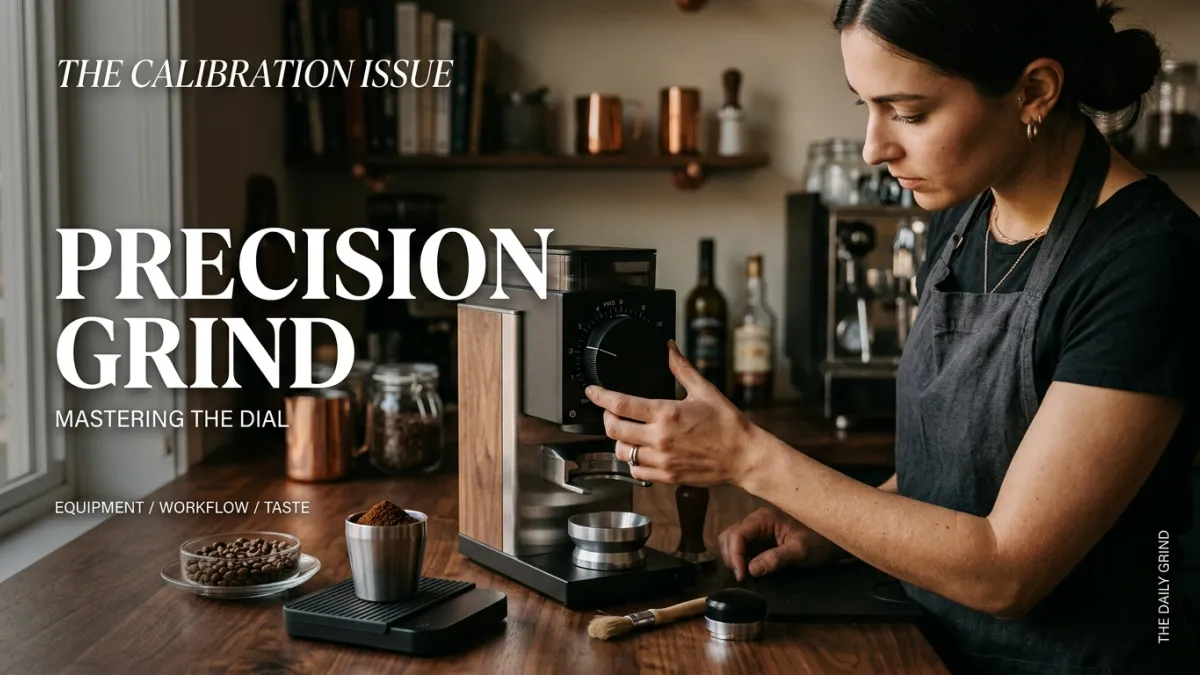
Step 2: Find Your Grinder's True Zero Point (Burr Touch)
This is the most critical step for establishing a baseline.
- Ensure Hopper is Empty: Do not have any beans in the grinder.
- Adjust Finer: With the grinder off, gradually adjust your grind setting finer and finer. You might hear the burrs start to touch, or the adjustment ring might stop moving.
- Turn Grinder On Briefly (Caution!): While slowly adjusting the grind setting finer, briefly turn the grinder on and listen carefully. You're listening for the distinct sound of the burrs just touching – a faint chirping, buzzing, or whirring sound that changes as they make contact. This is your "zero point." Do not let the burrs grind against each other for more than a second or two, as this can cause wear.
- Note Your Zero: Once you've identified the point where the burrs just begin to touch, note the corresponding number or mark on your grinder's adjustment dial. This is your true zero. If your grinder has a stepless adjustment, you might just feel the resistance.
- Reset: Immediately adjust your grinder significantly coarser to prevent burr damage.
Note: Some grinders (especially high-end commercial ones) have a physical zero calibration screw. Consult your grinder's manual if unsure.
Step 3: Establish a Reference Grind for Your Brew Method
Now that you have your zero point, you can start finding your ideal settings. Begin with your most frequently used brew method.
- Espresso: Start about 5-10 "clicks" (or a small turn on stepless grinders) coarser than your true zero. This will likely still be very fine.
- Pour-Over/Drip: Start roughly 15-25 clicks (or a moderate turn) coarser than your true zero. This should be similar to table salt.
- French Press: Start around 30-40 clicks (or a significant turn) coarser than your true zero. This will be coarse, like breadcrumbs.
Step 4: Test, Brew, Taste, and Adjust
This is an iterative process. You'll make small adjustments, brew, and taste to dial in the perfect grind.
- Brew a Small Batch: Use your chosen brew method with fresh beans at your reference setting.
- Taste and Evaluate:
- If your coffee tastes sour, weak, or watery: It's likely under-extracted. Your grind is too coarse. Adjust your grinder finer by 1-2 clicks (or a small increment).
- If your coffee tastes bitter, astringent, or hollow: It's likely over-extracted. Your grind is too fine. Adjust your grinder coarser by 1-2 clicks (or a small increment).
- For Espresso: Also observe shot time. If too fast (<25s for 30-40g out), go finer. If too slow (>35s), go coarser.
- Repeat: Continue brewing, tasting, and making small adjustments until you achieve a balanced, delicious cup. Remember to purge a small amount of coffee after each adjustment to clear old grounds from the burrs.
Step 5: Document Your Settings
Once you've found the sweet spot for a particular brew method and bean, record it! Note down:
- The grinder setting (number or mark relative to your true zero).
- The brew method.
- The type of coffee bean (roast level, origin, notes).
- Any specific brew parameters (dose, yield, time).
This log will be invaluable for consistent brewing and replicating success in the future.
Advanced Tips for Grind Mastery
- Grind Fresh, Always: Coffee stales rapidly once ground. Grind only what you need, just before brewing.
- Single Dosing: For ultimate freshness and consistency, weigh out your beans for each dose rather than leaving them in the hopper.
- Visual Inspection: Over time, you'll develop an eye for the ideal grind size. Compare your grounds to references for salt, sugar, sand, etc.
- Season Your Burrs: New grinder burrs often need some "seasoning" (grinding a few pounds of old beans) to perform optimally and consistently.
- Humidity Matters: Grind settings can be affected by ambient humidity. Be prepared to make tiny adjustments on very humid or dry days.
Calibrating your coffee grinder is a skill that will profoundly elevate your home brewing. It might take a little patience and experimentation, but the reward is a deeper understanding of your coffee and consistently delicious cups. Embrace the process, keep experimenting, and enjoy the journey to coffee perfection with Coffee Brew Hub!