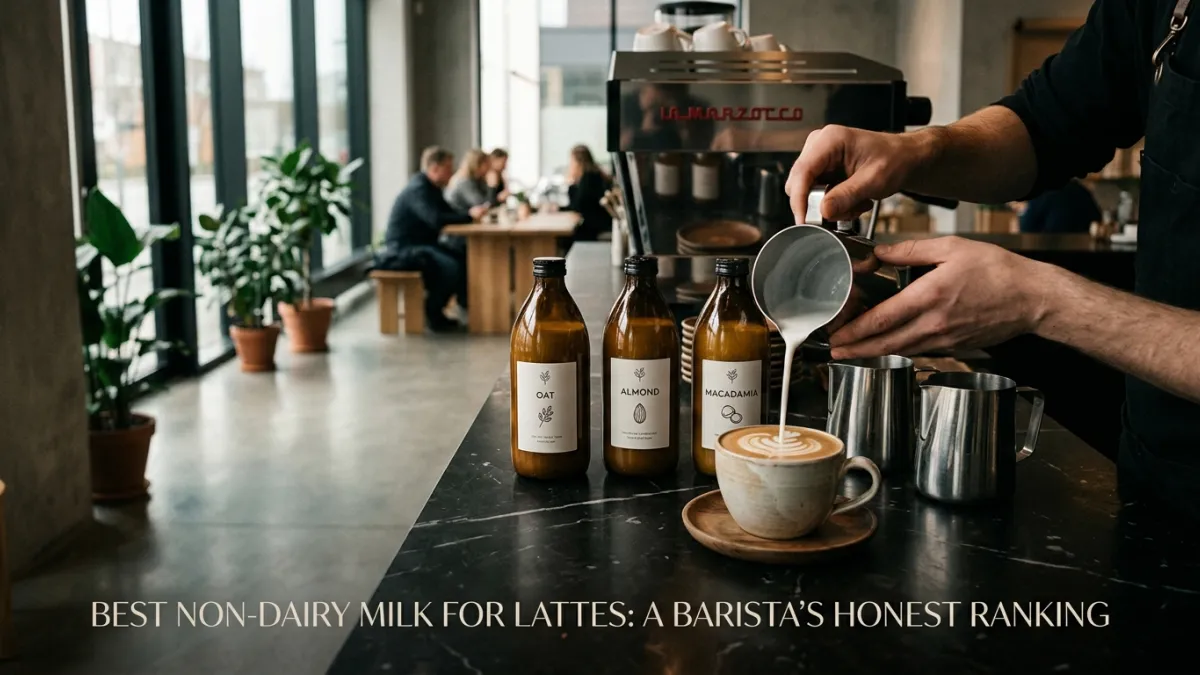
Best Non-Dairy Milk for Lattes: A Barista's Honest Ranking
The quest for the perfect latte doesn't end with espresso; the milk component is equally crucial, especially when venturing into the world of non-dairy alternatives. As home baristas, we're always seeking that ideal balance of flavor, texture, and steamability. With an ever-growing array of plant-based milks on the market, choosing the right one for your latte can be daunting. At Coffee Brew Hub, we've delved deep into the steaming pitcher to bring you an honest ranking of the best non-dairy milks for lattes, based on their performance and taste.
Our Ranking Criteria
To provide a comprehensive evaluation, we focused on several key factors critical for a superior non-dairy latte:
- Steamability & Texture: How well does it froth? Does it create a silky microfoam suitable for latte art?
- Flavor Compatibility: Does it complement or overpower the espresso? Are there any undesirable aftertastes?
- Stability: Does it curdle or separate when mixed with hot espresso?
- Availability & Cost: How accessible and affordable is it for the average home barista?
The Contenders: Ranked from Best to Good
- Oat Milk (Barista Blends Recommended)
- Soy Milk (Barista Blends Recommended)
- Almond Milk (Barista Blends Preferred)
- Cashew Milk / Coconut Milk Blends
- Rice Milk & Hemp Milk
Without a doubt, oat milk takes the crown. Specifically, barista-blend oat milks are engineered for excellence. Brands like Oatly Barista Edition, Minor Figures, and Califia Farms Barista Blend consistently deliver. They boast a higher fat content and specific protein structures that mimic dairy milk's ability to create stable, velvety microfoam. The flavor is subtly sweet and creamy, complementing espresso beautifully without overpowering it. It's also less prone to curdling than other options.
Pros: Superior steamability, excellent microfoam, neutral-to-sweet flavor, good stability.
Cons: Can be slightly more expensive than other options; some brands contain added oils for texture.
Soy milk holds a strong second place, especially the barista-specific formulations. Brands such as Pacific Barista Series Soy or Silk Barista Blend are designed to steam well, producing a respectable microfoam that can hold latte art. Its protein content helps with structure, though it generally doesn't achieve the same silky texture as oat milk. The flavor is a bit more distinct than oat milk, with a subtle bean-like undertone that some enjoy and others find less appealing. Curdling can be an issue with non-barista blends due to varying acidity levels in coffee.
Pros: Good steamability, high protein content, widely available, often more affordable.
Cons: Flavor can be polarizing; standard versions are prone to curdling; foam can be slightly stiffer.
Almond milk is a popular choice for its low-calorie profile and mild flavor, but its performance in lattes is a mixed bag. Standard almond milk is notoriously difficult to steam, often producing large, unstable bubbles that quickly dissipate. Barista blends (e.g., Califia Farms Barista Blend Almond) significantly improve steamability due to added stabilizers and fats, creating a more acceptable foam. However, the foam tends to be lighter and less dense than oat or soy. Its nutty flavor can work well with certain espresso profiles, but it can also be watery if not a barista version.
Pros: Mild flavor (when not overwhelming), widely available, lower calorie.
Cons: Poor steamability in standard versions, often watery texture, foam can be unstable and airy.
These milks are often found in blends, attempting to combine the creaminess of coconut with the neutrality of cashew. Pure cashew milk can be quite thin, while pure coconut milk, though creamy, often imparts a strong tropical flavor that clashes with many espresso roasts. Blends, such as Silk Coconut & Cashew, can offer a decent compromise in texture. Steamability varies wildly by brand; some can achieve a light foam, while others struggle. The distinct flavor profiles mean they are best suited for specific flavor pairings rather than general use.
Pros: Can offer good creaminess (especially blends), interesting flavor profiles.
Cons: Flavor can dominate espresso, variable steamability, limited availability of barista-specific versions.
These options typically rank lowest for lattes. Rice milk is often very thin and watery, making it nearly impossible to create any meaningful foam or texture. Its flavor is also quite subtle, which might seem like a pro, but its lack of body leaves lattes feeling insubstantial. Hemp milk can offer a slightly richer texture than rice milk due to its fat content, but it often has a distinct earthy or grassy flavor that many find unappealing in coffee. Both generally lack the proteins and fats required for stable microfoam.
Pros: Allergy-friendly (rice milk), unique nutritional profiles.
Cons: Very poor steamability, watery texture (rice), strong flavor (hemp), lack of body.
Comparison Table: Non-Dairy Milks for Lattes
| Milk Type | Steamability (Barista Blends) | Flavor Profile | Latte Art Potential | Common Issue |
|---|---|---|---|---|
| Oat Milk | Excellent | Creamy, subtly sweet | High | Cost, added oils |
| Soy Milk | Good | Nutty, distinct bean flavor | Medium-High | Curdling (non-barista), flavor |
| Almond Milk | Fair-Good | Mild, nutty (can be watery) | Low-Medium | Thin foam, watery texture |
| Cashew/Coconut Blends | Variable | Creamy, distinct | Low | Flavor clashes, inconsistent foam |
| Rice/Hemp Milk | Poor | Watery, earthy (hemp) | Very Low | No foam, poor texture |
Tips for Steaming Non-Dairy Milks
- Always use Barista Blends: These are formulated with higher fat content and stabilizers for optimal performance.
- Start Cold: Chilled milk allows for more time to incorporate air and create fine microfoam before reaching scalding temperatures.
- Don't Overheat: Aim for 140-150°F (60-65°C). Overheating can break down the milk's structure and lead to curdling or an unpleasant taste.
- Swirl & Tap: After steaming, swirl the pitcher vigorously to integrate the foam, then tap it gently on the counter to pop any large bubbles.
For the best non-dairy latte experience at home, oat milk (specifically barista blends) is the clear winner for its superior steamability, neutral-to-sweet flavor, and ability to hold beautiful latte art. Soy milk is a close second, while almond milk can work in a pinch with barista versions. Experimentation is key to finding your personal favorite and mastering the technique with each specific milk.
FAQ
Q: Why does my non-dairy milk curdle in my coffee?
A: Curdling often occurs due to the acidity of the coffee interacting with the proteins and stabilizers in non-dairy milk, especially if the milk isn't designed for high heat or has a lower fat content. Using a barista blend and ensuring your milk isn't overheated can significantly reduce this issue.
Q: Is there a non-dairy milk that tastes exactly like dairy milk?
A: While many non-dairy milks strive for a similar creaminess, none will taste "exactly" like dairy milk. Oat milk, particularly barista blends, often comes closest in terms of texture and neutral flavor that complements coffee without a strong plant-based taste.
Q: Can I make latte art with non-dairy milk?
A: Absolutely! Oat milk and barista-blend soy milk are the best for creating stable, glossy microfoam that allows for intricate latte art designs. The key is proper steaming technique to achieve the right texture and consistency.