Unlocking Flavor: Why the Pour Over Bloom is Your Secret Weapon
As passionate home baristas, we’re constantly seeking ways to elevate our coffee experience. We meticulously select our beans, grind them fresh, and invest in quality equipment. But there’s one seemingly small step in the pour over process that often gets overlooked, yet holds immense power to transform your brew: the bloom.
At coffee brew hub, we believe mastering the fundamentals is key to crafting exceptional coffee. Today, we're diving deep into the art and science of the pour over bloom, explaining why it's non-negotiable for a truly delicious cup, and guiding you on how to execute it perfectly every time.
What Exactly is the Pour Over Bloom?
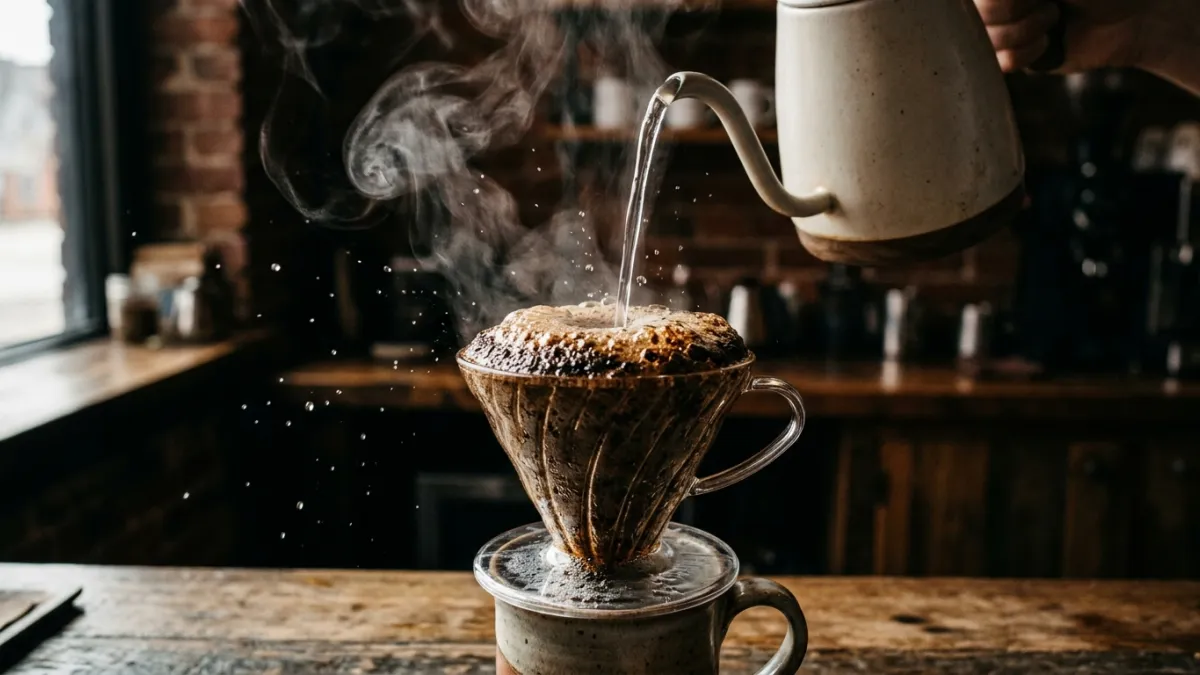
The bloom refers to the initial pour of hot water over your freshly ground coffee, just enough to fully saturate the grounds. What happens next is a magical, almost theatrical expansion of the coffee bed, bubbling and rising. This isn't just a pretty sight; it's a vital chemical reaction.
When coffee beans are roasted, they trap a significant amount of carbon dioxide (CO2) within their cellular structure. Grinding the beans releases some of this gas, but a substantial amount remains. The hot water of the bloom acts as a catalyst, forcing this trapped CO2 to escape rapidly. This process is called degassing.
Why Does the Bloom Matter So Much?
Ignoring the bloom is like trying to bake a cake without leavening – you'll get something, but it won't be quite right. Here’s why the bloom is crucial for superior pour over coffee:
- Even Extraction: CO2, when trapped in the coffee bed, can repel water. If you skip the bloom and immediately begin your main pour, the escaping gas will create channels and dry pockets in your coffee bed, leading to uneven extraction. Some parts of the coffee will be over-extracted (bitter), while others will be under-extracted (sour or weak). The bloom allows the CO2 to escape, creating an even, permeable bed for subsequent pours.
- Enhanced Flavor Clarity: By facilitating even extraction, the bloom ensures that you’re extracting all the desirable soluble compounds from your coffee grounds without the interference of CO2. This means a cleaner, more balanced cup that showcases the true flavor profile of your beans – from bright acidity to rich sweetness.
- Reduced Bitterness and Sourness: Uneven extraction is a primary culprit for undesirable flavors. A proper bloom minimizes these issues by promoting uniform water flow through the grounds, preventing over-extraction (bitterness) and under-extraction (sourness) in different parts of the coffee bed.
Mastering the Pour Over Bloom: A Step-by-Step Guide
Achieving the perfect bloom is simpler than you might think, but it requires attention to detail. Follow these steps for consistent success:
- Prepare Your Gear:
- Rinse Your Filter: Always rinse your paper filter with hot water before adding coffee grounds. This removes any papery taste and pre-heats your dripper and carafe, maintaining optimal brew temperature. Discard the rinse water.
- Add Freshly Ground Coffee: Place your preferred dose of freshly ground coffee (medium-fine for pour over) into the pre-wet filter. Gently shake the dripper to level the coffee bed.
- Heat Your Water: Ensure your water is at the optimal brewing temperature, typically between 195-205°F (90-96°C).
- The Initial Pour (The Bloom Itself):
- Volume: The ideal bloom pour is usually 2 to 3 times the weight of your dry coffee grounds. For example, if you’re brewing with 20g of coffee, pour 40-60g of water. Use a precise scale!
- Technique: Start your pour gently from the center of the coffee bed and move outwards in a slow, controlled spiral, ensuring all the grounds are saturated. Avoid pouring too quickly or directly onto the filter walls. Your goal is to wet every speck of coffee evenly.
- Observe: As you pour, watch the coffee bed expand and bubble. This is the CO2 escaping. Ensure there are no dry spots. If you see any, gently swirl your dripper or add a tiny bit more water to saturate them.
- The Waiting Game: Timing Your Bloom
- Once you’ve achieved full saturation, stop pouring. Let the coffee bloom for 30 to 45 seconds. This timeframe allows sufficient time for most of the CO2 to escape.
- For very fresh coffee (roasted within the last week), you might extend the bloom to 50 seconds, as it will contain more CO2. Older coffee might require less time, but 30 seconds is a good minimum.
- Proceed with Your Main Pour:
- After the bloom, you'll notice the coffee bed has flattened and settled. This is your cue to begin your main pour over technique, continuing to pour in controlled intervals to complete your brew.
Troubleshooting Your Bloom
- No Bloom/Weak Bloom: If your coffee isn't expanding, it could mean your coffee is stale (very little CO2 left), your water isn't hot enough, or you didn't pour enough water to saturate all the grounds.
- Bloom is Too Fast/Vigorous: While some bubbling is good, an overly aggressive bloom with water rushing through suggests your grind might be too coarse, or your water is too hot, leading to under-extraction.
The Takeaway
The pour over bloom is more than just a step; it's the foundation upon which a truly great cup of coffee is built. By understanding its purpose and executing it correctly, you’re not just brewing coffee – you’re coaxing out its full potential, ensuring every sip is as balanced, flavorful, and aromatic as it can be. So, next time you set up your pour over, give the bloom the respect it deserves. Your taste buds will thank you!
Experiment with your bloom time and water volume to see how it impacts the final taste. Happy brewing, coffee enthusiasts!