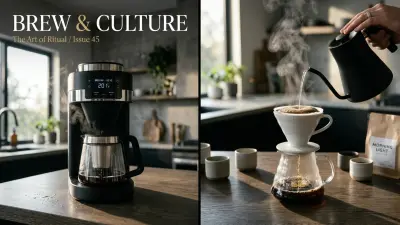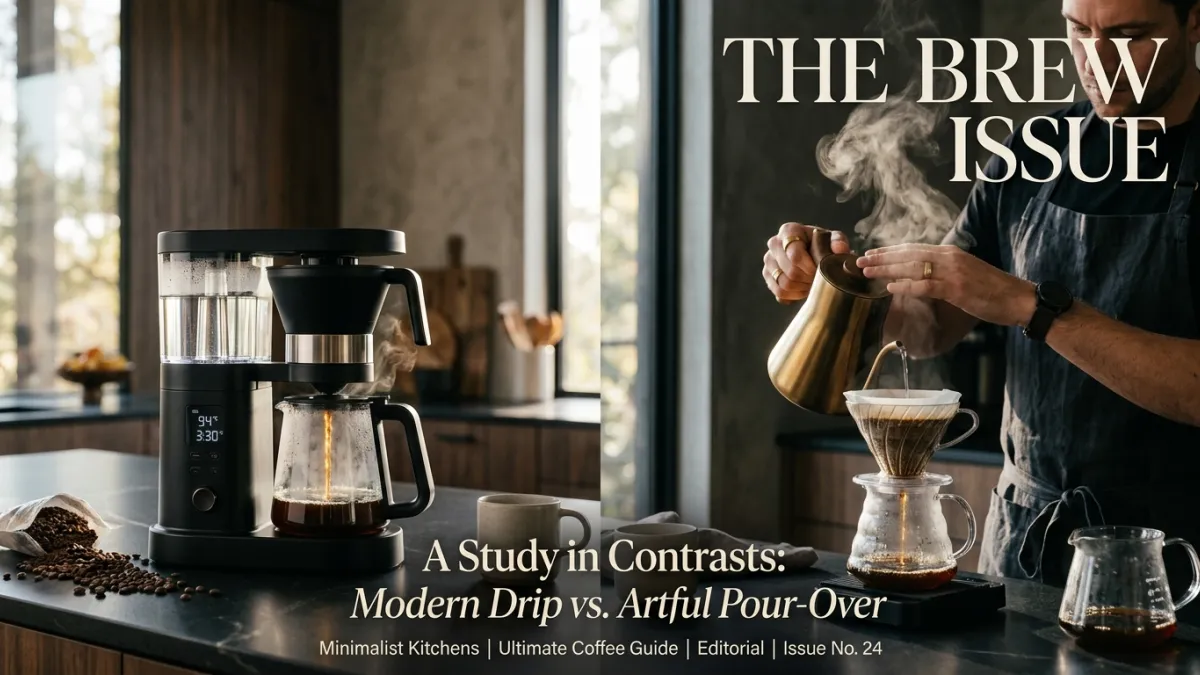
Drip vs. Pour Over: Faster & Easier for Beginner Home Baristas?
Embarking on your home barista journey can be exhilarating, but the sheer number of brewing methods can feel daunting. Among the most popular, and often confused, are automatic drip coffee makers and manual pour over methods. Both promise delicious coffee, but when it comes to speed and ease, especially for a beginner, they offer distinctly different experiences. At Coffee Brew Hub, we're here to demystify these choices and help you turn your kitchen into a personal café.
Let's dive into an unbiased comparison to help you decide which method might be your perfect starting point.
Understanding Automatic Drip Coffee
The automatic drip coffee maker is likely the most common brewing device found in kitchens worldwide. Its appeal lies in its simplicity and convenience.
How Drip Coffee Works
The process is largely automated: you add water to a reservoir, grounds to a filter basket, press a button, and the machine handles the rest. Water is heated, then dripped over the coffee grounds, extracting the coffee before it flows into a carafe below.
Speed and Ease for Beginners
- Speed: Drip coffee is generally very fast. Once you've added water and grounds, the machine takes over, and you can walk away. A full pot typically brews in 5-10 minutes, depending on the machine and volume. There's no active participation needed during the brew cycle.
- Ease: This is where drip coffee truly shines for beginners. The learning curve is virtually flat. You don't need to worry about water temperature, pour rate, or bloom times. Just measure, load, and press a button. Consistency is also high, as the machine performs the same steps every time.
Pros and Cons of Drip for Beginners
- Pros:
- Ultimate Convenience: Set it and forget it. Perfect for busy mornings.
- Minimal Effort: Requires very little technique or active involvement.
- Consistent Results: Delivers a reliable cup every time, assuming good coffee and water.
- Batch Brewing: Ideal for making coffee for multiple people or for a large quantity.
- Cost-Effective Entry: Basic machines are relatively inexpensive.
- Cons:
- Less Control: Limited ability to influence the brew beyond grind size and coffee-to-water ratio.
- Flavor Limitations: While good, high-end drip machines can produce excellent coffee, many entry-level models might not extract the nuanced flavors that manual methods can achieve.
- Heat Plate Issues: Coffee often sits on a hot plate, which can "stew" the coffee over time, leading to burnt or bitter flavors.
Exploring Manual Pour Over Coffee
pour over coffee is a manual method that requires a bit more hands-on involvement, but rewards the brewer with a highly customizable and often superior cup.
How Pour Over Coffee Works
With pour over, you manually pour hot water over coffee grounds in a filter cone, allowing gravity to draw the extracted coffee into a mug or carafe below. This process typically involves a "bloom" (a small initial pour to degas the coffee) followed by slow, controlled pours.
Speed and Ease for Beginners
- Speed: pour over is generally slower than automatic drip. While a single cup might take 3-5 minutes of active pouring, the total time, including heating water, grinding, and the bloom, can stretch to 7-10 minutes. Crucially, you need to be actively involved throughout the entire brewing process.
- Ease: This is where pour over presents a steeper initial learning curve. Achieving an excellent cup consistently requires attention to detail:
- Water Temperature: Needs to be precise (typically 195-205°F / 90-96°C).
- Grind Size: Crucial for proper extraction; too fine and it chokes, too coarse and it's under-extracted.
- Pouring Technique: A gooseneck kettle is highly recommended for controlled, even saturation.
- Brew Time: Needs to be monitored to prevent over or under-extraction.
- Coffee-to-Water Ratio: Accuracy is key, often requiring a scale.
Pros and Cons of Pour Over for Beginners
- Pros:
- Superior Flavor: Offers incredible control over extraction, allowing you to highlight the unique characteristics of the coffee beans. Many find pour over to produce a cleaner, brighter, and more aromatic cup.
- Engaging Ritual: The hands-on process can be a meditative and enjoyable start to the day.
- Skill Development: Mastering pour over is a satisfying skill for any aspiring home barista.
- Relatively Inexpensive Setup: While a gooseneck kettle and scale add to the cost, the dripper itself is often affordable.
- Cons:
- Requires Active Involvement: Not suitable for "set it and forget it" mornings.
- Steeper Learning Curve: Takes practice to master the variables (grind, water temp, pour speed).
- More Equipment: A quality gooseneck kettle and a coffee scale are highly recommended for best results.
- Single Serve Focus: Primarily designed for brewing one or two cups at a time. Larger batches are less common and more cumbersome.
Drip vs. Pour Over: The Beginner's Verdict on Speed and Ease
When we weigh speed and ease directly, the answer becomes clearer:
- For sheer speed and minimal effort, especially for batch brewing, automatic drip coffee is the undeniable winner. You literally press a button and walk away, returning to a ready pot of coffee.
- For initial ease and immediate consistent results without needing to learn any technique, automatic drip is also superior. There's no specialized skill required to operate a drip machine.
However, if "ease" eventually evolves into the satisfaction of mastering a craft and achieving a superior, nuanced cup, then pour over, despite its initial demands, becomes incredibly easy and rewarding with practice. The time investment in learning the technique pays dividends in flavor exploration.
Which Method is Right for Your Coffee Journey?
The choice between drip and pour over depends entirely on your priorities as a budding home barista:
- Choose Drip If: You prioritize speed, convenience, and hands-off brewing. You need to brew for multiple people regularly, or you simply want a consistent, reliable cup with the least amount of fuss in your morning routine.
- Choose Pour Over If: You're genuinely curious about coffee flavors, enjoy a hands-on ritual, and are willing to invest a little time and effort into learning a new skill. You seek to extract the most nuanced and clean flavors from your beans and are primarily brewing for yourself or one other person.
Ultimately, both methods can produce fantastic coffee. There's no single "best" way to brew, only the best way for you. Many coffee enthusiasts, including us at Coffee Brew Hub, even have both – a drip machine for quick, busy mornings and a pour over setup for leisurely weekends when the ritual is part of the pleasure.
Experiment, explore, and most importantly, enjoy the journey of discovering your perfect cup!