
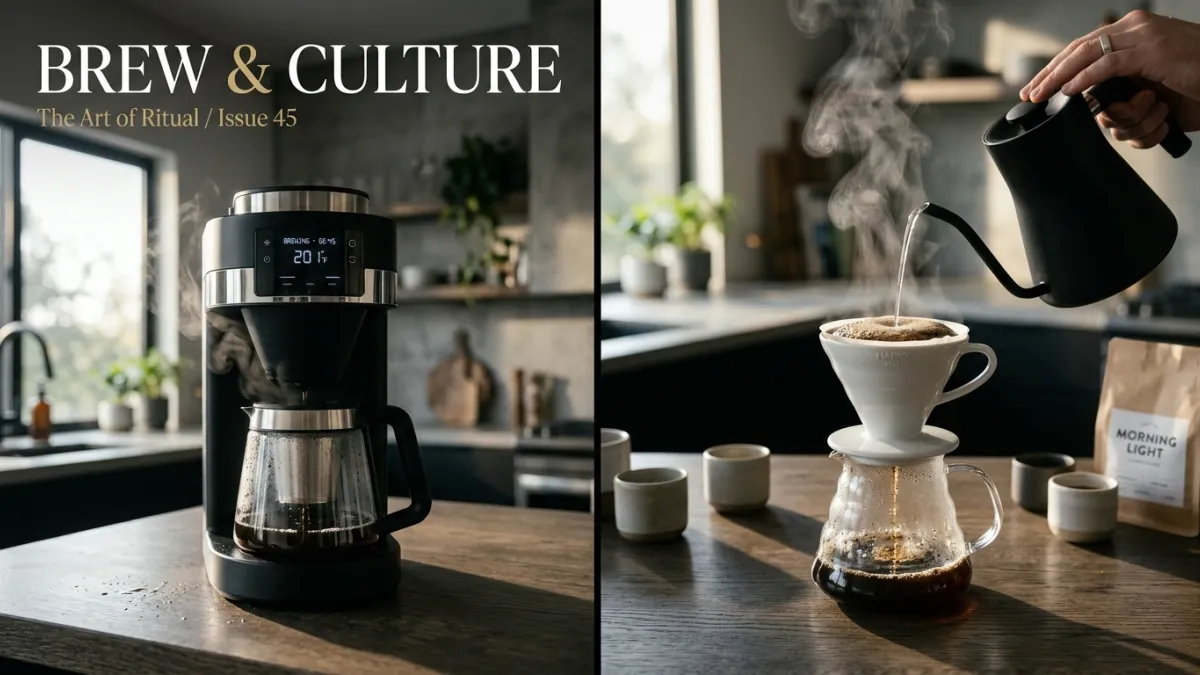
Drip vs. Pour Over: Which Brewing Method is Faster and Easier for Beginners?
Embarking on your home barista journey is an exciting adventure, and choosing your first brewing method can feel like a pivotal decision. Among the most popular choices are the ubiquitous automatic drip coffee maker and the revered manual pour over. Both promise a delicious cup, but when it comes to speed and ease, especially for those just starting out, they offer distinctly different experiences. At Coffee Brew Hub, we're dedicated to helping you navigate these choices. Let's objectively compare drip and pour over to determine which reigns supreme for the curious beginner.
Understanding Automatic Drip Coffee
The automatic drip coffee maker is a household staple for a reason. It's designed for convenience and consistency, making it a strong contender for beginners.
How Drip Coffee Works
drip coffee makers operate on a simple principle: cold water is heated and then dispersed over a bed of ground coffee held in a filter basket. Gravity does the rest, pulling the extracted coffee through the grounds and filter into a carafe below. The process is largely automated from start to finish.
Speed for Beginners
- Setup Time: Extremely fast. Add water, add ground coffee, press a button. This typically takes less than a minute.
- Brewing Time: Depending on the volume, a full pot can take anywhere from 5 to 15 minutes. However, your active involvement ends once you press start.
- Attention Required: Minimal. It's a "set it and forget it" method, freeing you up to do other things while your coffee brews.
Ease for Beginners
The drip method truly shines in its simplicity. Here's why:
- Learning Curve: Virtually non-existent. There are few variables to control beyond the coffee-to-water ratio.
- Equipment: Primarily just the machine itself and filters. Many models even include a grinder.
- Consistency: High. Once you find a ratio you like, the machine will reproduce it reliably every time.
- Forgiveness: Very forgiving of slight inconsistencies in grind size or water quality.
For someone seeking a reliable, no-fuss morning routine, automatic drip coffee is incredibly easy to master from day one.
Exploring Pour Over Coffee
pour over coffee has gained immense popularity among coffee enthusiasts for its ability to produce incredibly clean, nuanced cups. However, this precision comes with a greater demand for technique and attention.
How Pour Over Coffee Works
pour over involves manually pouring hot water over coffee grounds in a cone-shaped dripper, which sits atop a mug or carafe. The brewer controls several variables, including water temperature, pour rate, and saturation of the coffee bed, to extract flavor.
Speed for Beginners
- Setup Time: Moderate. You need to heat water (often in a gooseneck kettle), grind beans, set up the filter and dripper. This active setup can take 3-5 minutes.
- Brewing Time: The actual pouring process for a single cup typically takes 2.5 to 4 minutes. However, this is active brewing time.
- Attention Required: High. You must be present and focused throughout the entire brewing process, managing the pour to ensure even extraction.
Ease for Beginners
While rewarding, pour over presents a steeper learning curve for newcomers:
- Learning Curve: Significant. Mastering variables like grind size, water temperature, bloom phase, and pour technique takes practice.
- Equipment: Requires a dripper, filters, a gooseneck kettle (for precise pouring), a scale (for accurate measurements of coffee and water), and ideally a burr grinder.
- Consistency: Low initially. Inconsistent technique will lead to inconsistent results, which can be frustrating for beginners.
- Forgiveness: Less forgiving. Small errors in grind or pour can drastically impact the final taste.
Pour over is a craft that rewards dedication and precision, offering a journey of continuous improvement rather than immediate mastery.
Drip vs. Pour Over: Direct Comparison for Beginners
Let's break down the core aspects for those new to home brewing:
Speed: Which is Faster?
- Drip: Wins on overall "hands-off" speed. Once you press the button, you're done. While total brew time for a full pot might be longer than a single pour-over cup, your active time is minimal.
- Pour Over: Requires more active time upfront for setup (heating water, grinding) and constant attention during the 2.5-4 minute pouring process. If you need a quick cup without involvement, drip is faster.
Verdict on Speed: For minimal active involvement and speed from start to a brewed cup without supervision, Drip Coffee is faster.
Ease: Which is Easier?
- Drip: Incredibly easy. It's largely automated, requires minimal technique, and is forgiving. Perfect for those who want good coffee with zero fuss.
- Pour Over: More challenging. It demands active participation, precise technique, and additional equipment. Beginners might find the initial results inconsistent and frustrating.
Verdict on Ease: For simplicity, forgiveness, and a virtually non-existent learning curve, Drip Coffee is significantly easier.
Beyond Speed and Ease: A Note on Flavor
While this comparison focuses on speed and ease, it's worth briefly mentioning flavor. Drip coffee typically produces a consistent, robust, and full-bodied cup. Pour over, when executed well, excels at highlighting the nuanced flavors and bright acidity of specialty beans, often resulting in a cleaner, more delicate cup.
Which Method is Right for You?
If you're a beginner looking for:
- Maximum convenience and minimal effort for your daily caffeine fix.
- A reliable, consistent cup with an easy, automated process.
- The ability to "set it and forget it" while you get ready for your day.
Then an Automatic Drip Coffee Maker is likely your best starting point. It offers an excellent introduction to home brewing without the immediate demands of technique.
However, if you're a beginner who is:
- Eager to learn and engage with the brewing process as a craft.
- Intrigued by the idea of exploring subtle flavor nuances in your coffee.
- Willing to invest time in acquiring additional gear and mastering technique.
Then Pour Over could be a deeply rewarding path, even with its initial challenges. It’s a fantastic way to deepen your understanding and appreciation for coffee.
Conclusion
For sheer speed and ease of use for beginners, the automatic drip coffee maker stands out as the clear winner. It offers a straightforward, consistent path to a good cup of coffee with minimal effort. Pour over, while capable of producing extraordinary results, requires a greater investment of time, equipment, and learning. Ultimately, the "best" method depends on your priorities and what you seek from your home brewing experience. Both methods are fantastic ways to enjoy coffee, and at Coffee Brew Hub, we encourage you to explore whichever path sparks your interest first!