Disclosure: As an Amazon Associate, we earn from qualifying purchases.
Making cafe-quality lattes at home used to mean relying entirely on whole dairy milk to achieve that silky, glossy microfoam. Over the past few years, oat milk has completely transformed the home barista landscape, emerging as the undisputed champion among plant-based alternatives. However, grabbing a standard carton off the grocery store shelf often leads to flat, watery drinks or frustrating curdling. Understanding how professional-grade barista formulations function—and how to steam them properly—is the secret to pulling off flawless latte art and achieving a balanced, velvety mouthfeel in your morning cup.
Quick answer: The best barista oat milk balances extra lipids and dipotassium phosphate to recreate the stretch and thermal stability of dairy milk. Top contenders like Oatly Barista Edition, Minor Figures, and Califia Farms barista blend offer the ideal viscosity for microfoam without masking delicate coffee origin flavors. For the finest foam, steam between 55–65°C (130–150°F) using fresh espresso pulled at standard extraction parameters.
The Science of Barista Formulas vs. Standard Oat Milk
When you attempt to steam standard oat milk, the heat causes native proteins to denature rapidly while the high water content yields thin, brittle bubbles that dissipate within seconds. Standard non-dairy milks lack the structural fats and stabilization systems required to hold microscopic air bubbles in suspense. When combined with acidic light-to-medium roast espresso, standard oat milk frequently splits or curdles due to the sudden pH drop and thermal shock.
Barista-edition oat milks are specifically engineered to solve these thermodynamic challenges through a precise combination of added lipids and acidity regulators. The inclusion of neutral plant oils (typically rapeseed or sunflower oil) increases the total fat content to roughly 2–3%, mirroring whole dairy milk's tactile richness. Meanwhile, emulsifiers like sunflower lecithin keep the water and fat phase united, ensuring that steam wand pressure creates a homogeneous emulsion rather than a greasy separation.
Crucially, barista formulations contain dipotassium phosphate, an inorganic salt that acts as a thermal buffer. Acidic espresso pulled at a 1:2 ratio (18 g dose yielding 36 g espresso in 28 seconds) can lower the milk's local pH past its critical threshold. Dipotassium phosphate stabilizes the liquid, preventing the proteins from clumping together and curdling when poured into fresh shots. This simple chemical buffer is what allows milk pitchers to yield glossy, stable microfoam suitable for poured art.
Top Barista Oat Milks Reviewed: Field Tests & Lab Notes
To identify the clear winners for home espresso setups, we put the leading commercial brands through identical testing conditions at coffee Brew Hub. Each milk was evaluated using an 18 g espresso shot pulled from a fresh medium-roast blend (roast date within 14 days) and steamed using a professional single-hole steam tip on a dual-boiler home machine. We measured foam density, thermal stability, pouring texture, and flavor masking on every pour.
Oatly Barista Edition remains the industry standard for a good reason. It features an exceptionally balanced fat profile that stretches smoothly, creating tight microfoam with zero large surface bubbles. In taste tests, its subtle sweetness elevates bright, fruity espresso origin notes without leaving a greasy coating on the palate. Minor Figures, on the other hand, approaches the craft from a roaster's perspective; its neutral formulation allows delicate floral acidity to shine through, making it ideal for light-roast single-origin coffees brewed on precision flat burr grinders.
The Undisputed Gold Standard: Oatly Barista Edition (6-Pack)

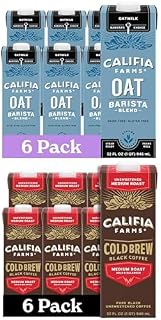
Califia Farms Barista Blend offers a slightly lighter body that heats rapidly and creates soft, velvety foam, making it a great entry point for enthusiasts practicing basic pour techniques. Califia also incorporates slightly lower native sugars, which keeps the cup from tasting overly sweet when combined with lighter roasts. For those seeking maximum creaminess without vegetable oils, Elmhurst Milked Oats delivers a cleaner label, though it requires precise temperature management to avoid premature foam collapse during pouring.
| Brand | Fat Content (per 240ml) | Sugar Content | Acidity Regulator | Best Used For |
|---|---|---|---|---|
| Oatly Barista Edition | 7g | 7g | Dipotassium Phosphate | Latte Art & High-Acid Espresso |
| Minor Figures Barista | 5g | 9.5g | Dipotassium Phosphate | Light-Roast Single Origins |
| Califia Farms Barista Blend | 5g | 8g | Dipotassium Phosphate | Everyday Cappuccinos & Cortados |
| Elmhurst Milked Oats | 4g | 4g | None (Minimalist formulation) | Health-Conscious Pour-Overs & Drip |
Mastering the Milk Pitcher: Steaming Technique for Home Baristas
Frothing oat milk requires a slightly different approach than steaming dairy milk. Because oat proteins denature faster and degrade under intense heat, your margins for error are smaller. Start with chilled milk straight from the refrigerator at around 4°C (39°F). Fill a stainless steel pitcher just below the start of the spout, giving yourself enough runway to incorporate air and build a rolling vortex before the milk overheats.
Submerge the steam tip just below the surface and purge your steam wand to clear condensed moisture. Turn the steam on full power, and lower the pitcher slightly until you hear soft, paper-tearing sounds—this is the stretching phase where air is drawn into the liquid. For oat milk, keep this stretching phase short, adding air only until the outside of the pitcher reaches room temperature (around 30°C / 86°F). Introduce less air than you would for standard dairy, as plant proteins expand quickly.
Once you have built sufficient volume, plunge the steam wand tip a quarter-inch deeper and tilt the pitcher slightly to create a rapid whirlpool vortex. This second phase, known as rolling, breaks down large bubbles into uniform, microscopic bubbles (microfoam). Stop steaming immediately when the pitcher feels uncomfortably warm to the touch, or when your probe thermometer reads 60°C (140°F). Exceeding 65°C (150°F) breaks down the fats, ruins the sweet oat flavor, and leads to immediate foam separation in the cup.
Barista's tip: Oat milk loses its integrated structure faster than dairy once steaming stops. If you let your pitcher sit while you pull your espresso, the foam will separate into a dry top layer and watery bottom liquid. Always pull your 18 g espresso shot first, keep it warm, and steam your oat milk immediately before pouring. Give the pitcher a firm tap on the counter and a steady swirl to keep the texture glossy and wet right up to the moment of the pour.
Choosing the Right Coffee Equipment and Beans
Achieving cafe-quality oat milk drinks isn't just about the carton in your fridge; it also relies heavily on your extraction parameters and brewing gear. High-acidity espresso pulled from light roasts can clash with oat sweetness if the extraction percentage is off. Aim for an extraction yield between 19% and 21%, using water filtered to SCAA standards (75–150 ppm total dissolved solids) at a temperature of 93°C (200°F) to ensure balanced solubles that blend seamlessly with plant fats.
Your grinder choice plays an enormous role in foam integration. Uniform particle distribution from conical or flat burr grinders (such as a Baratza Sette or Fellow Ode fitted with precision burrs) minimizes fines that trigger premature milk curdling. If you prefer brewing via immersion or pour-over methods, check out our guide on V60 filter techniques to learn how roast profile impacts beverage body. Alternatively, if you brew concentrated bases using a Moka pot, consult our guide on Moka pot brewing steps to prevent thermal scorching during extraction.
Creamiest Café Texture: Califia Farms Barista Blend Oat Milk
- Dose & Yield: 18 g dry coffee to 36 g liquid espresso (1:2 ratio) in 27–30 seconds.
- Water Temperature: 90–94°C (195–201°F) for optimal acid balance.
- Steaming Target: Stop steam wand at 58–60°C (136–140°F) max.
- Bean Freshness: Ideal window is 10 to 28 days post-roast for stable crema integration.
Step-by-Step Guide to Pouring Latte Art with Oat Milk
Pouring latte art with oat milk demands speed and deliberate positioning because the foam's surface tension changes rapidly as it cools. Follow these steps immediately after swirling your steamed milk into a liquid glass sheen:
- Set the Base: Tilt your cup at a 45-degree angle. Hold the pitcher 3 to 4 inches above the cup and pour a thin, steady stream into the center of the espresso crema to integrate the liquid without breaking the surface.
- Lower the Spout: When the cup is roughly half full, bring the spout down close to the liquid surface (about a quarter-inch away) and increase your flow rate slightly to push the white foam onto the crema.
- Form the Pattern: Gently wiggle the pitcher from side to side using your wrist to lay down white rippled bands for a heart or rosetta pattern.
- Cut Through: Lift the pitcher back up 3 inches to thin out the stream, and pull straight through the center of the design to finish.
For more detailed step-by-step milk control routines, explore our full library of espresso preparation tips to sharpen your overall drink assembly workflow.
Practical Recommendation
If you are just beginning your home barista journey, start with Oatly Barista Edition paired with a fresh medium-roast blend. Use an 18 g espresso dose pulled to 36 g yield, and focus on keeping your steam wand stretch phase under 3 seconds before sinking into a vortex. This pairing gives you the widest tolerance for thermal control and delivers reliable microfoam while you hone your milk-texturing technique.
Frequently Asked Questions
Why does my oat milk curdle when I pour it into hot coffee?
Formulated by Specialty Roasters: Minor Figures Barista Oat

Curdling happens when heat and acid force plant proteins to stick together. This usually occurs if the coffee is extremely acidic, the espresso extraction was under-extracted, or the oat milk lacks an acidity regulator like dipotassium phosphate. Lowering your brew temperature slightly or switching to a barista-grade oat milk will solve this issue.
What temperature should I heat barista oat milk to?
The optimal temperature for steamed oat milk is between 55°C and 60°C (130°F–140°F). Heating past 65°C (150°F) breaks down the added oils, dulls the natural sweetness, and destroys the microfoam structure.
Can I froth barista oat milk without a steam wand?
Yes. You can heat oat milk in a saucepan or microwave to 60°C (140°F) and use a French press or electric handheld whisk. Pumping a French press plunger rapidly below the surface creates surprisingly dense, silky microfoam suitable for pouring daily drinks.
Does barista oat milk contain more calories than regular oat milk?
Yes, barista versions generally contain slightly more calories and fat because neutral oils are added to help emulsify the milk and hold air bubbles. A standard serving contains around 140–170 calories compared to 90–120 calories in unfortified plain oat milks.