Quick answer: When measured by weight using a digital scale, light and dark roasts contain virtually the same caffeine content because caffeine molecules resist heat breakdown during roasting. However, if you measure your coffee using a volume scoop, light roast generally yields slightly more caffeine because its beans are denser and pack tighter into the scoop.
The Science of Roasting and Caffeine Stability
To understand how roast levels affect your morning cup, you first need to examine what happens inside the bean during thermal processing. Green coffee beans undergo intense chemical transformations inside the roasting drum, with temperatures rising between 190 °C and 232 °C (375 °F to 450 °F). During this exposure, organic compounds such as chlorogenic acids breakdown, sugars caramelize, and moisture evaporates rapidly. Despite these extreme environmental shifts, the caffeine molecule itself remains remarkably resilient throughout the process.
Caffeine is a thermally stable alkaloid with a sublimation temperature of approximately 235 °C (455 °F) under ambient pressure. Because commercial roasters drop the beans from the drum before internal bean temperatures reach this critical threshold, caffeine degradation remains extraordinarily low. Laboratory assays evaluating caffeine concentration across progressive roast stages indicate that caffeine loss from green bean to dark French roast is less than 1% to 2% overall. The fundamental compound survives roasting virtually intact, meaning the roast color alone is not a primary driver of caffeine loss.
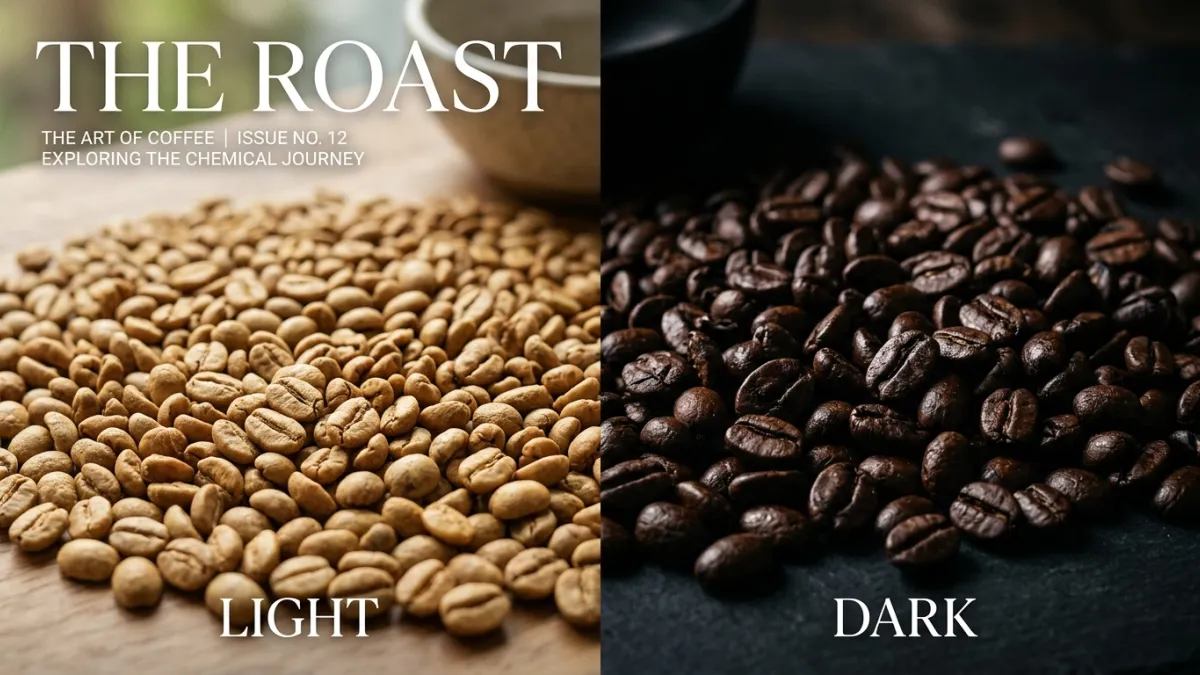
What changes dramatically during roasting is the physical structure and density of the coffee bean. As moisture escapes during the first crack, water weight drops by 12% to 22% depending on the final roast target. Concurrently, trapped carbon dioxide expands the cellulose matrix, causing dark roast beans to swell in volume while losing overall mass. The dark roast bean becomes porous, lighter, and structurally larger, whereas the light roast bean retains water mass, remains smaller, and preserves a dense interior.
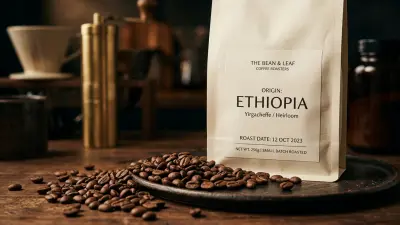
Barista's tip: When switching from a dense light roast Ethiopian Yirgacheffe to a dark roast Italian style bean on an adjustable grinder like a Baratza Virtuoso+ or Fellow Ode, always clear out grinder retention. Dense light beans require finer micro-adjustments to prevent channeling in a pour-over cone, while brittle dark beans shatter easily and generate more fines that can unexpectedly clog paper filters.
Weight vs. Volume: Why Measurement Method Changes Everything
The confusion surrounding roast levels and caffeine stems almost entirely from how home baristas measure ground coffee. If you use a traditional coffee scoop to measure by volume, you are filling a fixed spatial area. Because Light roast coffee beans are smaller and significantly denser, a single 2-tablespoon scoop holds a higher total mass of Light roast coffee compared to dark roast. More coffee mass inside the scoop directly correlates to a higher overall milligram count of caffeine delivered to your brewer.
Conversely, when you adopt specialty coffee standards and weigh your grounds using a digital scale, the caffeine balance levels out. Measuring out a precise 18 g dose of light roast and an 18 g dose of dark roast means you are using identical dry coffee mass. Because dark roast beans lose organic mass and water weight during roasting, an 18 g dose of dark roast actually requires a higher absolute count of individual coffee beans. This structural compensation offsets the tiny percentage of caffeine lost to heat, making the final caffeine content between equal-weight doses nearly identical.
To visualize how roast degree alters bean physical characteristics and measurement outcomes, consider the structural comparison in the table below:
| Roast Metric | Light Roast | Medium Roast | Dark Roast |
|---|---|---|---|
| Internal Bean Temp | 196 °C – 205 °C (385 °F – 401 °F) | 210 °C – 219 °C (410 °F – 426 °F) | 225 °C – 235 °C (437 °F – 455 °F) |
| Bean Density | High (Dense & Hard) | Moderate | Low (Porous & Brittle) |
| Moisture Loss | 11% – 13% | 14% – 16% | 18% – 22% |
| 1 Scoop (Volume) Mass | ~6.5 grams | ~5.8 grams | ~5.0 grams |
| Caffeine (per 18g Dose) | ~150 – 170 mg | ~150 – 170 mg | ~145 – 165 mg |
Key Factors That Impact Caffeine Content Beyond Roast Level
If roast level only exerts a negligible influence on total caffeine, what actually determines how much strength you get in your mug? The single most influential variable is bean genetics. The coffee world relies heavily on two primary cultivated species: Coffea arabica (Arabica) and Coffea canephora (Robusta). specialty coffee roasted for pour-over or espresso is almost universally Arabica, containing roughly 1.1% to 1.5% caffeine by weight. In contrast, Robusta beans pack 2.2% to 2.7% caffeine by weight, delivering nearly double the kick regardless of how lightly or darkly they are roasted.
Beyond botanical species, your choice of brewing equipment and brewing parameters plays a huge role in total caffeine yield. Because caffeine is a water-soluble compound, its extraction rate depends on water contact time, thermal energy, and particle surface area. A quick 25-second espresso shot extracts caffeine intensely but delivers a smaller total mass of caffeine per serving due to liquid volume. A full-immersion French press or a slow drip cold brew allows extended contact time, extracting maximum caffeine over hours or minutes.
Here are the primary variables that dictate caffeine concentration in brewed coffee:
- Botanical Species: Choosing a blend with Robusta content yields vastly more caffeine than any pure Arabica roast variation.
- Coffee-to-Water Brew Ratio: Concentrated ratios like 1:12 or 1:15 extract a higher dose per mug compared to diluted 1:18 ratios.
- Brew Water Temperature: Maintaining water between 90 °C and 96 °C (195 °F to 205 °F) maximizes chemical solubility compared to cooler water.
- Grind Size & Surface Area: Fine grinds increase surface exposure, allowing water to extract caffeine rapidly within short contact times.
- Total Serving Size: Drinking a 16 oz pour-over Mug delivers vastly more absolute caffeine than a 1 oz single espresso shot.
Optimizing Extraction: How to Dial In Your Brew for Ideal Caffeine
To take full control of your daily routine, you must align your brewing variables according to the coffee's physical characteristics. Dark roast beans are far more soluble and fragile than light roasts because their cell walls were ruptured during extended roasting. Water passes through dark roast grounds easily, meaning you can achieve full extraction using lower water temperatures around 90 °C to 92 °C (194 °F to 198 °F) alongside slightly coarser grind settings. High temperatures on dark roasts risk over-extracting harsh, bitter pyrazines without offering any extra caffeine benefit.
Light roasts present the exact opposite brewing challenge. Due to their tight density and intact cellular matrix, light roast grounds resist water penetration. To unlock both sweet origin flavors and target caffeine efficiency, home baristas should use boiling water between 94 °C and 96 °C (201 °F to 205 °F), a finer grind size, and a thorough agitation step during the bloom phase. Utilizing a precision pour-over brewer like the Hario V60 or Kalita Wave with an 18 g dose to 288 g water (a golden 1:16 ratio) provides the ideal balance of flavor complexity and energetic kick.
total dissolved solids (TDS) and target extraction yield (aiming for 18% to 22% according to Specialty Coffee Association standards) ultimately dictate cup quality. While caffeine extracts quickly during the early phase of the brew cycle due to high solubility, reaching proper extraction yield ensures that caffeine is accompanied by sweet carbohydrates and balanced acids rather than sour or astringent notes. Precision dosing on a digital scale remains the ultimate tool for achieving consistent caffeine delivery and taste harmony every single morning.
For home baristas seeking maximum caffeine efficiency without sacrificing flavor quality, step away from volumetric scoops and measure your coffee using a digital scale set to a 1:15 brew ratio (18 g of coffee to 270 g of water). If your primary goal is a clean, bright cup with high clarity and steady caffeine, select a dense light-to-medium Arabica single-origin bean brewed via pour-over; if you desire a bold, low-acid cup with rapid extraction, choose a dark roast prepared at lower water temperatures.
Frequently Asked Questions
Does espresso have more caffeine than drip coffee?
Ounce for ounce, espresso contains a much higher caffeine concentration (roughly 40-50 mg per fluid ounce) than drip coffee (about 12-18 mg per fluid ounce). However, a standard double espresso shot is only 2 fluid ounces (yielding ~80-100 mg caffeine), whereas an 8 oz mug of drip coffee yields ~95-120 mg of caffeine overall.
Does cold brew contain more caffeine than hot coffee?
Cold brew typically contains higher caffeine per serving because it is prepared using a higher coffee-to-water brew ratio (often 1:5 to 1:8 concentrate) and steeps for 12 to 24 hours. When diluted 1:1 with water or milk, a typical serving of cold brew still delivers roughly 150 to 200 mg of caffeine.
Can you lose caffeine by over-roasting coffee beans?
Extreme dark roasts, such as Spanish or Italian roasts pushed past second crack, can experience minor caffeine reduction due to sublimation. However, this loss rarely exceeds 5% of the bean's initial caffeine content, making brew parameters far more influential.
Why does dark roast feel stronger if it doesn't have more caffeine?
Dark roast coffee develops intense roasted, smoky, and bitter flavor compounds during pyrolysis. Human taste receptors perceive heavy bitterness and dark roasty notes as "strength," leading many drinkers to equate bold flavor with higher caffeine potency.