The Great Caffeine Debate: Unpacking Roast Levels and Energy
Welcome back to Coffee Brew Hub, where we empower you to master your brew and turn your kitchen into a personal café! Today, we're diving into one of the most persistent and debated topics in the coffee world: the relationship between roast level and caffeine content. It's a question we hear all the time from passionate home baristas and curious beginners alike: "Does dark roast really have more caffeine than light roast?" Prepare to have your assumptions challenged, because the answer might surprise you.
Does Dark Roast Really Have More Caffeine Than Light Roast?
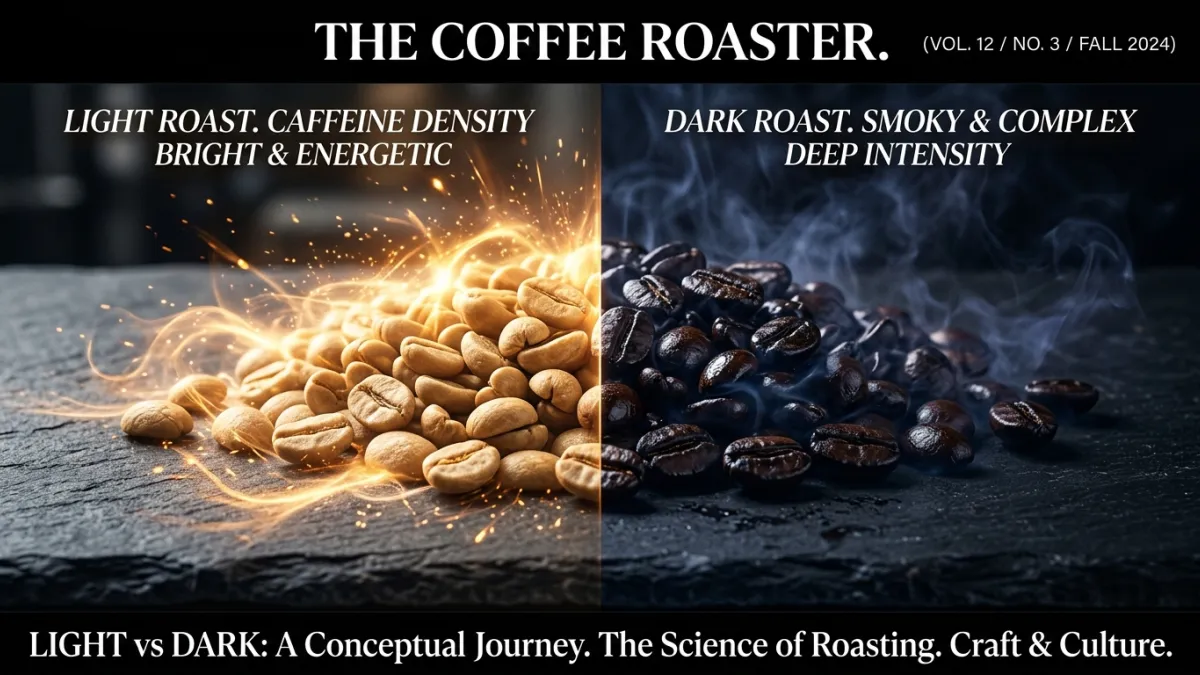
This is the million-dollar question, and the common perception is often that the darker, bolder brew must surely contain more caffeine. However, the science tells a slightly different, more nuanced story. Generally speaking, by weight, light roast coffee beans tend to have a slightly higher caffeine content than dark roast beans.
How can this be? As coffee beans are roasted, they lose moisture and mass, and they expand in size. Darker roasts are roasted longer, losing more mass and expanding more significantly. This means that a dark roast bean is less dense than a light roast bean. If you measure your coffee by scoops (volume), a scoop of dark roast beans will contain fewer individual beans and less coffee mass than a scoop of light roast beans. Conversely, if you measure your coffee by weight (which we always recommend for consistency), you'll find that 20 grams of light roast beans will contain slightly more caffeine than 20 grams of dark roast beans.
How Does Roasting Affect Caffeine Content?
Caffeine is a remarkably stable compound. While some very minor degradation can occur at extremely high temperatures over extended periods, the typical roasting process for coffee beans (even dark roasts) does not significantly "burn off" or destroy caffeine molecules. The perceived differences in caffeine levels between roasts primarily stem from the physical changes a bean undergoes during roasting – specifically, the loss of mass and increase in volume.
Think of it like this: a grape loses water and shrinks to become a raisin, but its sugar content isn't destroyed, just concentrated. Similarly, a coffee bean loses water and organic compounds during roasting, but its caffeine content largely remains intact relative to the original bean.
Why Do People Often Feel Dark Roasts Are Stronger?
If light roasts often have slightly more caffeine by weight, why do so many people report feeling a bigger kick from dark roasts? There are a few compelling reasons:
- Flavor Intensity: Dark roasts have a much bolder, more intense, and often bitter flavor profile. These strong flavors can be psychologically associated with "strength" or "potency," leading us to believe they're more caffeinated.
- Acidity Levels: Light roasts tend to be higher in acidity, which can sometimes lead to an upset stomach for sensitive individuals. This discomfort might be misinterpreted as a "negative" strong effect, whereas dark roasts are generally lower in acidity.
- Brewing Habits: Many people use more grounds when brewing dark roasts to achieve a desired strength or simply because they prefer a richer, more viscous cup. More coffee grounds (regardless of roast level) will always mean more caffeine.
Does Brewing Method Impact Caffeine Extraction?
Absolutely! The brewing method and parameters have a far greater impact on the amount of caffeine in your final cup than the roast level itself. Factors like:
- Grind Size: Finer grinds offer more surface area for water to extract compounds, including caffeine.
- water temperature: Hotter water generally extracts more caffeine, up to a point.
- Contact Time: The longer the coffee grounds are in contact with water, the more caffeine is extracted. A cold brew, for instance, has a very long steep time and can be incredibly caffeinated, despite using cold water.
- Coffee-to-Water Ratio: More coffee grounds per amount of water will naturally yield a more caffeinated brew.
So, a pour-over made with a light roast and a long extraction time might have more caffeine than a quick espresso shot made with a dark roast, depending on the specifics.
So, Which Roast Should I Choose for a Caffeine Kick?
For practical purposes, the difference in caffeine content between light and dark roasts (when measured by weight) is often so small that it's negligible for most drinkers. If your primary goal is maximizing caffeine, focus on these factors instead of roast level:
- Measure by Weight: Always use a scale to measure your coffee grounds. This ensures consistency and accuracy far beyond volumetric scoops.
- Consider the Bean Type: Robusta coffee beans naturally contain significantly more caffeine than Arabica beans, sometimes twice as much. If you need a serious jolt, look for blends that include robusta.
- Optimize Your Brew: Fine-tune your grind, water temperature, and contact time for efficient extraction.
Beyond Caffeine: What Are the Key Differences Between Light and Dark Roasts?
While the caffeine difference is often marginal, the flavor differences are vast and wonderful!
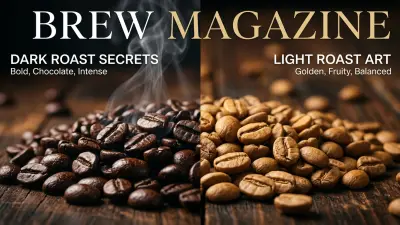
- Light Roasts: Roasted for a shorter period, beans are light brown. They tend to have higher acidity, retain more of the bean's original origin characteristics (fruity, floral, citrus notes), and have a lighter body. They're often described as bright and complex.
- Medium Roasts: A balanced profile, medium brown color. Less acidity than light roasts, with a more rounded body and notes of chocolate, nuts, and caramel, while still retaining some origin characteristics.
- Dark Roasts: Roasted until very dark brown, often with an oily sheen. They have lower acidity, a fuller body, and dominant flavors from the roasting process itself (smoky, bitter, chocolatey, toasted, sometimes burnt notes). Origin characteristics are largely muted.
Unlocking Your Perfect Cup at Coffee Brew Hub
The "caffeine king" title isn't as clear-cut as many believe when comparing light vs. dark roasts. The real power lies in understanding your beans, your brewing method, and your personal preferences. At Coffee Brew Hub, we encourage you to explore the incredible diversity of coffee – from the bright nuances of a light roast Ethiopian Yirgacheffe to the bold embrace of a dark roast Sumatra Mandheling. Experiment, taste, and find what truly excites your palate and fuels your day.
Armed with this knowledge, you can now confidently discuss the science behind your morning brew and make informed choices that empower you to master your coffee journey. Happy brewing!