Unlocking Your Best Brew: Comparing Coffee Filters – Paper, Metal, Cloth
As passionate home baristas, we know that every element of your coffee brewing setup contributes to the final cup. While grinders and beans often steal the spotlight, the humble coffee filter plays a crucial, often underestimated, role in shaping your brew's flavor, body, and clarity. At coffee brew hub, we believe understanding these nuances empowers you to truly master your craft.
From the crisp, clean taste of a pour-over to the rich, sediment-laden mug of a French press, your filter choice dictates more than just convenience – it's a fundamental decision that impacts the very essence of your coffee. Let's dive deep into the world of coffee filter materials, comparing paper, metal, cloth, and other options to help you choose the perfect match for your brewing style and taste preferences.
Paper Filters: The Classic Choice for Clarity
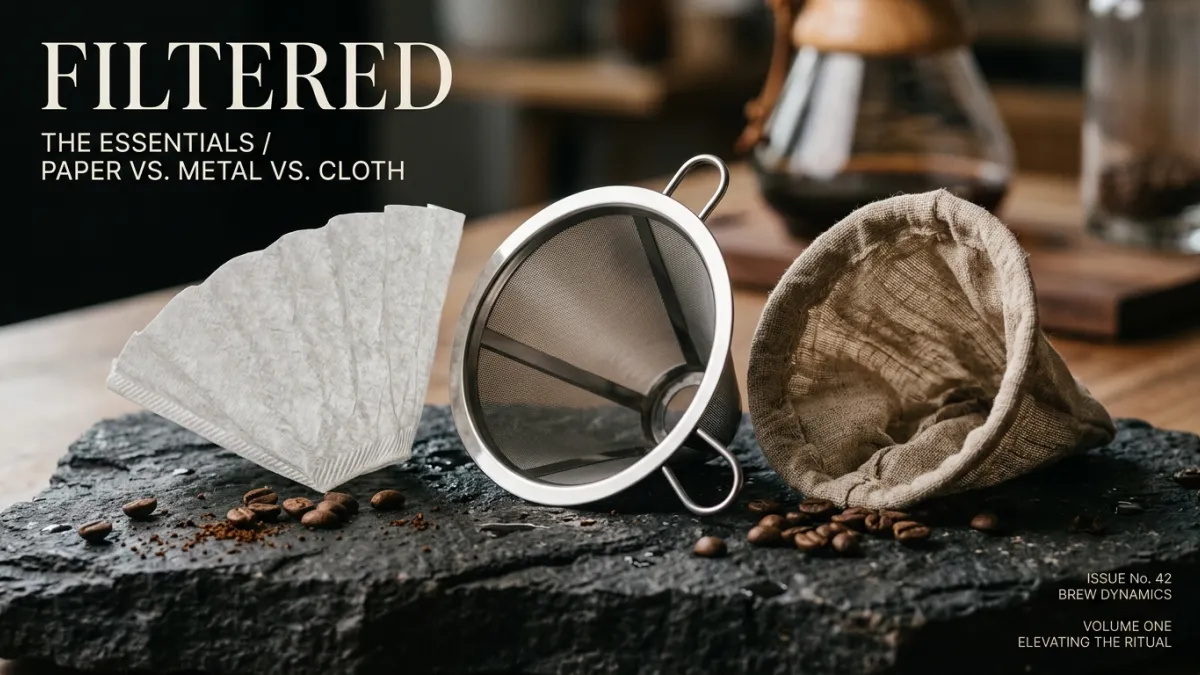
Paper filters are arguably the most common type, found in everything from automatic drip machines to sophisticated pour-over setups like the Hario V60 and Chemex. They are typically made from virgin paper pulp or sometimes bamboo.
- Pros:
- Clean Cup: Paper filters are excellent at trapping fine particles and insoluble lipids (oils), resulting in a remarkably clean, bright, and sediment-free cup. This allows delicate floral and fruity notes to shine through.
- Easy Cleanup: Simply discard the filter and spent grounds.
- Widely Available & Affordable: Easy to find in various shapes and sizes.
- Cons:
- Oil Absorption: By trapping coffee oils, paper filters can sometimes strip away some of the perceived body and richness from the brew.
- Paper Taste: Unrinsed paper filters can impart a papery taste to your coffee. Always pre-wet (rinse) your paper filter thoroughly with hot water before brewing.
- Waste & Cost: Single-use filters contribute to waste and require continuous repurchase.
- Ideal For: Pour-over methods (V60, Chemex, Kalita Wave), automatic drip coffee makers, AeroPress (often used for a cleaner cup).
Metal Filters: For a Full-Bodied Experience
Metal filters, often called "permanent" or "reusable" filters, are typically made from stainless steel, sometimes plated with gold. They feature fine mesh or perforated holes that allow more of the coffee's natural oils and micro-fines to pass into your cup.
- Pros:
- Full-Bodied Brew: By allowing oils and some fines through, metal filters create a coffee with a richer mouthfeel and more pronounced body.
- Environmentally Friendly: Reusable and durable, reducing waste.
- Cost-Effective: A one-time purchase saves money in the long run.
- No Paper Taste: Eliminates the risk of papery off-notes.
- Cons:
- Sediment: Expect some fine sediment in the bottom of your cup, which some drinkers dislike.
- Cleanup: Requires thorough rinsing and occasional scrubbing to prevent oil buildup and clogging.
- Grind Sensitivity: Requires a more precise grind size to avoid excessive fines or slow drawdown.
- Ideal For: French press, pour-over cones (e.g., Kone filter), AeroPress (disk filters), some automatic drip machines.
Cloth Filters: The Best of Both Worlds?
Less common in Western brewing culture but a staple in many traditional methods (like the Vietnamese phin or certain pour-over styles), cloth filters are typically made from cotton or hemp. They offer a unique filtration profile that sits somewhere between paper and metal.
- Pros:
- Clean Cup with Body: Cloth filters effectively trap most fines like paper, but allow some oils to pass through, yielding a clean cup with a silken body and a smooth finish.
- Reusable: Environmentally friendly and cost-effective over time.
- Unique Flavor Profile: Many enthusiasts praise the distinct, often sweeter and less bitter, character cloth filters impart.
- Cons:
- High Maintenance: Cloth filters require meticulous cleaning immediately after each use (rinsing, sometimes boiling) and proper storage (often in water in the fridge) to prevent mold growth and rancid oil buildup, which can impart unpleasant off-flavors.
- Durability: Less durable than metal; they wear out and need replacement.
- Availability: Can be harder to find than paper or metal filters.
- Ideal For: Pour-over (like the Hario Woodneck Drip Pot, Chemex-style brewing), Siphon brewers, Vietnamese phin.
Nylon/Plastic Filters: Convenient and Common
Often found built into automatic drip coffee makers or as standalone reusable filters, nylon or plastic mesh filters provide a convenient and durable option. They are generally less refined in their filtration compared to metal mesh.
- Pros:
- Reusable & Durable: Long-lasting and environmentally friendlier than single-use paper.
- Convenient: Easy to clean (usually just a rinse) and widely available, often coming with brewing devices.
- Inexpensive: Low upfront cost.
- Cons:
- Less Precise Filtration: Typically allow more fines and oils through than paper or cloth, but often less than a dedicated metal filter, leading to a less clear cup.
- Potential for Off-Flavors: Lower quality plastics can sometimes impart a plastic taste, especially when new or if not cleaned properly.
- Staining: Can stain and retain odors over time.
- Ideal For: Automatic drip coffee makers, some travel brewers.
Choosing Your Perfect Filter: Factors to Consider
With such a diverse range of options, how do you decide? Consider these factors:
- Taste Preference: Do you prefer a clean, bright cup (paper, cloth) or a rich, full-bodied one with more texture (metal, nylon)?
- Brew Method: Some filters are better suited for specific brewers. Always check compatibility.
- Convenience & Cleanup: Paper offers ultimate convenience, while metal and cloth require a bit more effort.
- Environmental Impact: Reusable options (metal, cloth, nylon) are more sustainable than single-use paper.
- Cost: reusable filters have a higher upfront cost but save money over time.
Your Brew, Your Choice
There's no single "best" coffee filter material; only the best one for you and your preferred brewing method. Each material offers a unique sensory experience, altering the clarity, body, and flavor nuances of your coffee.
We encourage you at coffee brew hub to experiment! Try brewing the same coffee with different filter types and taste the difference. This hands-on exploration is key to deepening your coffee knowledge and truly turning your kitchen into a personal café.