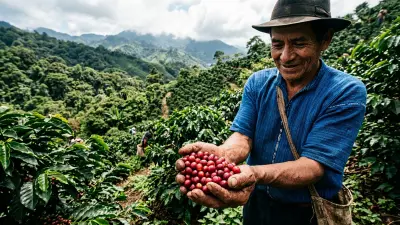
Why Kenyan Coffee Stands Out: A Symphony for Your Senses
For any passionate home barista, the journey through the world of coffee is an endless exploration of flavors, origins, and brewing techniques. Among the myriad of coffee-producing nations, Kenya holds a special, revered place. Known for its unmistakable bright acidity, astonishing complexity, and often explosive fruit-forward notes, Kenyan coffee is a truly unique experience. At coffee brew hub, we believe understanding these nuances empowers you to master your brew. Let's dive deep into what makes Kenyan coffee so extraordinary.
The Unique Terroir: Where Flavor Begins
The distinctive character of Kenyan coffee isn't accidental; it's a direct result of its exceptional terroir. Kenya's coffee-growing regions, primarily situated on the high plateaus surrounding Mount Kenya, boast ideal conditions that are hard to replicate anywhere else in the world.
Altitude and Climate
Most Kenyan coffee is grown at altitudes ranging from 1,400 to 2,000 meters above sea level. This high altitude, combined with a moderate climate, allows coffee cherries to mature slowly. This extended maturation period enables the coffee bean to develop a denser cell structure and concentrate a richer array of sugars and organic acids, which are the building blocks of its renowned flavor complexity.
Volcanic Soil
The fertile, deep red volcanic soils of Kenya are rich in essential minerals and organic matter. These nutrient-dense soils contribute significantly to the coffee plant's health and the development of its vibrant flavor profile, imparting unique mineral notes that are often perceptible in the final cup.
Meticulous Processing: Crafting Complexity
Kenya's commitment to quality extends beyond its terroir to its processing methods, which are among the most rigorous and celebrated globally. The vast majority of Kenyan coffee undergoes a meticulous fully washed process.
The Washed Method & Fermentation
After harvesting, the coffee cherries are de-pulped, removing the outer skin and pulp. What follows is a critical step: the beans are submerged in fermentation tanks for 12 to 72 hours. This controlled fermentation breaks down the mucilage layer, contributing significantly to the coffee's clean, bright acidity and complex fruitiness. Many Kenyan coffees even undergo a "double fermentation" process, where they are washed, fermented again, and then washed once more. This extra step further refines the acidity and enhances flavor clarity. Finally, the beans are thoroughly washed and sun-dried on raised beds, ensuring even drying and preventing mold or off-flavors.
Unpacking the Flavor Profile: A Symphony of Senses
When you taste a well-brewed Kenyan coffee, you're embarking on a sensory adventure. It's truly unlike any other coffee experience.
The Signature Bright Acidity
The most defining characteristic of Kenyan coffee is its bright, sparkling, and often wine-like acidity. This isn't a sour, unpleasant acidity, but rather a lively, refreshing tartness often reminiscent of blackcurrant, cranberry, grapefruit, or rhubarb. This acidity provides a wonderful structure and vibrancy to the cup.
Explosive Fruit & Savory Nuances
Beyond the acidity, Kenyan coffees burst with an incredible range of fruit flavors. Expect notes of blackberry, blackcurrant, passionfruit, and citrus. Beneath these vibrant fruit notes, you might also discover subtle savory undertones like tomato or even a hint of umami, which add another layer of intrigue and complexity to the overall profile.
Notable Varietals: SL28 & SL34
Much of Kenya's flavor legacy can be attributed to specific coffee varietals developed in the 1930s by Scott Agricultural Laboratories (hence "SL"). SL28 and SL34 are renowned for their exceptional cup quality, contributing significantly to the classic Kenyan profile of complex acidity, rich body, and intense fruit flavors. These varietals are robust and well-suited to Kenya's unique growing conditions.
Understanding the Kenyan Grading System
Kenya employs a highly structured grading system, primarily based on bean size, which often correlates with density and flavor potential. You'll frequently encounter grades like:
- AA: The largest screen size, generally considered top-tier.
- AB: A slightly smaller but still excellent screen size.
- PB (Peaberry): A natural mutation where only one bean develops inside the cherry, often prized for its concentrated flavor.
While size isn't the only indicator of quality, it serves as a useful benchmark for consistency and potential in the cup.
Mastering the Brew: Bringing Kenyan Coffee Home
To truly appreciate the nuances of Kenyan coffee, thoughtful brewing is key. Its bright acidity and complex flavors shine with methods that highlight clarity and clean separation of notes.
General Brewing Tips
- Water Temperature: Aim for slightly lower temperatures, around 195-205°F (90-96°C), to prevent over-extraction and dulling its delicate acidity.
- Grind Size: A medium-fine grind is often ideal for pour-over, while a coarser grind suits French Press. Experiment to find the sweet spot that balances extraction without bitterness.
- Freshness: As with all specialty coffee, use freshly roasted beans and grind them just before brewing to capture peak flavor.
Recommended Brewing Methods
For Kenyan coffee, we highly recommend methods that allow for a clean cup and emphasize its aromatic qualities:
- Pour-Over (e.g., Hario V60, Chemex): This method is exceptional for highlighting clarity, acidity, and delicate floral or fruity notes. It allows the complex flavors to express themselves individually.
- AeroPress: Its immersion and pressure combination can create a vibrant, full-bodied cup that still retains the characteristic brightness.
- French Press: While producing a fuller body, the French press can sometimes mute the delicate acidity. If using this method, ensure a coarser grind and a slightly shorter steep time.
Conclusion: Embrace the Kenyan Coffee Journey
Kenyan coffee is a testament to what meticulous cultivation, precise processing, and a unique environment can achieve. Its signature bright acidity, coupled with a dazzling array of fruity and sometimes savory notes, offers an unparalleled experience for the discerning palate. At coffee brew hub, we encourage you to grab a bag of high-quality Kenyan beans, experiment with your brewing, and let your kitchen transform into a personal café where the vibrant flavors of Kenya take center stage. You won't regret the journey!