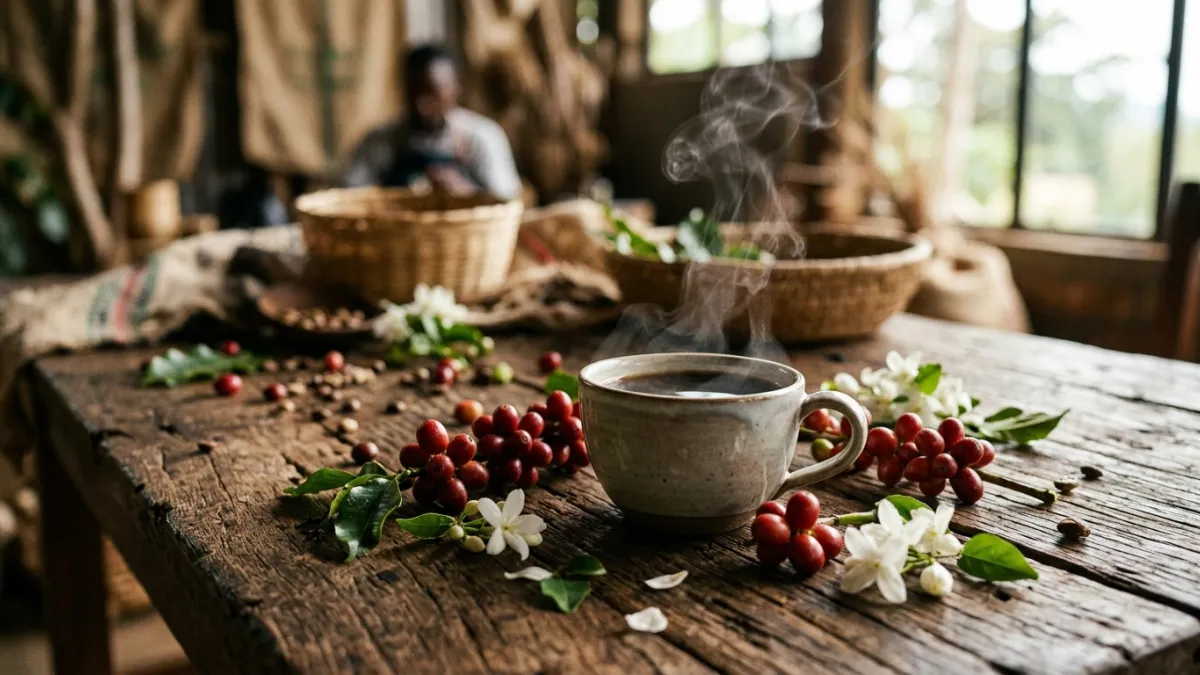
Explore the Vibrant World of Kenyan Coffee
At Coffee Brew Hub, we believe that understanding the origin of your beans is key to mastering the brew. Few origins captivate the senses quite like Kenyan coffee. Renowned globally for its unparalleled brightness and intricate flavor profile, Kenyan coffee is a true gem in the specialty coffee world. If you've ever wondered why a cup of Kenyan coffee tastes so uniquely vibrant, prepare to dive deep into its secrets.
The Terroir: Where Brightness Begins
Kenya's unique geography and climate are the primary architects of its distinctive coffee profile. Most Kenyan coffee is grown on the high plateaus surrounding Mount Kenya, at altitudes ranging from 1,400 to 2,000 meters above sea level. This high altitude means slower cherry maturation, allowing more time for complex sugars and acids to develop within the bean. The rich, red volcanic soil, combined with consistent rainfall and ample sunshine, provides the perfect environment for coffee trees to flourish.
The Art of Processing: Double Fermentation
While terroir lays the foundation, Kenya's meticulous processing methods elevate its coffee to legendary status. Almost all Kenyan coffee undergoes a fully washed process, but with a unique twist: a "double fermentation."
- Initial Fermentation: After harvesting, ripe coffee cherries are de-pulped, and the beans (still encased in mucilage) are fermented in tanks for 12-24 hours to break down the sticky mucilage.
- Washing: The beans are then thoroughly washed to remove residual mucilage.
- Second Fermentation (Soaking): Crucially, the beans are often soaked again in fresh water for an additional 12-24 hours. This second soak is believed to contribute significantly to the coffee's famed acidity and clarity, allowing for the development of even more nuanced flavors.
- Drying: Finally, the beans are sun-dried on raised beds, carefully turned to ensure even drying and prevent mold.
The Signature Profile: Bright Acidity & Complex Flavors
This careful cultivation and processing culminate in a cup profile that is unmistakably Kenyan.
Decoding Bright Acidity
When we talk about "bright acidity" in Kenyan coffee, we're not referring to sourness. Instead, it's a lively, refreshing characteristic that awakens the palate, akin to the crispness of a Granny Smith apple or the zest of a lemon. This acidity is often malic (apple-like), citric (lemon, grapefruit), or tartaric (grape/wine-like), providing a clean, vibrant finish that makes the coffee feel refreshing and complex.
Unveiling Complex Flavors
Beyond the acidity, Kenyan coffee offers an incredible spectrum of flavors that evolve with every sip. The most iconic note associated with Kenyan coffee is blackcurrant – a rich, tangy, and slightly savory fruitiness that is utterly unique. But the complexity doesn't stop there. You might also encounter:
- Citrus: Grapefruit, orange, lemon zest.
- Tomato: A savory, umami-like sweetness that adds depth.
- Winey/Berries: Notes of red wine, cranberry, or raspberry.
- Floral: Delicate hints of hibiscus or rose.
- Sweetness: Often accompanied by a sugary, syrupy body.
These flavors are often layered and dynamic, changing as the coffee cools, offering a truly engaging tasting experience.
Understanding Kenyan Coffee Grades
Kenyan coffee is meticulously graded after processing, primarily based on bean size. While not a direct indicator of quality, larger beans often correlate with higher altitudes and better flavor development. The most common grades you'll encounter are:
- AA: The largest beans, generally considered the highest quality.
- AB: Slightly smaller than AA, but still excellent.
- PB (Peaberry): A natural mutation where only one round bean develops inside the cherry, often prized for its concentrated flavor.
Looking for AA or AB grades is a good starting point for experiencing the quintessential Kenyan profile.
Brewing Kenyan Coffee to Perfection at Home
To truly appreciate the delicate acidity and intricate flavors of Kenyan coffee, brewing methods that highlight clarity are paramount.
Recommended Brewing Methods:
- Pour-Over (V60, Chemex): These methods excel at showcasing the clean, bright characteristics. Use a medium-fine grind, water around 200-205°F (93-96°C), and a careful pour to ensure even extraction. Focus on a longer bloom to release gases and facilitate even saturation.
- Aeropress: Offers versatility. You can brew a concentrated shot or a longer brew. Its full immersion can bring out a richer body while still preserving the acidity.
- French Press: While less common for such delicate coffees, a French Press can still deliver a delicious cup if you're mindful of your grind (coarser) and immersion time (shorter). It will offer a fuller body, which can sometimes mute the brightest notes but enhance the sweetness.
General Tips for Brewing Kenyan Coffee:
- Grind Fresh: Always grind your beans just before brewing to preserve volatile aromas and flavors.
- Water Quality: Use filtered water. The quality of your water significantly impacts the taste of your coffee.
- Temperature Control: Aim for the recommended temperature range to ensure proper extraction without over-extracting bitterness or under-extracting flavor.
Sourcing and Storage
To enjoy the best Kenyan coffee experience, seek out reputable specialty roasters who provide detailed origin information and roast dates. Always buy freshly roasted beans and store them in an airtight container in a cool, dark place, away from light, heat, and moisture. This will help preserve those exquisite flavors for as long as possible.
Embark on Your Kenyan Coffee Journey
Kenyan coffee is more than just a beverage; it's an experience – a testament to careful cultivation, meticulous processing, and a unique terroir. We at Coffee Brew Hub encourage you to explore its vibrant acidity and complex flavors. Grab a bag of freshly roasted Kenyan beans, brew it with care, and savor a truly exceptional cup that will transport your senses to the heart of East Africa.