Welcome back to coffee brew hub, fellow coffee enthusiasts! If you've ever found yourself staring at your pour-over setup, wondering how much coffee to use for that perfect cup, you're not alone. The coffee-to-water ratio is arguably the most critical variable in pour-over brewing, directly impacting flavor, strength, and overall enjoyment. Mastering it is a significant step towards turning your kitchen into a personal café.
Today, we're diving deep into the world of pour-over coffee ratios, breaking down the frequently asked questions and equipping you with the knowledge to brew with confidence and precision.
What is the Ideal Pour Over Coffee Ratio?
The golden standard for pour-over coffee typically falls within a ratio of 1:15 to 1:18. This means for every 1 part of coffee, you'll use 15 to 18 parts of water. Let's break that down:
- 1:15 ratio: For every 1 gram of coffee, use 15 grams of water. This results in a stronger, more concentrated cup.
- 1:17 ratio: For every 1 gram of coffee, use 17 grams of water. This is often considered the sweet spot for balance and clarity.
- 1:18 ratio: For every 1 gram of coffee, use 18 grams of water. This yields a lighter, more delicate cup.
So, if you want to brew a typical 300ml (or 300g) cup of coffee, using a 1:16 ratio, you would calculate: 300 grams of water / 16 = 18.75 grams of coffee. Simple math, profound impact!
Why is the Coffee-to-Water Ratio So Important?
Precision in your ratio is key to achieving consistency and optimal flavor extraction. Too little coffee for your water, and your brew will be weak, under-extracted, and potentially sour. Too much coffee, and your brew will be overly strong, bitter, and over-extracted. A balanced ratio ensures you're extracting the desirable compounds from your coffee grounds without pulling out the harsh, undesirable ones.
How Do I Measure Coffee and Water Accurately?
The absolute best way is with a digital kitchen scale. coffee recipes, especially for pour-over, are always given in grams because it's a precise and consistent unit of measurement. Volume measurements (like scoops or cups) can vary wildly based on bean density, roast level, and how tightly packed the coffee is.
- For Coffee: Weigh your whole beans before grinding them. This ensures you have the exact amount needed.
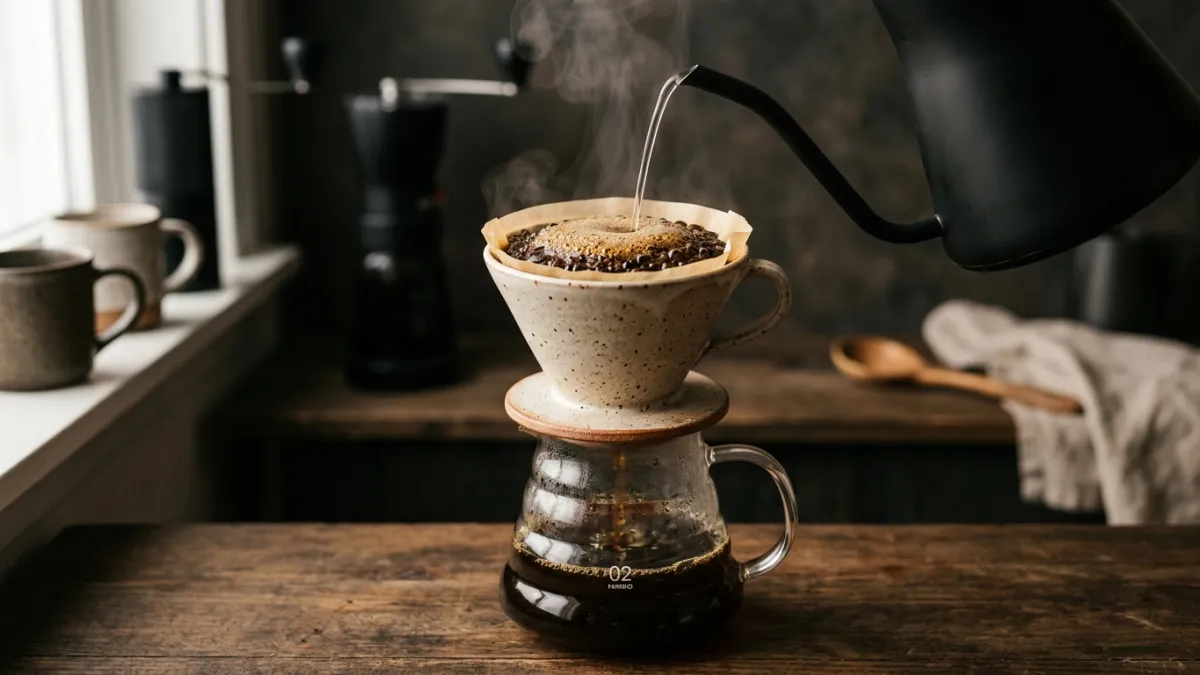
- For Water: Place your pour-over device and carafe on the scale, tare it to zero, and then pour your hot water until you reach your target weight.
What If I Don't Have a Scale?
While we highly recommend investing in a digital scale (it's a game-changer for any home barista!), if you're in a pinch, you can use a volumetric scoop. As a general guideline, a standard coffee scoop holds about 2 tablespoons, which is roughly 10-12 grams of whole bean coffee. However, remember this is an approximation and will not give you the same precision as a scale. For best results, measure by weight.
Does Grind Size Affect the Ratio?
Indirectly, yes. Grind size primarily affects the extraction time. A finer grind exposes more surface area, leading to faster extraction, while a coarser grind slows it down. While the fundamental ratio remains the same, you might slightly adjust your grind to achieve your desired brew time (typically 2:30 to 4:00 minutes for pour-over). If your brew is too slow and bitter, coarsen your grind; if it's too fast and sour, fine-tune it. The ratio sets the strength; the grind refines the flavor.
How Does Roast Level Influence the Ratio?
The roast level can indeed influence your preferred ratio. Generally:
- Lighter Roasts: Often benefit from a slightly tighter ratio (e.g., 1:15 or 1:16) to ensure full flavor development and to bring out their nuanced acidity and fruit notes.
- Darker Roasts: Tend to be more soluble and can extract quickly. A slightly looser ratio (e.g., 1:17 or 1:18) can prevent over-extraction and bitterness, highlighting their rich, chocolatey, or smoky characteristics.
How Do I Adjust the Ratio for My Taste?
This is where the art of brewing comes in! Start with a universally accepted ratio like 1:16 or 1:17. Brew a cup, taste it, and then ask yourself:
- Is it too weak or watery? Try a slightly tighter ratio (e.g., go from 1:17 to 1:16).
- Is it too strong or bitter? Try a slightly looser ratio (e.g., go from 1:16 to 1:17 or 1:18).
Make small, incremental changes (e.g., 0.5 ratio points at a time) and keep notes. Your palate is the ultimate judge!
What's the Difference Between Ratio and Yield?
While often used interchangeably, they refer to different things:
- Ratio: The relationship between the dry coffee grounds and the total water used for brewing (e.g., 1:16).
- Yield: The final amount of brewed coffee you end up with in your cup or carafe. Due to absorption by the coffee grounds and some evaporation, the yield will always be slightly less than the total water poured.
Can I Use the Same Ratio for Different Pour-Over Devices?
Yes, the fundamental 1:15 to 1:18 ratio range is a great starting point for most pour-over devices (Hario V60, Chemex, Kalita Wave, etc.). However, different brewers have unique geometries and flow rates that might necessitate slight adjustments to other variables like grind size, pour technique, or even a minor tweak to your preferred ratio to dial in the perfect cup for that specific device.
Embrace the Experimentation!
Mastering the pour-over coffee ratio is a journey, not a destination. It's about understanding the fundamentals, using precise measurements, and most importantly, tasting and adjusting. Don't be afraid to experiment within the recommended range to find what truly excites your palate. With these tips from coffee brew hub, you're well on your way to consistently brewing perfect, flavorful pour-over coffee right in your own kitchen!