Unveiling Coffee's Incredible Journey
Every morning, that first intoxicating aroma wafting from your kitchen is more than just a signal for your day to begin; it's an echo of centuries of history, exploration, and passion. The coffee in your cup has a story as rich and complex as its flavour profile, a journey that spans continents, cultures, and countless generations. At coffee brew hub, we believe understanding this heritage deepens your appreciation and enhances every brewing experience. Let's embark on "The Journey of Coffee: A Brief History from Ethiopia to Your Cup."
The Mythical Birthplace: Ethiopia
Our story begins in the ancient highlands of Ethiopia, specifically the Kaffa region, sometime around the 9th century. While historical accounts are often shrouded in legend, the most enduring tale involves a goat herder named Kaldi. He noticed his goats became unusually energetic and "danced" after eating red berries from a particular tree. Curious, Kaldi tried the berries himself and experienced a similar invigorating effect. He shared his discovery with a local monastery, where the abbot initially disapproved, throwing the berries into a fire. However, the enticing aroma of the roasting beans soon emerged, prompting them to rake the embers and dissolve the beans in hot water. The resulting dark, aromatic liquid kept the monks awake during long hours of prayer, thus birthing coffee.
While the exact details remain a legend, what is certain is that coffee's origins lie deep within Ethiopian culture, where the beans were initially chewed or crushed and mixed with fat to form an energy-rich food source, long before they became a brewed beverage.
The Mystical Brew Spreads: The Arabian Peninsula
From Ethiopia, coffee beans crossed the Red Sea to the Arabian Peninsula, specifically to Yemen, by the 15th century. Here, Sufi mystics embraced coffee (known as qahwa, an Arabic word for "wine") to aid in concentration and wakefulness during their nightly prayers. The stimulating effects of coffee allowed them to prolong their spiritual devotions, leading to its widespread adoption throughout the Islamic world.
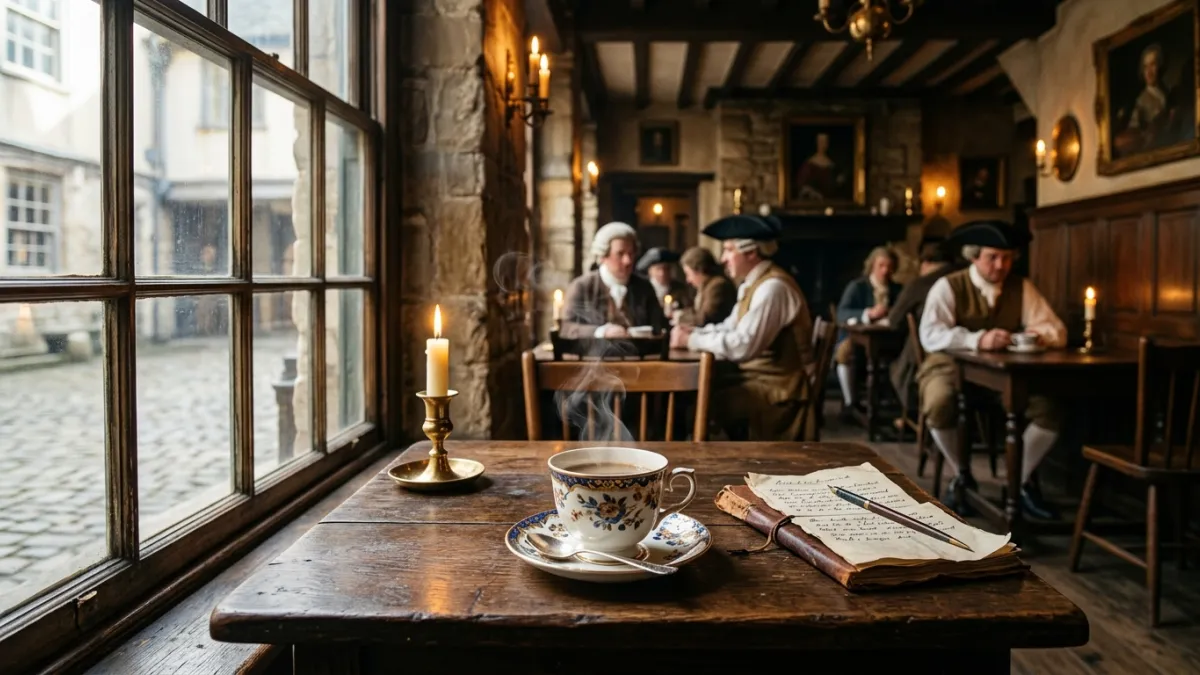
Coffee houses, or kaveh kanes, soon began to emerge in cities like Mecca, Cairo, and Istanbul. These establishments quickly transformed into vibrant hubs of social interaction, intellectual debate, and artistic expression. People gathered to play chess, listen to music, discuss politics, and exchange news – all over a cup of coffee. The Arabian Peninsula effectively commercialized coffee, cultivating it on large plantations and establishing intricate trade routes.
Coffee Conquers Europe: From Ottoman Empire to Parisian Cafés
By the 16th and 17th centuries, coffee had captivated the Ottoman Empire, becoming an integral part of Turkish culture. It was through Ottoman trade that coffee eventually made its way to Europe. Venetian merchants, with their extensive trading networks, were among the first to bring coffee beans to the continent in the early 17th century.
Initially met with suspicion and even dubbed "the bitter invention of Satan," coffee eventually won over the European palate, thanks in part to Pope Clement VIII, who, after tasting it, declared it a "truly Christian beverage." The first European coffee houses opened in Venice (1645) and London (1652), quickly mirroring their Middle Eastern counterparts as centres of social and intellectual life. London's coffee houses became known as "penny universities" for their accessible price and the stimulating conversations they fostered. Coffee began to replace alcoholic beverages as the morning drink, leading to a more sober and productive society.
Global Domination: The New World and Beyond
The demand for coffee exploded, prompting European powers to cultivate it in their colonies. The Dutch East India Company was instrumental in this global expansion. In the late 17th century, they successfully smuggled coffee plants out of the Arab port of Mocha and established large-scale cultivation in Ceylon (Sri Lanka) and Java (Indonesia), becoming the primary suppliers of coffee to Europe.
The French followed suit. Legend has it that in 1723, a young naval officer named Gabriel de Clieu transported a single coffee seedling from the Royal Botanical Garden in Paris to Martinique, meticulously nurturing it through perilous sea voyages and even sharing his precious water ration with it. This single plant is said to be the ancestor of most coffee trees grown throughout the Caribbean and Latin America, including the massive plantations that would later define Brazil's coffee industry, making it the world's largest producer.
From Farm to Roaster to Your Cup
The journey doesn't end with global cultivation. Throughout the 19th and 20th centuries, advancements in harvesting, processing (wet and dry methods), roasting, and brewing technology transformed coffee from a luxury item into an everyday staple. The rise of industrialization brought mass production, while more recently, the specialty coffee movement has championed single-origin beans, meticulous processing, and artisanal roasting, elevating coffee back to an art form.
Today, your coffee's journey continues long after it leaves the farm. It travels through roasters that coax out its unique flavours, grinders that prepare it for extraction, and finally, into your hands, where you, the home barista, complete its remarkable odyssey. Every variable, from grind size to water temperature, honours this vast history.
Appreciating Every Sip
The next time you prepare your morning brew, take a moment to reflect on this incredible journey. From the legendary goats of Ethiopia to the vibrant coffee houses of Istanbul, from the Dutch plantations of Java to the vast fields of Brazil, coffee has woven itself into the fabric of human history. Understanding its past not only enriches your personal brewing ritual but also connects you to a global community that cherishes this extraordinary beverage, a mission we proudly support here at coffee brew hub.