Espresso vs. Coffee: Unpacking Caffeine, Taste & Brewing Differences Explained
As passionate home baristas and coffee enthusiasts, we often encounter the terms "espresso" and "coffee" used interchangeably, or with a sense of vague understanding. While both are beloved beverages derived from roasted coffee beans, they are fundamentally distinct in their creation, character, and even their caffeine punch. At Coffee Brew Hub, our mission is to empower you to master your brew, and that starts with a clear understanding of these foundational differences. Let's delve into what truly sets espresso apart from your daily cup of joe.
Understanding the Fundamentals: What Defines Each?
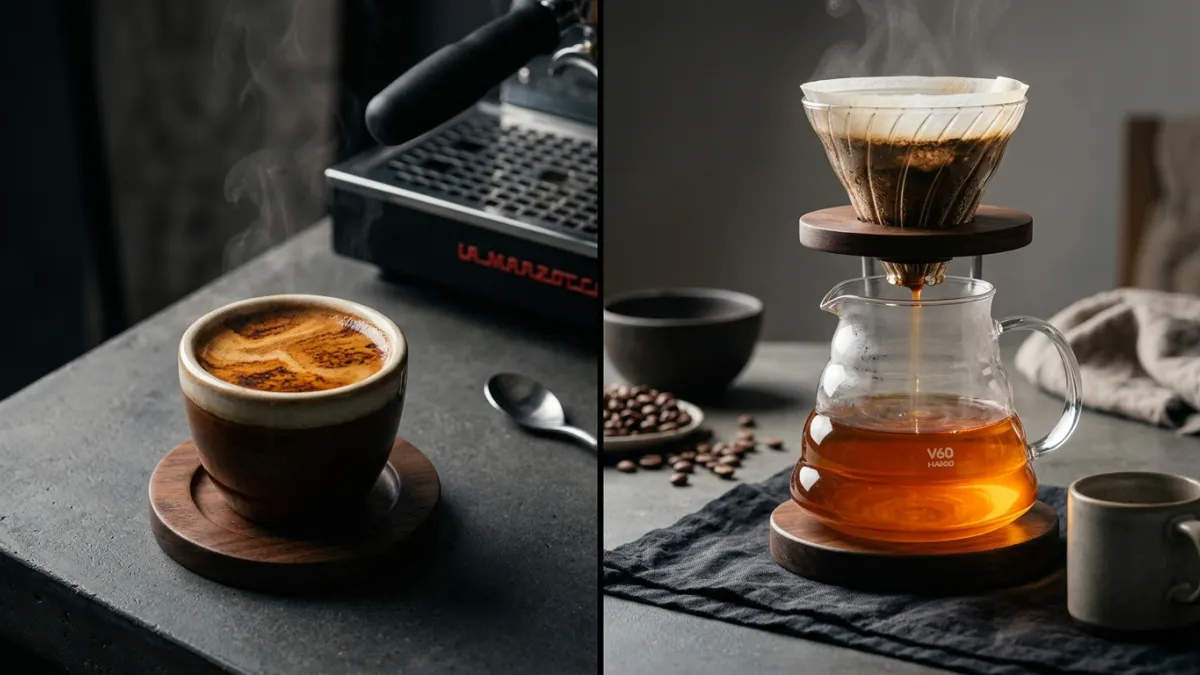
The most crucial distinction to grasp is that espresso is a brewing method, not a specific type of coffee bean or roast. Any coffee bean can be used to make espresso, though some lend themselves better to the process due to their flavor profiles. When we talk about "coffee" in contrast, we typically refer to beverages made via other brewing methods like drip, pour-over, French press, or AeroPress – methods that generally involve longer contact times and lower pressure.
Brewing Methods: A Tale of Pressure and Time
The heart of the difference lies in how each beverage is extracted from the coffee grounds.
Espresso Brewing
- Grind: Extremely fine, almost like powdered sugar, to maximize surface area for rapid extraction.
- Water Temperature: Precisely controlled, typically between 195-205°F (90-96°C).
- Pressure: High pressure, usually around 9 bars (about 130 PSI), is forced through the coffee bed.
- Time: Very short, generally 25-30 seconds for a standard 1-2 ounce shot.
- Equipment: An espresso machine is essential to achieve the necessary pressure.
- Result: A concentrated, viscous shot topped with a reddish-brown foam called crema, which is an emulsion of coffee oils and gases.
Traditional Coffee Brewing (e.g., Drip, Pour-Over, French Press)
- Grind: Medium to coarse, depending on the specific method. Finer for pour-over, coarser for French press.
- Water Temperature: Similar range to espresso, but often less precisely controlled without specialized equipment.
- Pressure: Low pressure, relying on gravity (drip, pour-over) or immersion (French press, cold brew).
- Time: Longer extraction times, ranging from 2-5 minutes for drip/pour-over to several hours for cold brew.
- Equipment: A wide array, from simple manual drippers to automatic coffee makers.
- Result: A larger volume, less concentrated beverage, without crema.
Taste and Texture: A Symphony of Flavors
The distinct brewing methods naturally lead to vastly different sensory experiences.
Espresso Taste Profile
- Intensity: Bold, concentrated, and intense. It’s designed to be sipped slowly or form the powerful base of milk-based drinks.
- Flavor Complexity: A well-pulled espresso reveals a kaleidoscope of nuanced flavors – from rich chocolate and caramel to bright fruit and floral notes, depending on the beans.
- Body & Texture: Full-bodied, often described as syrupy or viscous, thanks to the emulsified oils and dissolved solids. The crema adds to this richness and mouthfeel.
- Serving: Typically served in small, demitasse cups, reflecting its potency.
Traditional Coffee Taste Profile
- Intensity: Generally milder and more diluted than espresso, though strength varies greatly by brew method and coffee-to-water ratio.
- Flavor Clarity: Certain methods like pour-over excel at highlighting specific flavor notes with a cleaner finish. French press, conversely, retains more oils and sediment for a fuller, sometimes muddier, taste.
- Body & Texture: Lighter in body compared to espresso, ranging from light and crisp (pour-over) to medium-full (French press). No crema.
- Serving: Served in larger mugs, ideal for prolonged sipping.
Caffeine Content: The Surprising Truth
This is where many assumptions are challenged. While espresso feels more potent due to its concentrated nature, a typical serving of regular coffee often contains more caffeine overall.
- Per Serving:
- A single shot of espresso (1-1.5 oz) contains approximately 60-100 mg of caffeine.
- An 8-ounce cup of regular brewed coffee contains roughly 95-200 mg of caffeine.
Conclusion: An 8-ounce cup of regular coffee generally has more total caffeine than a single shot of espresso.
- Per Ounce (Concentration):
- Espresso: Approximately 40-75 mg of caffeine per fluid ounce.
- Regular Coffee: Approximately 12-25 mg of caffeine per fluid ounce.
Conclusion: Espresso is significantly more concentrated in caffeine per fluid ounce. This high concentration contributes to the perceived immediate "kick" due to rapid absorption.
It's important to remember that actual caffeine content can vary widely based on the specific coffee beans (Robusta beans contain more caffeine than Arabica), roast level, and precise brewing parameters.
Choosing Your Brew: When to Opt for Each
Neither espresso nor traditional coffee is inherently "better"; they simply serve different purposes and cater to different preferences.
- Choose Espresso when you want:
- A quick, intense energy boost.The base for classic milk-based drinks like lattes, cappuccinos, and macchiatos.
- To savor a concentrated, complex flavor experience in a small volume.
- Choose traditional coffee when you want:
- A longer, more leisurely sipping experience.
- A variety of flavor profiles, from bright and clean to rich and full-bodied, depending on the brew method.
- A versatile beverage that can be enjoyed black or with a wide range of additions.
Conclusion
Espresso and coffee, while both originating from the same versatile bean, represent two distinct realms of brewing art. Understanding their differences in brewing technique, taste profile, and caffeine concentration empowers you, the home barista, to make informed choices and truly appreciate the vast world of coffee. Experiment with both, explore different beans and roasts, and discover which method best suits your palate and your day. Happy brewing from your friends at Coffee Brew Hub!