Burr Grinder vs Blade Grinder: Why It Matters for Your Coffee
In the quest for the perfect cup of coffee, many factors come into play: the quality of your beans, the precision of your brew method, and even the water you use. Yet, one element often overlooked by beginners, but championed by seasoned home baristas, is the grind. The way your coffee beans are broken down directly impacts the flavor in your mug. Today, we're diving deep into the fundamental difference between two primary types of coffee grinders: the ubiquitous blade grinder and the revered burr grinder. Understanding their mechanics and impact is crucial for elevating your daily brew.
Blade Grinders: The Choppy Path to Convenience
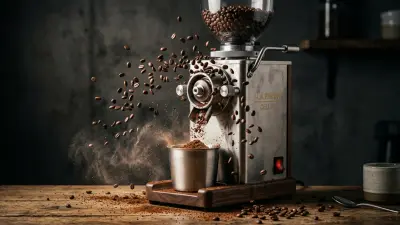
blade grinders, often resembling a simple spice grinder, are a common entry point for many coffee enthusiasts due to their affordability and widespread availability. They operate on a simple principle: a spinning blade (much like a propeller) rapidly chops and smashes coffee beans against the walls of the grinding chamber.
Pros:
- Affordability: Significantly less expensive than most burr grinders, making them an accessible option.
- Availability: Easily found in department stores and online retailers.
- Simplicity: Easy to operate with a single button, requiring minimal effort.
Cons:
- Inconsistent Grind: This is their biggest drawback. Rather than grinding, the blades chop the beans into various sizes, from fine powder to coarse chunks. This unevenness leads to poor extraction, a common cause of bitter or sour coffee.
- Heat Generation: The high-speed blades generate significant friction and heat, which can "cook" the coffee beans slightly while grinding. This heat diminishes delicate aromatic compounds and can impart a burnt or stale taste to your coffee.
- Dull Flavor: Due to inconsistency and heat degradation, the resulting coffee often tastes muted, bitter, or sour, lacking the complexity and vibrant notes found in properly ground beans.
- Noise: Can be quite loud and jarring during operation, which might not be ideal for early morning brewing.
Burr Grinders: The Precision Choice for Flavor
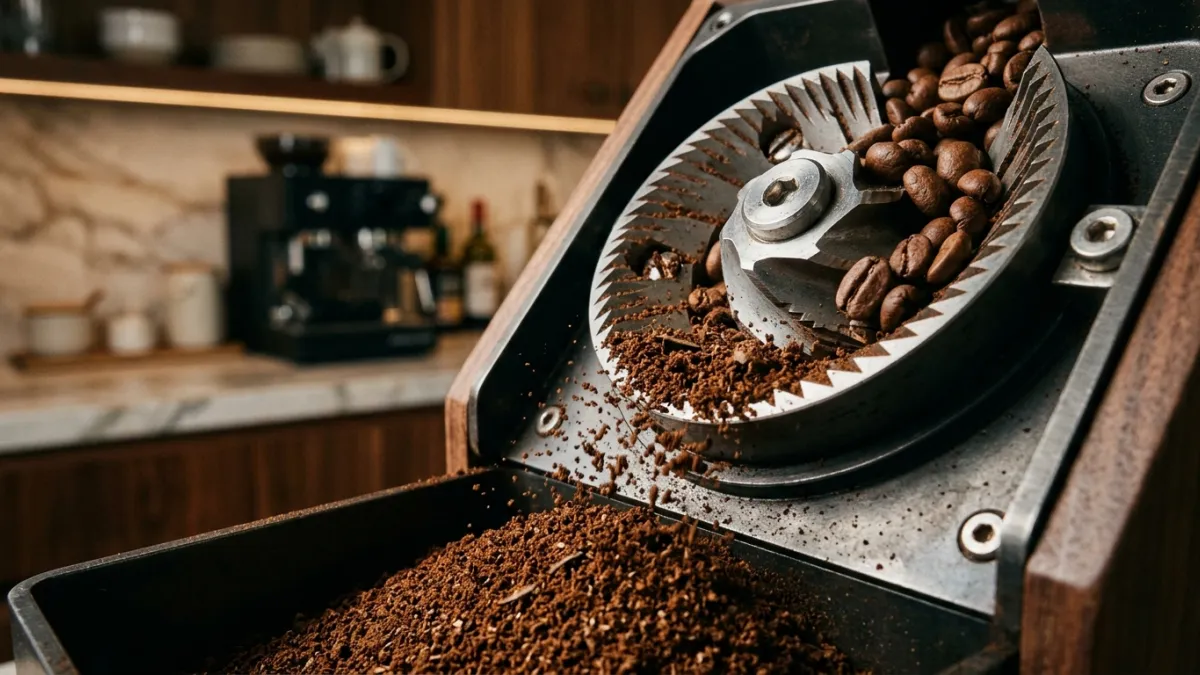
burr grinders are the gold standard for anyone serious about their coffee. Instead of chopping, they meticulously crush coffee beans between two abrasive surfaces, known as burrs. These burrs are precisely spaced, allowing for a consistent, uniform grind size.
Types of burr grinders:
- Conical burr grinders: Feature two cone-shaped burrs (one inner, one outer) that funnel beans through, producing a very consistent grind with less noise and heat generation compared to flat burrs.
- Flat burr grinders: Use two parallel, ring-shaped burrs that grind beans as they pass between them. These can offer excellent consistency but might be slightly louder and generate a bit more heat than conical burrs, depending on the model.
burr grinders come in both manual (hand crank) and electric versions, catering to different preferences and budgets. Manual burr grinders are often portable and quieter, while electric models offer convenience and speed.
Pros:
- Consistent Grind: This is their defining advantage. By crushing beans to a uniform size, burr grinders ensure even extraction, leading to a balanced, predictable, and flavorful cup every time.
- Preserves Flavor: Grinding at lower speeds and with less heat preserves the delicate oils and aromatics in your coffee, unlocking its full taste potential and preventing premature staling.
- Adjustable Settings: Most burr grinders offer a wide range of grind settings, allowing you to fine-tune for specific brewing methods (e.g., very fine for espresso, medium for pour-over, coarse for French press). This versatility is key for experimenting and perfecting your brew.
- Quality of Extraction: Leads to superior flavor profiles—rich, nuanced, and free from the bitterness or sourness caused by uneven extraction. You can truly taste the characteristics of the bean.
Cons:
- Higher Cost: Generally more expensive than blade grinders, though entry-level electric burr grinders are becoming more accessible and offer great value.
- Size: Electric burr grinders can take up more counter space compared to compact blade grinders.
- Cleaning: Can require a bit more effort to clean and maintain properly to ensure optimal performance and hygiene.
Why Grind Consistency Matters for Your Coffee
The "why" behind the burr grinder's superiority boils down to extraction. When hot water passes through coffee grounds, it dissolves and extracts soluble compounds that give coffee its flavor, aroma, and body. This process needs to happen evenly across all coffee particles.
- Under-extraction: Occurs when water passes too quickly through coarse grounds, or if fine particles aren't thoroughly saturated. Results in a sour, weak, or watery taste because not enough flavor compounds have been dissolved.
- Over-extraction: Happens when water stays in contact with fine grounds for too long, or if larger particles are saturated excessively. Leads to a bitter, hollow, or overly strong flavor as undesirable compounds are extracted.
With a blade grinder's inconsistent output, you'll inevitably have a mix of very fine powder and very coarse chunks. This means that simultaneously, some parts of your coffee are over-extracting (the fine particles) while others are under-extracting (the coarse chunks). The result is a cup that tastes both bitter and sour, lacking any true balance or depth—often described as "muddy" or "flat."
A consistent grind from a burr grinder, however, ensures that all coffee particles extract at a similar rate, allowing you to achieve that sweet spot of balanced flavor, whether you're brewing a delicate pour-over, a rich French press, or a complex espresso. The ability to precisely control your grind size is the key to unlocking the full potential of your beans for any brewing method.
Making the Right Choice for Your Coffee Journey
Your choice between a blade and a burr grinder ultimately depends on your priorities and commitment to your coffee experience.
- If you are a casual coffee drinker who prioritizes convenience and budget above all else, a blade grinder might seem acceptable. However, be aware that you're leaving a significant amount of flavor on the table, regardless of the quality of your beans.
- For anyone serious about unlocking the full potential of their coffee beans, or for those experimenting with various brewing methods, a burr grinder is an essential investment. While the initial cost is higher, the improvement in flavor and the ability to fine-tune your grind for optimal extraction are invaluable. Many entry-level burr grinders offer excellent performance without breaking the bank, providing an immediate upgrade to your coffee quality.
At Coffee Brew Hub, we always advocate for embracing the tools that empower you to craft the best possible cup. And when it comes to grinding, the difference a burr grinder makes is truly transformative, turning good beans into great coffee.
Conclusion
The humble coffee grinder plays a far more critical role in your brewing process than many realize. While blade grinders offer a cheap and cheerful way to break down beans, they fall short on the most crucial aspect: grind consistency. Burr grinders, with their precision engineering, deliver the uniform particle size essential for even extraction and, ultimately, a superior tasting cup of coffee. Investing in a good burr grinder is arguably the single most impactful upgrade you can make to your home coffee setup, transforming your daily ritual from a routine into a truly exceptional experience, allowing you to taste your coffee as it was meant to be enjoyed.