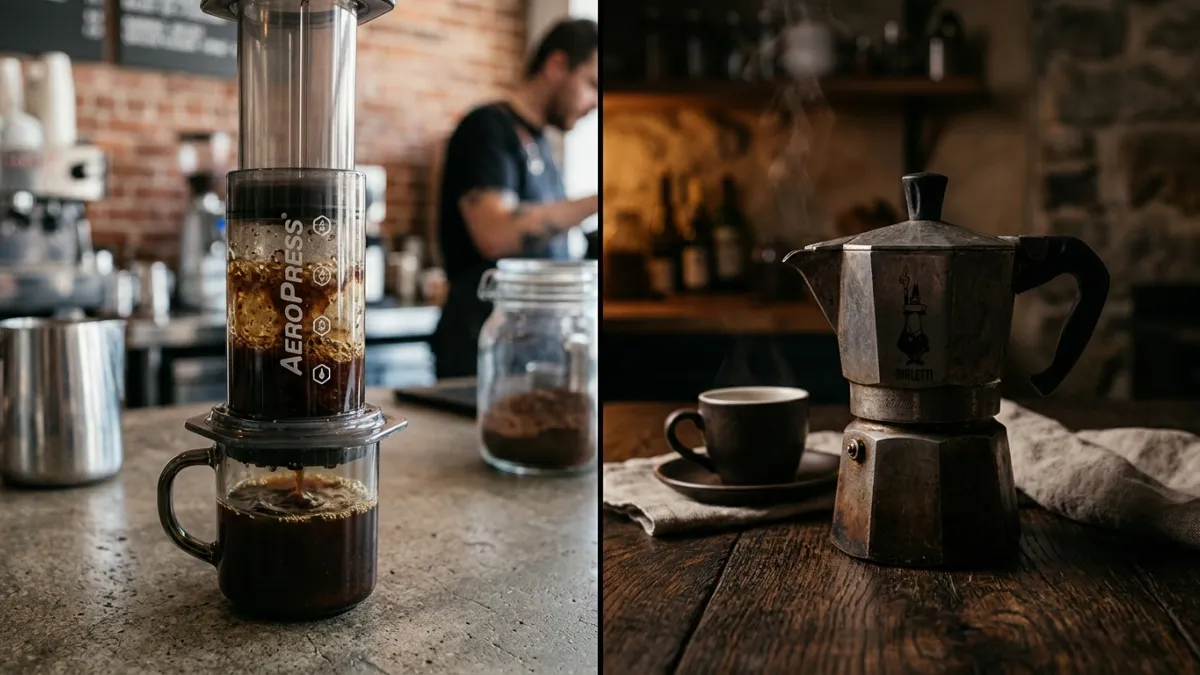
AeroPress vs Moka Pot: Which Is Right for Your Brew?
As passionate home baristas, we at coffee brew hub understand the quest for the perfect cup. Two iconic brewers, the Aeropress and the Moka Pot, frequently spark debate among enthusiasts. Both are celebrated for their ability to produce strong, concentrated coffee outside of a traditional espresso machine, yet they achieve this through vastly different mechanisms and offer distinct coffee experiences.
This detailed comparison will dive deep into each method, exploring their brewing principles, taste profiles, ease of use, versatility, and more, to help you determine which brewer aligns best with your preferences and lifestyle. Let's embark on this journey to discover your ideal coffee companion.
Understanding the AeroPress
Invented in 2005 by Aerobie president Alan Adler, the Aeropress quickly gained a cult following for its simplicity and versatility. It's a full immersion brewer that uses air pressure to extract coffee.
How it Works:
The AeroPress consists of two cylinders that create a vacuum seal. Ground coffee is steeped in hot water, then a plunger is pressed down, forcing the coffee through a paper filter into your cup. This pressure-assisted immersion brewing results in a smooth, clean brew.
Coffee Profile:
- Clean and Smooth: The paper filter effectively removes sediment, resulting in a remarkably clean cup.
- Versatile Concentration: Can brew anything from a concentrated shot (often diluted to make an Americano-like drink) to a full-bodied cup, or even cold brew.
- Low Acidity/Bitterness: The short brewing time and efficient extraction often lead to a coffee with less bitterness and acidity than many other methods.
Key Advantages:
- Speed: A full brew can be ready in 1-2 minutes.
- Ease of Cleaning: The spent coffee puck is ejected cleanly, making cleanup incredibly fast.
- Portability & Durability: Lightweight, compact, and made from tough plastic, it's ideal for travel.
- Versatility: Accommodates various grind sizes, water temperatures, and brew ratios, allowing for endless experimentation.
Key Disadvantages:
- Batch Size: Typically brews only 1-2 servings at a time.
- Plastic Construction: While durable, some prefer non-plastic brewing devices.
Understanding the Moka Pot
A timeless Italian classic, the Moka Pot was designed by Alfonso Bialetti in 1933 and has since become a staple in millions of homes worldwide. It’s a stovetop brewer that produces strong, espresso-style coffee using steam pressure.
How it Works:
Water in the bottom chamber is heated on a stovetop, creating steam pressure that forces the hot water up through a funnel filled with coffee grounds in the middle chamber. The brewed coffee then percolates into the top chamber.
Coffee Profile:
- Bold and Intense: Produces a strong, robust brew that's often compared to espresso, though it's not true espresso due to lower pressure.
- Rich Body: The lack of a paper filter allows more coffee oils and fine particles through, contributing to a fuller body.
- Traditional Italian Experience: Delivers that classic, concentrated coffee often enjoyed with milk or sugar.
Key Advantages:
- Robust Flavor: Delivers a distinctly strong and rich coffee experience.
- Classic Aesthetic: Iconic design, often made of aluminum or stainless steel, adding a touch of tradition to your kitchen.
- Durability: Made of metal, these brewers are built to last for decades.
- Batch Size: Available in various sizes, from single-serve to those accommodating 6+ cups.
Key Disadvantages:
- Potential for Bitterness: Over-extraction can occur if the heat is too high or the brew runs too long, leading to a bitter taste.
- Cleaning: Requires disassembly and careful cleaning of multiple parts; soap is often advised against as it can leave residue.
- Less Versatile: Primarily designed for one type of strong brew.
- Requires Stovetop: Not as portable as the AeroPress for travel without a heat source.
AeroPress vs Moka Pot: A Direct Comparison
Brewing Process & Time
- AeroPress: Fast and hands-on, typically 1-2 minutes of active brewing. Requires precise plunging.
- Moka Pot: Slower, stovetop process, usually 5-10 minutes. Requires monitoring to prevent over-extraction.
Coffee Profile & Taste
- AeroPress: Clean, smooth, low acidity, highly adaptable concentration. Great for nuanced beans.
- Moka Pot: Bold, intense, rich, sometimes with a touch of bitterness. Ideal for strong, traditional coffee.
Ease of Use & Cleaning
- AeroPress: Exceptionally easy to use and clean. The puck ejects easily, and a quick rinse is often enough.
- Moka Pot: Moderate ease of use; requires attention to heat and timing. Cleaning involves disassembling and rinsing, avoiding soap on aluminum models.
Versatility
- AeroPress: Highly versatile – hot, cold, concentrate, various grind sizes, and water temperatures.
- Moka Pot: Less versatile, primarily designed for a strong, hot brew. Grind size is crucial and less forgiving.
Portability & Durability
- AeroPress: Extremely portable (lightweight plastic), very durable for travel.
- Moka Pot: Durable metal construction, but less compact and requires a heat source, making it less ideal for backpacking.
Cost
- Both brewers are generally affordable, typically ranging from $30-$60 for the AeroPress and $25-$70+ for Moka Pots, depending on material and size.
Which One Is Right For You?
Choose the AeroPress if:
- You prioritize speed, convenience, and easy cleanup.
- You enjoy experimenting with different brew ratios and concentrations, including cold brew.
- You prefer a clean, smooth cup with low bitterness.
- You need a highly portable coffee solution for travel or office use.
- You typically brew for 1-2 people.
Choose the Moka Pot if:
- You crave a bold, robust, and intense coffee similar to espresso.
- You appreciate traditional brewing rituals and classic kitchen aesthetics.
- You don't mind a bit more involvement in the brewing process and cleanup.
- You want a durable brewer that will last for years.
- You brew for multiple people or prefer larger batches.
Conclusion
Both the AeroPress and the Moka Pot are fantastic brewers that offer unique pathways to a satisfying cup of coffee. There's no single "better" option; the ideal choice ultimately depends on your personal taste preferences, lifestyle, and brewing priorities.
If you value versatility, speed, and a clean cup, the AeroPress might be your perfect match. If you lean towards tradition, robust flavors, and a stovetop ritual, the Moka Pot will likely win your heart. Why not try both? Many home baristas find joy in mastering multiple methods, expanding their coffee horizons, and transforming their kitchen into a personal café.